Cascais Câmara Funds EO4RO, a 12-Month Satellite-and-AI Pilot With GMV and Plymouth Marine Laboratory to Track the Pacific Brown Alga Rugulopteryx Okamurae Across the Atlantic Litoral
Cascais Câmara funds the 12-month EO4RO satellite-and-AI pilot with GMV and Plymouth Marine Laboratory to forecast Rugulopteryx okamurae blooms 48-72 hours in advance — the first municipal-led Earth-observation programme aimed at the invasive Pacific brown alga to launch outside the Algarve.
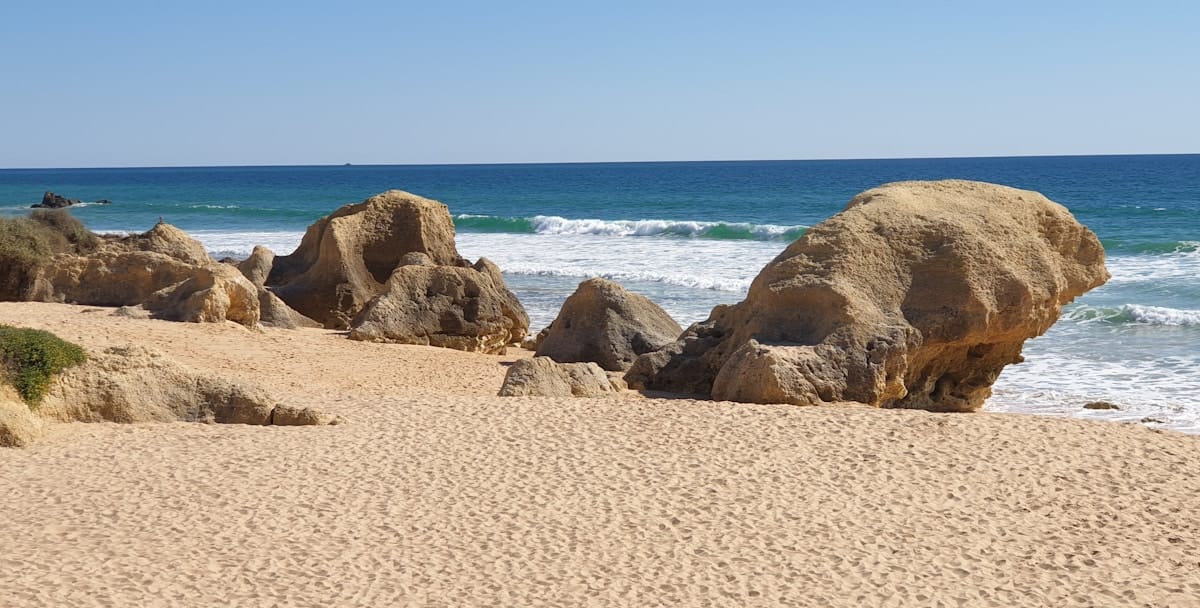
The Câmara Municipal de Cascais has put its name to a 12-month Earth-observation pilot — EO4RO, Earth Observation for the Mapping and Monitoring of Rugulopteryx okamurae — that combines Sentinel-class satellite imagery, oceanographic data, weather forecasts and machine-learning algorithms to track and forecast the spread of the invasive Pacific brown alga across the Portuguese Atlantic coast. Field testing began in the first half of 2026, and project partners expect a first set of operational outputs by year-end.
The pilot is co-run with the Portuguese space-tech company GMV — the Madrid-headquartered group's Lisbon subsidiary that already serves the European Space Agency and Copernicus contracts — and the British Plymouth Marine Laboratory, which has been monitoring Rugulopteryx okamurae in the Mediterranean since the alga was first registered off Ceuta in 2002. Cascais is footing the municipal share of the cost; the partners have not published a headline figure for the programme.
Why the alga matters
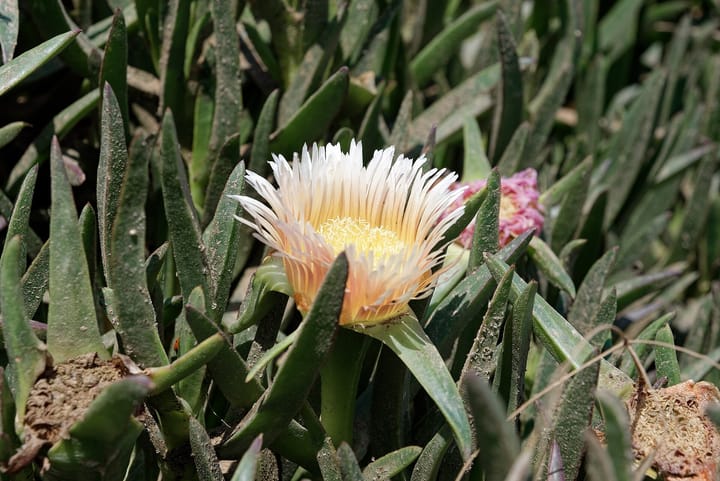
Rugulopteryx okamurae, native to the western Pacific, has been one of the most disruptive marine invasions in southern European waters this decade. The Strait of Gibraltar bloom of 2015 forced the closure of seasonal beaches in Tarifa and Algeciras for weeks at a time and dumped tens of thousands of tonnes of decomposing biomass onto the shoreline. The plume has since worked its way west along the Andalusian coast and around Cabo de São Vicente, and in 2024 the Instituto Português do Mar e da Atmosfera (IPMA) confirmed presence in the Algarve barlavento. Cascais is one of the first municipalities outside the Algarve to treat the alga as a permanent rather than seasonal threat.
The economic damage stack runs through three channels: fishing nets are clogged and torn by the loose biomass, beach tourism falls off when the sand is layered in decomposing fronds, and municipal budgets are pulled into a perimeter of clean-up costs that the Algarve câmaras have run at €0.50-€1.20 per kilo of biomass collected. A 12-month satellite-led forecast that flags incoming blooms 48 to 72 hours in advance changes the operational math: clean-up crews can stage equipment before the deposit hits the sand rather than after.
How the EO4RO stack works
The technical chain has three layers. First, an Earth-observation feed — primarily Copernicus Sentinel-2 multispectral imagery and Sentinel-3 ocean-colour reads — is processed through GMV's algorithms to detect surface biomass signatures. Second, oceanographic and meteorological inputs (currents, sea-surface temperature, wind direction and wave height) are pulled from CMEMS and the Met Office to model where the detected biomass is likely to drift over the next 24-72 hours. Third, Plymouth Marine Laboratory's bloom-prediction layer adds the biological-growth modelling that turns a current-state read into a forward-looking forecast.
The system is designed to push automated alerts to the câmara's emergency-services portal and to the regional Capitania do Porto in Cascais, with a secondary feed flagged for the surf schools and bathing-concession operators that work the Praia do Guincho - Praia do Tamariz arc.
What Cascais is testing for, exactly
Three operational questions sit behind the pilot:
- Detection sensitivity — at what biomass concentration can Sentinel-2 reliably distinguish a Rugulopteryx surface mat from natural sargassum, kelp or wave foam.
- Drift accuracy — how well the coupled current-and-wind model predicts the landing point of a detected mat on the Cascais shore inside the 48-72 hour window.
- Operational latency — how long it takes between a satellite pass, an algorithm output and a câmara-actionable alert.
Mayor Nuno Piteira Lopes framed the project as a proof-of-concept for council-led environmental monitoring: "A parceria demonstra o potencial da colaboração entre a ciência e o poder local." GMV project manager Filipe Brandão said the goal is "aplicar tecnologia a problemas concretos da praia," pointing to the Algarve municipalities that have been managing the same alga without forecast tools as the obvious next adopters if the Cascais pilot delivers.
The scaling question
If EO4RO clears its 12-month proof window, the natural target markets are the Algarve barlavento and sotavento câmaras, the Canary Islands and the Mediterranean coast — anywhere Rugulopteryx okamurae has already arrived or is forecast to arrive. The same technical chain, with retrained algorithms, also applies to two other invasive marine species the Iberian coastline is now tracking: the Caulerpa cylindracea bloom that hit the Costa Brava in 2021 and the Asian shore crab signal that the Universidade do Algarve picked up off Olhão in 2024. For Cascais, the upside on a successful pilot is reputational; for GMV, it is the chance to package a Sentinel-based environmental-monitoring product the firm can sell across the Mediterranean rim. Portugal now has a national framework for this work: the 2026 to 2030 action programme for the invasive alga, approved in September.
For coastal residents, the immediate practical effect, assuming the system works, is that by the 2027 bathing season the Cascais câmara may be able to flag a Rugulopteryx landing the same way IPMA flags an incoming heat wave — 48 hours in advance, with enough lead time for the câmara to redirect crews, divert concessions and set expectations for the bathing public before the alga hits the sand. On the coastal-management side of the file, the invasive alga Portugal is not allowed to sell sets out why EU law bans placing Rugulopteryx okamurae on the market and which document would unlock it.