A Think Tank Urges the Government to Shield the Sines Refinery, Portugal's Only One, in the Galp–Moeve Downstream Deal
SEDES has written to the prime minister, president and every party, warning that the Galp–Moeve tie-up could hand control of Portugal's only refinery abroad and urging the state to use its sovereign powers to protect it.
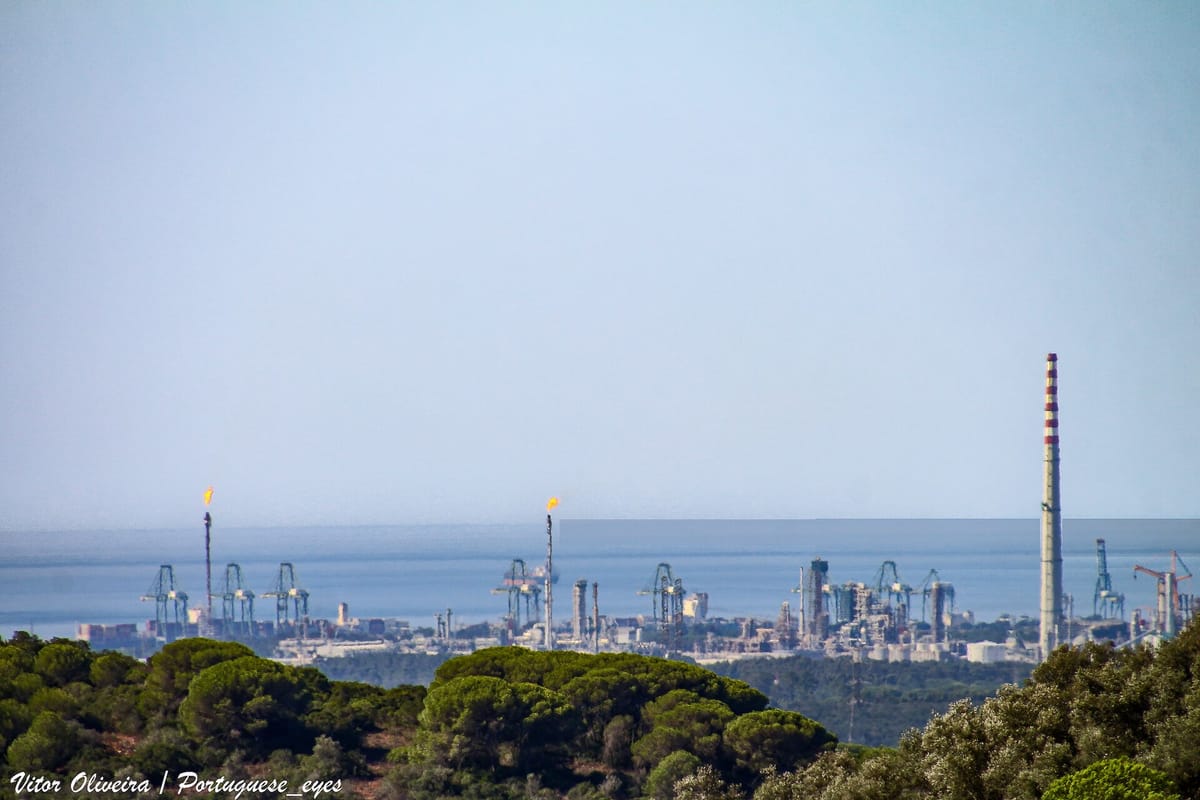
A prominent Portuguese think tank has written to the country's top political leaders urging them to do "everything" to protect the Sines refinery as energy group Galp weighs merging its downstream business with Spain's Moeve. In a position paper sent to Prime Minister Luís Montenegro, President António José Seguro and every party in parliament, SEDES — the Associação para o Desenvolvimento Económico e Social (Association for Economic and Social Development) — argues that the deal is not merely a private matter for shareholders but one that touches "the Portuguese economy and sovereignty."
The intervention lands on a deal we have followed since the government drew its own red lines around it. In January, Galp and Moeve — the group formerly known as Cepsa — signed a non-binding agreement to explore combining their downstream portfolios into two Iberian energy champions, one focused on retail and the other on industry. SEDES's paper, titled "Implications of the Galp-Moeve deal for the Sines refinery," is dated 28 July and was sent to leaders late last week, after the re-election of Álvaro Beleza as head of the association's coordinating council through 2028.
One refinery versus nine
At the heart of SEDES's warning is a simple asymmetry. "While Spain has nine refineries, Sines is the only refinery on Portuguese territory," the group notes — "it is hard to overstate the importance of this kind of asset for a country's strategic autonomy." Thanks to Sines, the association says, Portugal is currently self-sufficient in refining capacity. Should the merger proceed, it warns, the country "will become entirely dependent on decisions taken outside Portugal — and outside the EU — when it comes to the supply of refined products."
Refineries, SEDES adds, are technologically complex assets carrying enormous accumulated know-how in both construction and operation, which makes them almost impossible to replace once lost. The group also points to "public reports" that Galp is negotiating a separate arrangement with Mubadala — "in reality, one of Abu Dhabi's sovereign wealth funds" — that would include ceding control of the Sines refinery itself. That prospect, of a strategic national asset passing to a Gulf state fund, is what has sharpened the alarm.
A call for the state to use its powers
SEDES reminds the government that the state "holds sovereign powers" to "safeguard strategic assets essential to guaranteeing national defence and security and the security of the country's supply of services fundamental to the national interest." In plain terms, it is urging Lisbon to treat refining capacity the way it would any other piece of critical infrastructure — and to be ready to act if the deal threatens it. The message dovetails with the government's own stated conditions, which centred on keeping Sines running and putting Portuguese supply first. Galp, for its part, has cast the tie-up as a way to build scale in an Iberian market and has faced separate pressure this summer, from a revived windfall levy on refiners to a fight over fuel margins.
What This Means for Expats
- Fuel security: Sines refines much of the diesel and petrol sold at Portuguese pumps. Who controls it can, over time, shape supply reliability and price stability for drivers and businesses.
- A slow-moving story: The Galp-Moeve agreement is still non-binding. Expect months of political and regulatory wrangling before anything is settled — this is a debate to track, not an imminent change.
- Sovereignty in focus: The Mubadala angle turns this into a national-interest question. If it advances, watch for the government to invoke its powers over strategic assets, as it has with ports and grids.
- Energy transition context: Sines is also central to Portugal's green-hydrogen and industrial plans, so its ownership matters well beyond today's fuel market.
Whether SEDES's letter shifts the calculus is unclear, but it hands the opposition and the president a well-argued brief at a moment when the government is already fielding questions about the deal. For now, the refinery keeps running — and its future ownership has become one of the more consequential open questions in Portuguese economic policy.