Portugal Revives a Windfall Levy on Oil Refiners as Galp's First-Half Profit Jumps 44 Percent
The Council of Ministers has approved a Temporary Solidarity Contribution on the oil sector, a windfall-style levy on refiners' profits that run far above normal years. It arrives as Galp posts an €812 million first-half profit, up 44 percent, with Brussels' approval secured back in April.
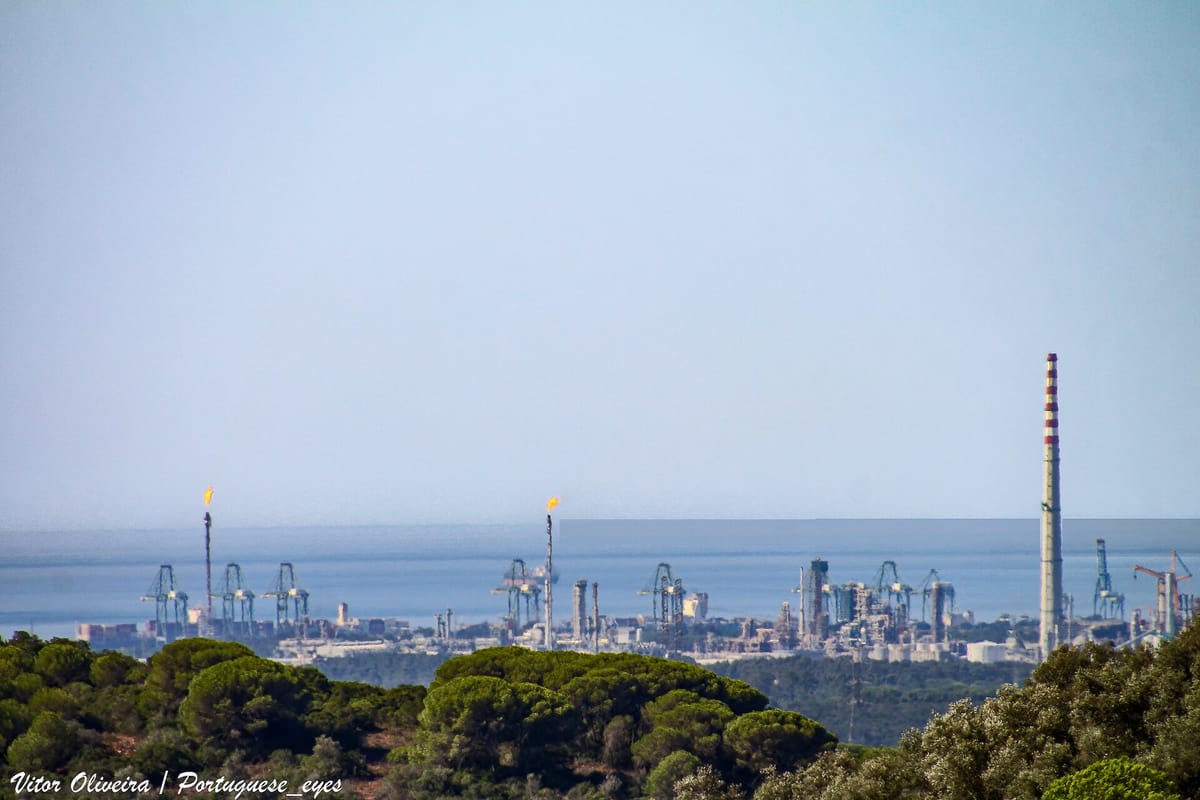
The Council of Ministers (Conselho de Ministros) approved on Thursday a decree creating a Temporary Solidarity Contribution (Contribuição de Solidariedade Temporária) on the oil sector — a windfall-style levy aimed at the slice of refiners' and crude producers' profits that sits far above what they booked in ordinary years. The measure targets companies in crude oil extraction and refining, and lands at a moment when the country's dominant energy group is posting some of its strongest results in years.
Galp, the obvious Portuguese example, reported a first-half net profit of €812 million, up 44 percent on the same period of 2025. It is exactly that kind of jump — profit "considerably above the average of previous years," in the government's phrasing — that the new contribution is designed to capture. Finance Minister Joaquim Miranda Sarmento (Finance Minister) has framed the money as a way to soften the blow of fuel-price rises on households and businesses, and to fund investment that reduces the country's reliance on fossil fuels.
A second run at a windfall tax
This is not Portugal's first attempt at taxing energy windfalls. During the 2022–2023 spike that followed Russia's invasion of Ukraine, the state applied a solidarity contribution to the energy sector — but it raised far less than the government had projected, a shortfall that has shadowed every discussion of a sequel. The new decree tries again, this time squarely on the petroleum business rather than energy at large.
Brussels has cleared the path. The European Commission signed off on Portugal's proposal in April 2026, and Lisbon had earlier joined Germany, Spain, Italy and Austria in pressing the Commission for a coordinated, EU-wide mechanism. The bloc already has a template: its 2022 solidarity contribution levied 33 percent on the part of fossil-fuel companies' profits that ran more than 20 percent above their recent four-year average. Portugal's exact rate and threshold will be set out as the decree is finalised.
What it means on the ground
For anyone filling a tank, the immediate effect is likely to be small. A tax on company profits is not the same as a cut in the price at the pump, and it does nothing directly to the fuel margins that the energy minister recently asked the regulator ERSE to study — a separate fight in which Galp has already rejected the idea of capped margins. Whether drivers feel any benefit depends entirely on how the government spends the proceeds, and on how much it actually collects.
That last point is where the scepticism lives. The 2022 experience showed how hard these levies are to design: define the "excess" too narrowly and the yield disappears; define it too broadly and you invite legal challenge. Portugal's courts are already sitting on a €23 billion backlog of contested tax, a reminder that aggressive assessments can spend years in dispute rather than in the treasury. Investors read the timing too: the levy arrives alongside a budget in which the Finance Ministry has been stripping contentious reforms out of the 2027 plan to keep it moving through a divided parliament.
For expats, the contribution is worth watching less for its effect on fuel bills than for what it signals: a government willing to reach for one-off levies on profitable sectors when it needs revenue, and a market — tracked in our weekly markets briefing — that has already been marking Galp's shares down even as its profits climb. Business owners weighing an appeal against any future assessment can find the mechanics in our guide to contesting a tax assessment. The decree sets the direction; the numbers, and the money, will follow.