The Interior Minister Would Put Offenders' Nationality in Next Year's Security Report, and the 251 Percent Figure Behind the Debate Is Mostly One Residual Category
Parliament debated the 2025 internal security report on Wednesday. Luís Neves said he is open to adding a nationality column to the 2026 edition. The report itself shows that 838 of the 1,205 immigration-related occurrences sit in a heading it never itemises.
Portugal's annual internal security report does not record the nationality of the people who commit crimes. The Minister for Internal Administration told parliament on Wednesday that the next edition might.
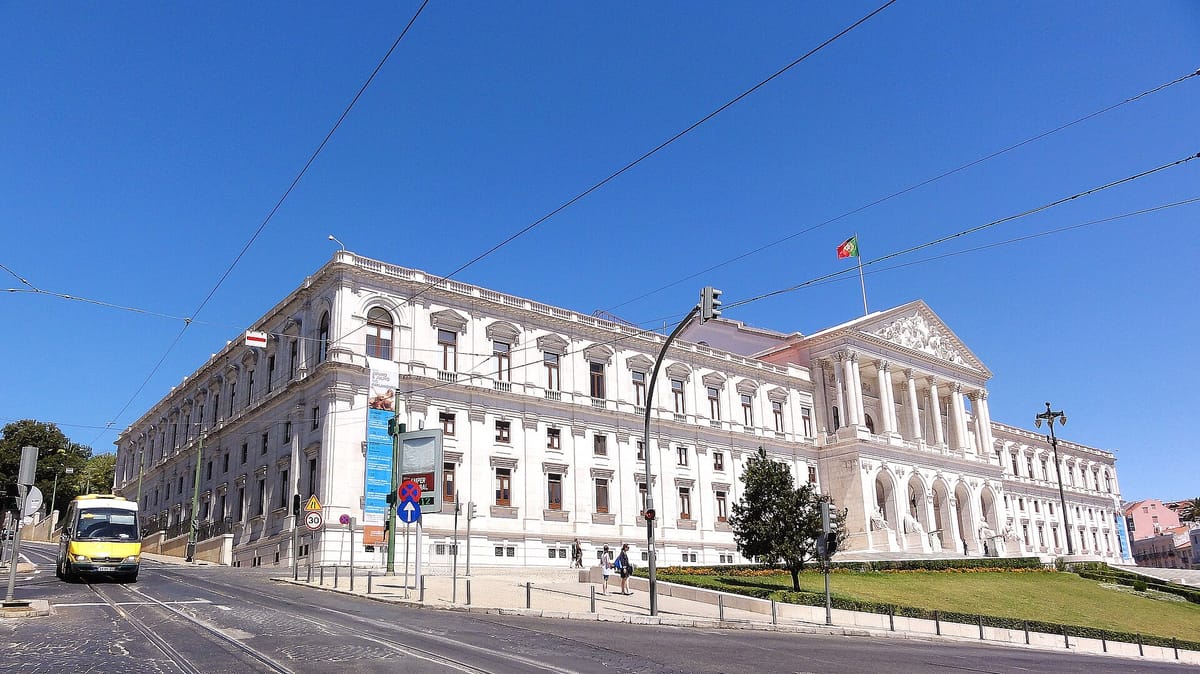
Luís Neves was in the chamber to debate the Relatório Anual de Segurança Interna (RASI, Annual Internal Security Report) for 2025, the document the government is required to lay before the Assembleia da República (Assembly of the Republic) each year. Asked about the absence of nationality data, he said he was open to including it in the 2026 report. "It is not discriminatory towards anyone," he said. "It is a matter of understanding who is actually in Portugal."
It is a position he has held for some time. Before joining the government, Neves was national director of the Polícia Judiciária (Judicial Police), and in that job he had already asked his own ministry to put nationality into official crime reporting.
The figure the debate turned on
The argument that produced the question was about a single percentage. Madalena Cordeiro, a Chega deputy, put the rise in immigration-related crime at about 250 percent and used it to attack the government's record. "There are no words to describe this government's capacity to pretend everything is fine and to abstain from reality," she said, pointing to "networks that bring in illegal immigrants, that traffic people and that live off their labour exploitation."
Neves did not dispute the number. He disputed what it measures. "These figures reflect only more work by the security forces," he replied, noting that in cases of aiding illegal immigration, as in drug trafficking, there is rarely a complainant. Crimes of that kind appear in the statistics when the police go looking for them.
The report itself supports a more specific reading than either side offered. RASI 2025 records an increase of 862 occurrences in crimes relating to illegal immigration, which it puts at 251.3 percent against 2024. The category covers six separate offences, and the report breaks them out: aiding illegal immigration, 262 cases; marriage of convenience, 60; breach of an entry ban, 25; criminal association for aiding illegal immigration, 11; recruitment of illegal labour, 9. The sixth entry is a residual heading, "other crimes related to illegal immigration", and it accounts for 838 of the 1,205 total.
In other words, the offence the political argument is about, aiding illegal immigration, accounts for roughly one case in five inside the number being quoted. The bulk of the increase sits in a catch-all category the report does not itemise further.
The investigative figures, supplied separately by the Polícia Judiciária, move in more than one direction. New inquiries into human trafficking fell 4 percent and into illegal entry and residence fell 17 percent, while inquiries into aiding illegal immigration rose 5 percent and into criminal association for that purpose rose 160 percent. Defendants formally constituted for aiding illegal immigration reached 186, up 48; arrests on the same charge reached 26, up 18. Arrests for human trafficking fell to seven.
Behind those numbers sits the pattern the report keeps returning to. Victims of trafficking in Portugal are overwhelmingly trafficked for labour exploitation, above all in seasonal agriculture, but also in construction, livestock farming, textiles, catering, sport and domestic work. The Observatório do Tráfico de Seres Humanos (Human Trafficking Observatory) logged 307 records in 2025, of which 205 were validated as victims.
What the rest of the report says
Nationality was one thread in a long debate. The wider picture in RASI 2025 is of more reported crime and slightly less violent crime: 365,802 criminal complaints, up 3.1 percent or 10,924 cases on 2024, against 14,149 reports of violent and serious crime, down 1.6 percent. Theft remains the most reported offence, followed by fraud and road crimes.
Each party found its own figure. Rui Rocha of Iniciativa Liberal called the report a "scenario of calamity" on safety and discipline in schools, and spoke of a real escalation of violence. The report counts 8,133 school incidents, up 14.1 percent, of which 5,694 were criminal in nature, down 0.9 percent; the growth is in the non-criminal part of the count.
Paulo Muacho of Livre said Portugal remains a safe country and that the report shows no explosion in crime, but warned of serious signals in domestic violence, violence against minors, sexual violence and road deaths. Paula Santos of the PCP said the data do not support the conclusion that the country is less safe, while insisting that "not everything is fine" and that her party does not dismiss the feelings of insecurity produced by years of disinvestment in neighbourhood policing.
For the CDS, João Almeida took the opposite view of the same statistic Chega had used, arguing that immigration-related crimes were the report's most relevant datum and that they rose because enforcement resumed. Filipe Sousa of the JPP said the report confirms Portugal is among the safest countries but pointed to the rise in general crime, to roughly 30,000 domestic violence reports and to the highest rape figure of the decade. The precise figures are 29,644 domestic violence reports, down 1.9 percent, with violence against minors up 8.6 percent, and a 6.4 percent rise in rape to the highest number in ten years, which we covered when the report was first published in April.
The Highway Code, thirty years on
Road safety took up much of the afternoon. Isabel Moreira of the PS called the situation on Portuguese roads a tragedy and said her parliamentary group is revisiting the criminal treatment of driving without a licence and driving under the influence of alcohol. Driving with a blood alcohol level of 1.2 grams per litre or more is the third most reported crime in the country, and it rose 23 percent last year.
Neves used the debate to announce two things. The Estratégia Nacional de Segurança Rodoviária (National Road Safety Strategy) goes to the Council of Ministers within days, after a public consultation that drew more than 60 submissions. "We gathered more than 60 contributions and within days we will present the final document to the Council of Ministers," he said.
And the revision of the Código da Estrada (Highway Code) is being finished. The code is more than thirty years old and has had, in his words, dozens of instruments inserted into it over that period. A draft circulating in August would have made driving above 180 kilometres per hour a crime; what survives into the final text is still unknown.
Why the nationality question is not a small one
Adding a field to a statistical annex sounds technical. It is not. RASI is the document every party quotes for a year after it is published, and the categories it chooses determine which arguments can be made from it. A nationality column would let the report answer a question that is currently answered only by inference, and it would also produce a number that is easy to quote and hard to read, in exactly the way the 251.3 percent figure has been this week.
The minister gave no date and no commitment beyond openness to the idea, and no consultation with the data protection authority was mentioned in the chamber. For residents watching how Portugal counts its foreign population, it sits alongside a run of changes this year, from the ten-year nationality clock to Wednesday's bill on where AIMA lawsuits are heard. If you need to know how the reporting side of the system works from the other end, our guide to reporting a crime in Portugal sets out what happens after a complaint is filed.