Reporting a Crime in Portugal
Researched and written with AI tools from official sources. How we make our guides
How to report a crime in Portugal: where to go, the online complaint portal, the six-month deadline, your right to an interpreter, and claiming damages.

Last verified: October 2026.
Who this is for
- You have been the victim of a crime in Portugal, such as theft, fraud, damage, threats, or assault.
- You saw a crime and want to report it.
- You live here or are visiting, and you do not speak Portuguese well.
Not for you if: you want to report wrongdoing inside your own workplace. Read Reporting Wrongdoing at Work in Portugal instead.
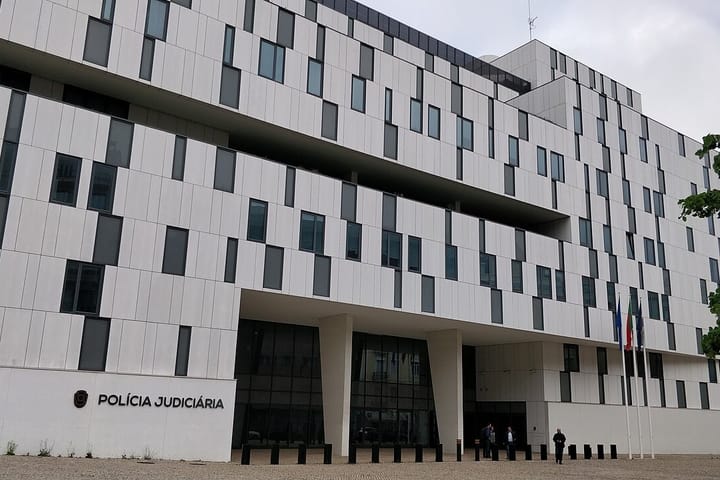
In an emergency, or if a crime is happening now, call 112. To report a crime afterwards, go to any PSP or GNR police station or any public prosecutor's office (Ministério Público). For 18 common crimes you can also file online at queixaselectronicas.mai.gov.pt. Reporting is free and you do not need a lawyer. For many everyday crimes, such as theft, fraud, damage, threats, and simple assault, nothing happens unless you make a formal complaint (queixa) within six months of learning what happened and who did it.
In an emergency
Call 112, the national and European emergency number. It is free and works 24 hours a day.
Other public lines:
- 117: forest fire alerts.
- 144: the national social emergency line, free, 24 hours.
- 800 202 148: the free 24-hour information line for victims of domestic violence.
The online complaint system is not for emergencies. Never use it for a crime in progress.
Three kinds of crime
Portuguese law puts every crime into one of three groups. The group decides what the State can do without you. It is set by the law, not by how serious the incident felt.
Public crimes (crimes públicos). The public prosecutor acts as soon as it learns of the crime. Anyone can report it. You cannot withdraw it. Domestic violence, robbery, and corruption are public crimes.
Semi-public crimes (crimes semipúblicos). The prosecutor can only act if the victim makes a formal complaint. After that, the State runs the case. This group covers many everyday crimes:
- theft (furto);
- criminal damage (dano);
- fraud (burla);
- threats (ameaça);
- simple assault (ofensa à integridade física simples).
Private crimes (crimes particulares). You must complain, become a formal party to the case (assistente), and bring the charge yourself. That means you need a lawyer and pay a court fee. Defamation (difamação) and insult (injúria) are private crimes.
How to tell which group a crime is in. The Ministério Público explains it simply. If the law creating the crime says nothing, it is public. If it says prosecution "depends on a complaint", it is semi-public. If it says prosecution depends on a "private accusation", it is private.
Some exceptions:
- Simple assault becomes a public crime in some cases. Examples are attacks on a police officer, a prison guard, a teacher or other education worker, or a health worker, at work or because of their job.
- Theft becomes a private crime in some family cases, such as theft between spouses or close relatives who live together. Shoplifting of low-value goods that are recovered at once is also a private crime, unless two or more people did it.
Reporting versus making a complaint
In English, both are "reporting". In Portuguese law they are two different acts.
- A report (denúncia) tells the authorities that a crime happened. Anyone can make one, by speaking or in writing. There are no special formalities.
- A complaint (queixa) is the victim saying they want the offender prosecuted. It is what starts a semi-public or private case.
This matters. For a semi-public or private crime, a report only leads to an investigation if the victim also makes a complaint within the legal deadline. You can describe a theft in full and still see nothing happen, because you did not say you wanted the person prosecuted.
What to say: tell the officer clearly that you want to file a complaint (apresentar queixa) and that you want criminal proceedings against whoever did it (desejo procedimento criminal). Check that the statement you sign says so.
You can file the complaint yourself, through a lawyer, or through someone holding a power of attorney with specific powers. This helps if you are abroad when you find out about the crime.
The six-month deadline
The right to complain ends six months after you learned of the crime and who did it. The clock does not start on the day of the crime. It starts when you know both what happened and who was responsible, which can be later.
- For certain sexual offences, the deadline is one year.
- If several people have the right to complain, each one has their own six months.
- If you do not complain in time against one person involved, the others also benefit, where they too can only be prosecuted on a complaint.
If you are close to the six months, file first and gather evidence later. A complaint does not need to be complete to be valid. It needs to be on time.
Where to report
You have four options. You need to identify yourself with an ID document when you report in person.
1. A police station
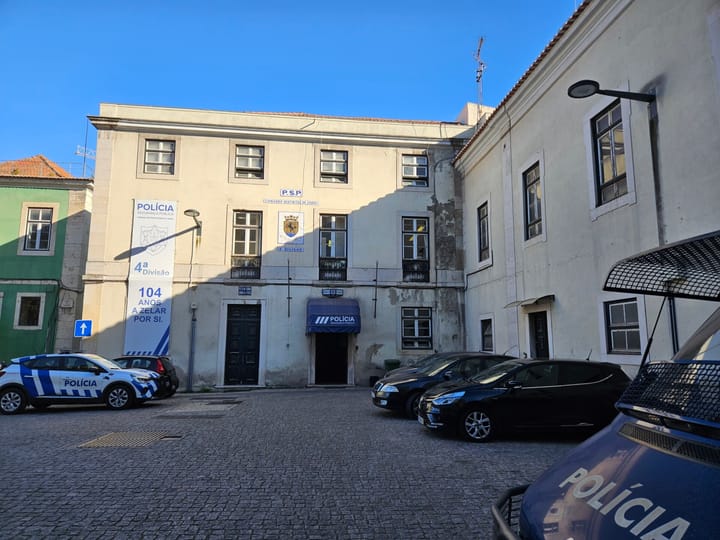
Go to any PSP station (esquadra) or GNR post (posto). The PSP covers cities and larger towns. The GNR covers most other areas. Either will take your report.
A complaint made to any body that must pass it to the prosecutor counts as made to the prosecutor. So you do not lose your date by going to the wrong station.
2. The Ministério Público
You can report in person at any office of the public prosecutor (Ministério Público). You can also send a report by email to a prosecutor's office. If you send it by plain email, without a qualified digital signature, you must deliver or post the originals within seven days.
This route suits complex cases with documents, such as a fraud with a paper trail.
3. Online, through Queixa Eletrónica
The Ministry of Internal Administration runs an online complaint system at queixaselectronicas.mai.gov.pt. It sends your complaint to the GNR or the PSP. It covers 18 types of crime:
- simple assault
- domestic violence
- ill-treatment
- human trafficking
- procuring (pimping)
- theft
- robbery
- criminal damage
- fraud
- job or employment fraud
- extortion
- damaging or removing documents and technical records
- damage to nature
- using another person's ID or travel document
- pollution
- aiding illegal immigration
- illegal recruitment of labour
- marriage of convenience
Who can use it: any identified person, Portuguese or foreign, who lives in Portugal or is in the country.
How you sign in: with your Citizen Card (Cartão de Cidadão), Chave Móvel Digital, Via CTT, or identification in person. If you need to set up Chave Móvel Digital, see Activating the Chave Móvel Digital.
Once your identity is confirmed, your complaint is treated the same as one made at a police station. The portal also has an area where you can check the status of your complaint.
For crimes not on the list, go to the nearest police station or prosecutor's office.
4. Domestic violence
The PSP and GNR have specialist teams for domestic violence. The PSP also takes reports by email at [email protected]. The national network for victims includes support centres, shelters, and the free 24-hour line on 800 202 148. In an emergency, call 112.
What to bring
- Your passport, residence card, or Citizen Card.
- A written timeline: what happened, when, where, and who was involved.
- Any evidence: photos, messages, receipts, bank statements, names of witnesses.
- For theft, a list of what was taken, with serial numbers if you have them.
You do not need to know the legal name of the crime, or who did it.
Your right to an interpreter
Portuguese is the language of criminal proceedings. But if you do not know or do not speak Portuguese well, you get a qualified interpreter free of charge. This applies even if the officer happens to speak your language.
When you report a crime, the law says the report must be taken in a language you understand. If you are told to come back with a friend who speaks Portuguese, that is not what the law says. Ask for an interpreter.
After you report
Proof of your report. As a victim, you are entitled to a certificate of your report, describing the main facts. The prosecutor's office must give it to you straight away. Keep it. It proves when you complained.
If police saw the crime, they write an official report (auto de notícia) and must send it to the prosecutor within 10 days.
The investigation (inquérito). The public prosecutor directs the investigation. It must tell you:
- how the complaint system works and what it means for your case;
- how legal aid works;
- how to claim State compensation if you were the victim of a violent crime, and the advance payments for domestic violence victims;
- which public and private bodies support victims.
The law also recognises "especially vulnerable victims", because of age, health, disability, or the kind of crime. This status brings extra protections. Tell the authorities early about anything that makes you vulnerable.
Becoming an assistente
An assistente is a formal party to the criminal case. You can see the file, ask for steps in the investigation, bring a charge alongside the prosecutor, and appeal on your own. You need a lawyer, and there is a court fee.
You can become an assistente if you are the victim and over 16, or if the case depends on your complaint. Close family can do so if the victim has died.
Deadlines:
- For a private crime, you must ask to become an assistente within 10 days of the police warning you that it is required. When you report a private crime, you must say you want to become an assistente.
- In other cases, you can join up to five days before the trial or the pre-trial hearing, or within the time for appealing the sentence.
For a semi-public crime, becoming an assistente is optional. For a private crime, it is required. If you do not do it, the case ends.
Claiming money from the offender
In Portugal, a claim for damages caused by a crime is normally made inside the criminal case, not in a separate civil case. Only some situations allow a separate claim.
- Say you intend to claim. The authorities must tell you that you can claim. You can say you intend to do so at any time until the investigation closes.
- File the claim. You are then notified of the charge. You have 20 days to file your claim in writing.
- Small claims. If the amount is low enough that a separate civil case would not need a lawyer, you can simply ask the court to set compensation. No special form is needed.
If no claim was made and the offender is convicted, the court can still award you a sum where your need for protection requires it.
State compensation. The Commission for the Protection of Victims of Crime (Comissão de Proteção às Vítimas de Crimes, CPVC) works with the Ministry of Justice. It decides on State compensation for victims of violent crime when the offender cannot pay. For domestic violence victims left in serious financial need, it can grant a monthly payment.
If you cannot afford a lawyer, you can apply for legal aid at any Segurança Social service desk. See Applying for Legal Aid in Portugal.
Anonymous reports
You can report anonymously, but it has limits. An anonymous report only starts an investigation if it points to a crime, or is itself a crime. If an investigation opens, the person who has the right to complain is told. If not, the report is destroyed.
For a public crime, an anonymous report can be enough to start a case. For a crime that needs a complaint, it is not. A complaint must come from an identified person.
Withdrawing a complaint
You can give up your right to complain before using it. You can also withdraw a complaint for a semi-public or private crime. You can do so until the first-instance judgment is published, but only if the accused does not object. Once withdrawn, you cannot file it again.
You cannot withdraw a public crime, because it never depended on your complaint. Domestic violence is the case that most often surprises people. Once the State knows, the case goes on, whatever the people involved later decide. The prosecutor can, with the judge's agreement and at the victim's free request, suspend the case on conditions for the offender.
Practical points
- Say "queixa" and check the paper. Ask for your certificate or reference number. It is your proof that you complained in time.
- Note the six-month date as soon as you know what happened and who did it.
- Use the online portal for the 18 listed crimes, and never for an emergency.
- Ask for an interpreter. It is free.
- Claim money inside the criminal case. Say you intend to claim before the investigation closes.
- For defamation or insult, see a lawyer at once. You have 10 days to become an assistente after the police warning.
- Not every dispute is a crime. An unpaid bill, poor building work, or a withheld deposit without a fraud behind it is usually a civil matter. See Resolving a Dispute through the Peace Courts (Julgados de Paz).
If you used force to defend yourself, see Self-Defence Law in Portugal. If someone is hurt, see What to Do in a Medical Emergency in Portugal.
This guide is general information about Portuguese law, not legal advice. For your own case, speak to the Ministério Público, the police, or a lawyer.
Sources
This guide is written from official sources and, where relevant, organisations' own websites.
- Ministry of Internal Administration, Queixa Eletrónica portal: https://queixaselectronicas.mai.gov.pt/ (18 crime types under Portaria n.º 1593/2007, of 17 December; identified people, national or foreign, resident or present in Portugal; not for emergencies; 112, 117, 144; sign-in methods; treated as a complaint made at a station; status check), checked 2 October 2026
- Ministry of Internal Administration, domestic violence micro-site, support available: https://queixaselectronicas.mai.gov.pt/micrositevd/apoios.html (PSP and GNR specialist teams, [email protected], national support network, 800 202 148 free 24-hour line, 144, CPVC contacts), checked 2 October 2026
- Ministério Público, frequently asked questions, criminal area: https://www.ministeriopublico.pt/perguntas-frequentes/area-criminal (how to tell public, semi-public, and private crimes apart; where to file; email reports and seven days for originals; no lawyer and no payment needed; six months; legal aid from Segurança Social; no withdrawal for domestic violence, provisional suspension), checked 2 October 2026
- Comissão de Proteção às Vítimas de Crimes, who we are (updated 20 August 2026): https://cpvc.justica.gov.pt/quem-somos/ (independent body with the Ministry of Justice; State compensation for victims of violent crime and domestic violence under Lei n.º 104/2009), checked 2 October 2026
- Procuradoria-Geral Regional de Lisboa, Penal Code (Decreto-Lei n.º 48/95), consolidated: https://www.pgdlisboa.pt/leis/lei_mostra_articulado.php?nid=109&tabela=leis (article 113 who may complain; 115 six months, one year for article 178(1), separate clocks, effect on co-participants; 116 renunciation and withdrawal; 143 simple assault, complaint and public exceptions; 152 domestic violence; 153 threats, complaint; 188 defamation and insult, private accusation; 203 theft, complaint; 207 private accusation for family theft and low-value shoplifting; 212 damage; 217 fraud), checked 2 October 2026
- Procuradoria-Geral Regional de Lisboa, Code of Criminal Procedure (Decreto-Lei n.º 78/87), consolidated: https://www.pgdlisboa.pt/leis/lei_mostra_articulado.php?nid=199&tabela=leis (article 49 complaint to the Ministério Público, any body that must forward it, lawyer or special power of attorney; 50 private crimes; 51 withdrawal; 67-A especially vulnerable victims; 68 assistente, 10 days for private crimes, other deadlines; 71 civil claim inside the criminal case; 75 duty to inform, intention until the end of the investigation; 77 20 days, small claims; 82-A reparation in special cases; 92 free interpreter; 242(3) report needs a timely complaint; 243 police report within 10 days; 246 form, language, anonymous reports; 247 information to the victim, certificate of the report), checked 2 October 2026
Last verified October 2026. Rules and fees change; check the official source before acting.