Sines Investment Pipeline Edges Toward 10% of Portuguese GDP as Santiago do Cacém Calls for a Gabinete da Área de Sines Reboot — Housing Reaches €5,000/m² and the A26-A2 Connection Slips to 2028
ECO's 22 May reportage frames Sines as a 10%-of-GDP investment cluster outpacing public infrastructure: Repsol, Galp and Start Campus anchor the pipeline, Santiago do Cacém projects 15,000 new workers by 2031, two-bedroom rents clear €2,000, the A26-A2 link slips to 2028.

The industrial cluster the Marcello Caetano government carved out of the Alentejo coast in 1971 is once again the largest construction site in Portugal — and once again straining against the limits of the public infrastructure that surrounds it. A long-form reportage published by ECO on Friday 22 May 2026 under bylines Alexandre Batista and Hugo Amaral sets the modern Complexo Industrial e Logístico de Sines (CILS) against a deadline calculus the local administration argues only a centralised planning body can resolve.
The Capital Stack Behind the Site
The headline number framing the reportage is the combined private-investment notional anchored at Sines by Repsol, Galp and Start Campus — a figure the article puts approaching 10% of Portugal's GDP over the build-out horizon. Repsol's polymers complex, Galp's renewable-feedstock refinery transition and Start Campus's SIN01 hyperscale data-centre buildout sit on top of a third phase of east-breakwater expansion at the port and a fresh high-voltage substation the APS port authority brought into operation on 28 April 2026. None of these projects is contingent on the others, which is precisely why the synchronisation pressure on the municipal layer has compounded so quickly.
Workforce Projections vs. Housing and Schools
Santiago do Cacém's administration projects 7,000 new workers inside two years and 15,000 by 2031 to staff the announced footprint. The local housing market has already moved ahead of those numbers: a two-bedroom rental in central Sines now clears €2,000 a month and acquisition prices reach €5,000 per square metre — pricing closer to the Lisbon ribbon than to the Alentejo coast. The municipal secondary school has doubled enrolments and reached full capacity, while the primary-care network and the local hospital are running below the staffing-per-resident ratios the new headcount will require. The municipality runs a €41 million annual budget with roughly €12 million earmarked for investment — a quantum the local administration argues cannot absorb the housing-schools-healthcare load that comes attached to a 10%-of-GDP industrial pipeline.
The Connectivity Gap
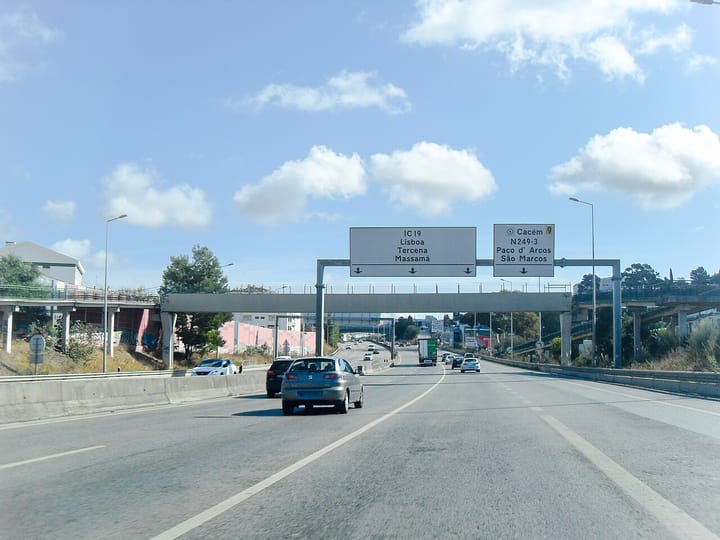
Two infrastructure timelines define the bottleneck. The A26 highway connection to the A2 motorway — the missing link that would put Sines a direct dual-carriageway drive from Lisbon — is not scheduled to complete before 2028 at earliest. The Évora-Elvas-Badajoz railway corridor, by contrast, is on track for early-2027 commissioning and would remove the current detour through Entroncamento for freight heading north into the Iberian rail corridor. That sequencing matters: rail will pick up bulk-cargo and intermodal flows roughly a year before the road network catches up, leaving the labour-commuting and SME-logistics gap squarely on regional roads through at least 2028.
The Governance Pitch
The substantive policy ask out of Santiago do Cacém is a revival of the Gabinete da Área de Sines — the centralised state planning office Caetano stood up in 1971 to coordinate urbanisation, housing, healthcare and education around the original refinery and port programme. The modern equivalent would sit above municipal competences, command its own line in the state budget, and synchronise concession timelines, school construction and hospital staffing on the same Gantt chart that governs the private capex. Whether the Montenegro government's AICEP licensing overhaul can deliver that synchronisation without a dedicated planning vehicle is the open question — the reportage's framing is that the time pressure on Sines is now governance-led, not capital-led.
What This Means for Expats
- Property migration play: If you priced Sines as an Alentejo arbitrage in 2023 or 2024, the €5,000/m² ceiling is now a Lisbon-coast equivalent — the discount window is closed.
- Hiring window through 2031: 15,000 net new jobs across data-centre operations, polymer-chemical engineering and port logistics — relevant for technical CVs in industries with persistent skill shortages.
- Commuting reality: Plan on Lisbon-Sines by road remaining a 90-minute-plus drive until at least 2028 — the A26-A2 missing link is not a near-term fix.
- School-place pressure: Anyone moving school-age children into Sines or Santiago do Cacém in the next two academic years should confirm enrolment availability ahead of any property commitment.
- Watch the governance vehicle: If the government accepts the Gabinete-revival pitch, expect a state-secretariat-level coordinator named before year-end as the political signal.
The next read on whether Lisbon hears the local pitch lands when the Conselho de Ministros reopens the Sines file — either through a dedicated decree-law or as an annex to the licensing reform Castro Almeida is pushing before the legislature ends. On the Sines industrial file, Repsol's 830 million euro Alba project collecting its operating title for two 300,000-tonne polymer plants, a year behind the company's own published schedule is the latest step.