Google's Nuvem Subsea Cable Comes Ashore at Sines, Giving Portugal Its First Direct Fibre Link to the United States and the Azores
Google's Nuvem cable has been moored at Sines, giving Portugal its first direct subsea link to the United States and its first ever to the Azores. Running 6,900 km from South Carolina via Bermuda and São Miguel, the €500 million system carries up to 384 Tbps and enters service in 2027.
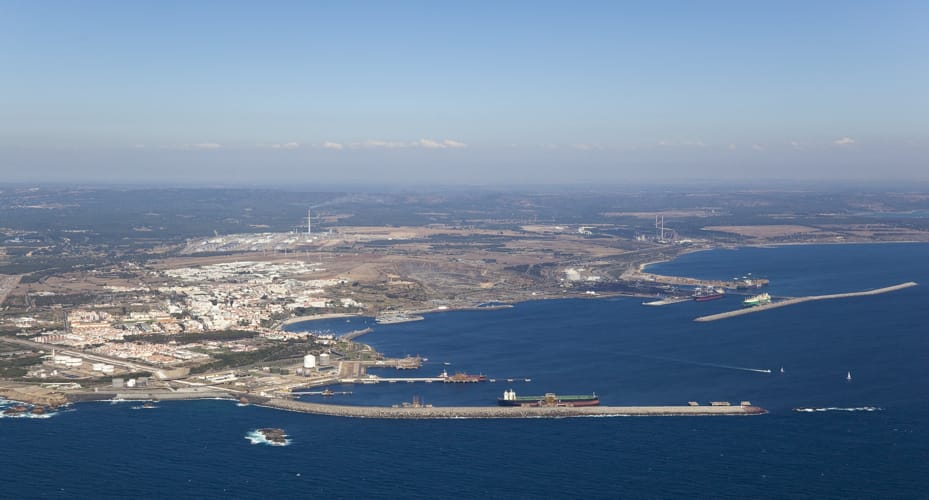
A new transatlantic internet cable owned by Google has been pulled ashore at Sines, on Portugal's southwest coast, giving the country its first direct fibre-optic link to the United States and, along the way, its first ever direct subsea connection to the Azores. The cable, named Nuvem — Portuguese for “cloud” — was moored at the Sines landing station this week in a joint operation with the Portuguese operator MEO, and is expected to enter service in 2027.
Nuvem is a roughly 6,900-kilometre system running from Myrtle Beach, in the US state of South Carolina, across the Atlantic to Bermuda, then to the island of São Miguel in the Azores, before making landfall at Sines. Google, which announced the project in 2024, describes it as the first cable system to connect the United States directly to both the Azores archipelago and mainland Portugal, knitting the mid-Atlantic islands into the global backbone rather than leaving them dependent on longer, indirect routes.
The engineering numbers are substantial. Each of the cable's fibre pairs is designed to carry around 24 terabits per second, and with 16 pairs in total the system is projected to reach an aggregate capacity of about 384 terabits per second — a very large pipe by the standards of existing Atlantic crossings. Google estimates the project will generate an economic impact of around €500 million for Portugal, and the government formally recognised the Sines landing as a project of “relevant public interest” in 2025, a status that smooths the permitting for the shore works.
For Sines, the arrival is another marker in the town's steady repositioning from an oil-and-container port into a digital gateway. The deep-water port already anchors ambitions for data centres and green-energy exports, and a cluster of subsea cables now converges on the same stretch of Alentejo coast. Landing a cable there means the traffic between North America and Europe can enter the continent through Portugal, rather than routing first through the traditional hubs in the United Kingdom, France or the Netherlands.
That is precisely the pitch Portugal has been making for several years. The country has courted cable operators aggressively, hosting a global submarine-cable summit in Cascais and winning €200 million of European Union backing for the “Atlantic Triangle” upgrade linking the mainland, the Azores and Madeira. Its national data-centre plan leans explicitly on subsea connectivity and cheap renewable power to lure the big technology companies, and MEO — Nuvem's landing partner — is separately set to operate a new “Brexit cable” connecting Galway to Lisbon, Ireland's first route to continental Europe that skips the UK.
The Azores angle is the one local officials keep returning to. A direct cable landing on São Miguel turns an ultra-peripheral Atlantic region — historically at the far end of every network — into a potential relay point on one of the world's busiest data corridors. Regional leaders have argued that digital infrastructure “ends the ultra-periphery,” opening the door to data centres, research facilities and jobs that do not depend on physical proximity to Lisbon or Brussels. Whether that promise materialises will depend on what gets built around the landing, not just the cable itself.
There is also a resilience dimension. Portugal's own recent history — from storm damage that severed fixed-line links to the pan-Iberian power blackout of April 2025 — has sharpened attention on how fragile critical infrastructure can be. Adding a high-capacity, independently routed path across the Atlantic gives European traffic another way around, reducing the reliance on a handful of chokepoints further north.
For now, the cable is ashore but not yet lit. The next steps are testing and integration before commercial traffic begins to flow in 2027. When it does, a share of the data moving between Europe and the Americas — the video calls, cloud services and streaming that underpin daily life — will pass through a landing station on the Portuguese coast, and through an archipelago in the middle of the ocean that has spent centuries defined by its distance from everywhere else.