Talks at the Health Ministry Close Without a Deal, and INEM's Technicians Keep Their 14 and 28 September Strikes
The union and INEM's board left Wednesday's meeting at the Health Ministry without agreement on the emergency fleet shake-up, so the 14 and 28 September stoppages stand. Rui Lazaro reports 'approximations' on both disputed measures and expects a counter-proposal within days.
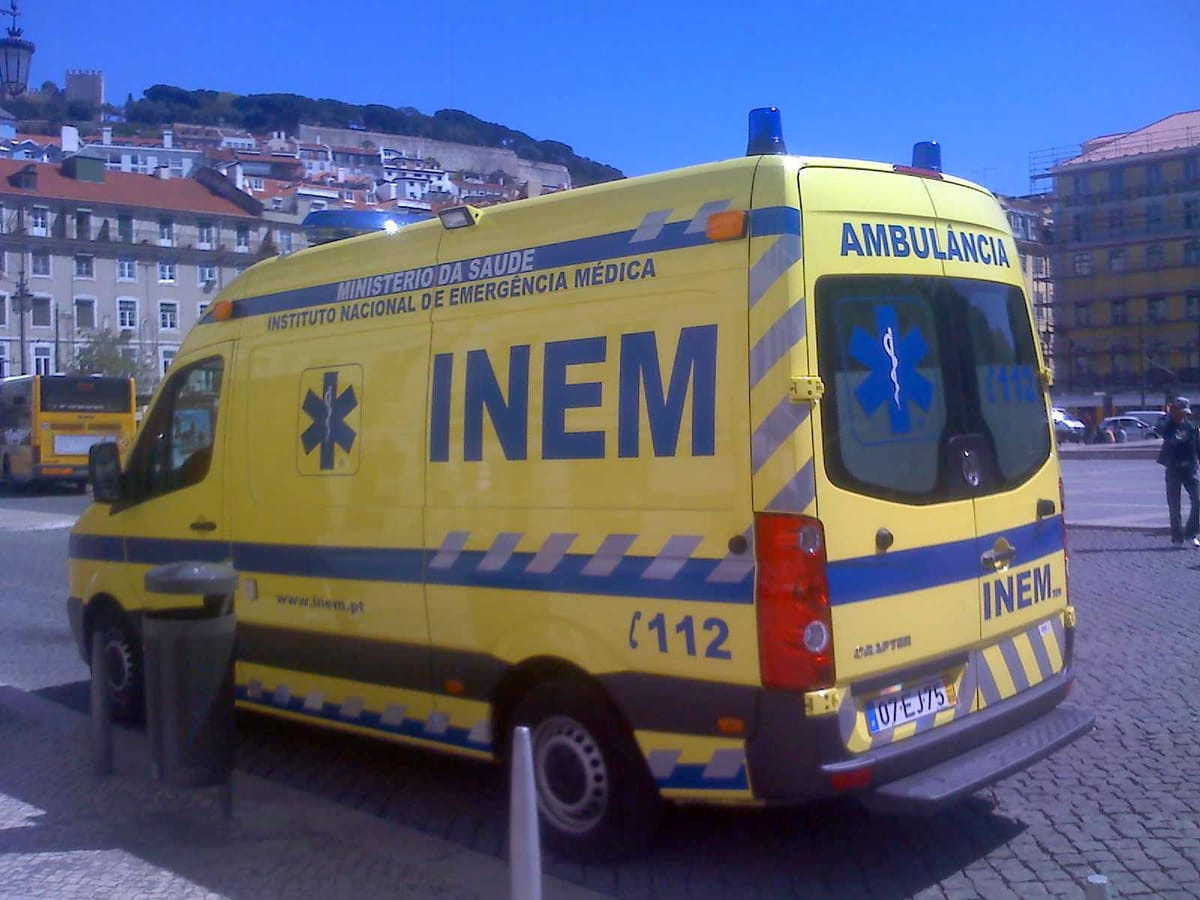
The meeting that was meant to settle it did not. Representatives of INEM's pre-hospital emergency technicians left the Ministry of Health on Wednesday evening without an agreement on the reorganisation of Portugal's emergency medical fleet, and the two strike days called for 14 and 28 September remain on the calendar.
"It was not possible to reach an agreement," Rui Lázaro, president of the Sindicato dos Técnicos de Emergência Pré-Hospitalar (Union of Pre-Hospital Emergency Technicians, STEPH), told reporters afterwards. The session brought the union together with INEM's board and was mediated by the Minister of Health, Ana Paula Martins, in person. We set out the terms the technicians carried into the room yesterday.
Where the two sides moved, and where they did not
Lázaro was notably less combative than the wording of the outcome suggests. He described "approximations" on both of the measures at the heart of the dispute: the reassignment of emergency ambulances to hospital transfer work, and the plan to convert the SIV immediate life support ambulances into lighter emergency response vehicles. He also said the meeting let the union explain the reasoning behind its demands, and let the government and INEM's board explain theirs.
"After all, as we suspected, we all want INEM to keep providing the response and to come out of this stronger," he said. What has not closed is the gap on the shape of the fleet itself. The reorganisation, as set out by INEM's board, moves management of 54 emergency ambulances to the Unidades Locais de Saúde (Local Health Units) and converts 46 SIV ambulances into light vehicles, so that the crew travels in a car rather than in the ambulance. Those are the measures the union has called a dismantling since the plan first surfaced in July.
A counter-proposal is now the deciding document
The negotiation is not over. Lázaro said the union expects to receive a counter-proposal from the government and INEM's president in the coming days, which the workers will then assess. Until that happens, the strike stands: "For now, the strike remains scheduled."
He was equally clear that calling it off is available. If the counter-proposal "can be accepted", and if it guarantees that INEM's response is not undermined and instead comes out reinforced, the union would have "every pleasure in cancelling the strike".
That is a meaningfully different posture from the one the union took earlier this month, when the strikes were called and the position was that only a written government retreat would do. The distance between "retreat in writing" and "a counter-proposal we can accept" is the space in which the next two weeks will be fought.
What This Means for Expats
- Two dates to note: 14 and 28 September, both Mondays. Neither is cancelled yet, and a decision may not come until close to the first one.
- 112 still answers on strike days: minimum services apply to emergency medical cover in Portugal, so the line operates and life-threatening calls are attended. What can stretch is response time for lower-priority calls.
- Know what you are calling: if you are unsure whether a situation is an emergency, SNS 24 on 808 24 24 24 offers clinical triage in Portuguese and English and can route you correctly. Our guide to medical emergencies covers the triage colours and when an urgência visit is free.
- The underlying change outlasts the strike: whatever happens in September, moving 54 ambulances to local health units changes who dispatches them. For residents in inland councils with thin cover, that is the detail worth following, not the picket.
- Plan around Mondays if you have scheduled care: non-urgent hospital transfers are exactly the category most exposed on a strike day.
The next signal is the counter-proposal. If it lands and the union takes it to its members, a cancellation could come quickly. If it does not land, or lands unchanged, the first stoppage arrives in under three weeks. On the parliamentary side of the INEM story, our report on parliament suspending the clock on its own INEM committee of inquiry until 30 November because the documents it asked for have not arrived sets the latest reference.