INEM's Pre-Hospital Technicians Call Two September Strikes Over an Ambulance Shake-Up They Brand a Dismantling
The STEPH union has called strikes for 14 and 28 September over a reorganisation that would move 54 ambulances to local health units and convert 46 life-support vehicles into cars that cannot carry patients — cutting roughly 100 ambulances from front-line response. The union calls it a dismantling o
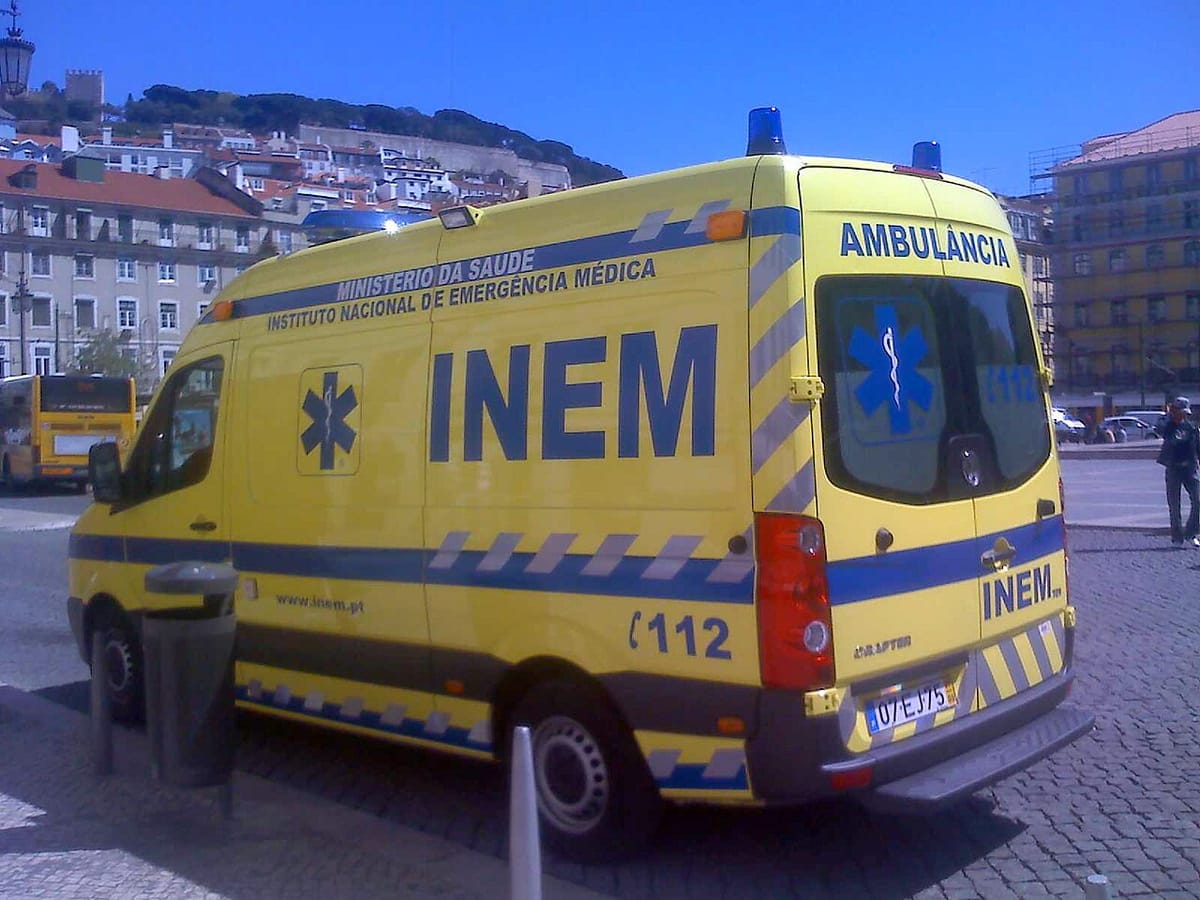
Portugal's pre-hospital emergency technicians will walk out twice next month, in an escalating fight over a reorganisation they say will strip the country's ambulance network of roughly a hundred vehicles. The dispute pits the people who staff Portugal's emergency response against the very institution meant to run it.
Two days of stoppages
The STEPH (Sindicato dos Técnicos de Emergência Pré-Hospitalar — Union of Pre-Hospital Emergency Technicians) has called strikes for 14 and 28 September. The union represents the technicians who crew the ambulances of INEM (Instituto Nacional de Emergência Médica — National Institute for Medical Emergency), the body that answers 112 medical calls and coordinates emergency care across the country. The union says it will honour any minimum-service levels imposed for the strike days.
What the technicians are protesting
At the centre of the row is a restructuring that moves ambulances out of INEM's direct control. Under the plan, 54 emergency ambulances would be transferred to the ULS (Unidades Locais de Saúde — Local Health Units) and restricted to inter-hospital transfers, while 46 immediate-life-support vehicles would be converted into lighter emergency cars with no capacity to transport patients.
STEPH's arithmetic is stark: taken together, the changes remove around 100 ambulances from front-line emergency response. The union calls it a "desmantelamento do INEM" — a dismantling of the institute — and warns it will erode the system's ability to reach patients quickly at the very moment demand is rising.
A direct call for the president to go
The union's president, Rui Lázaro, has aimed his fire squarely at INEM's leadership. He accuses the institute's president, Luís Cabral, of failing to engage with union representatives and of breaking commitments made by the government. Lázaro has gone as far as to demand Cabral's resignation, saying the director should step down "before it starts costing more lives."
The union has left a door open: it says it is willing to call off the strikes if the government reverses the reorganisation. That framing turns September's stoppages into a deadline as much as a protest — a test of whether the health ministry will defend the restructuring or step back from it.
A pattern of friction
The clash does not come out of nowhere. INEM's plan to shift ambulances to the local health units has been building for weeks, and the institute has been through a turbulent stretch — from a new operating charter that introduced AI-assisted triage and a non-doctor board to the fallout from a fatal helicopter accident earlier in the summer. The September strikes turn a simmering institutional argument into a public one, with emergency cover as the stake.
What This Means for Expats
- Emergency cover on strike days: If you need urgent help on 14 or 28 September, the 112 line still operates, but response times could be affected. Minimum services are legally guaranteed — know the basics of how 112, INEM and the SNS 24 line work before you need them.
- A system under strain: The fight over ambulances is part of a wider debate about the resilience of Portugal's public health service, from staffing to infrastructure.
- Watch the government's move: Whether the ministry reverses the reorganisation will signal how much weight front-line unions still carry in health policy.
For residents, the practical takeaway is simple: two September dates to keep in mind, and a reminder that the machinery behind an emergency call is itself under considerable pressure. On the parliamentary side of the INEM story, our report on parliament suspending the clock on its own INEM committee of inquiry until 30 November because the documents it asked for have not arrived sets the latest reference.