Constitutional Court Rejects the Civil Code Rule That Voids Gifts to a Married Person's Lover, in a Case From Gaia
Ruling 589/2026 finds that Article 2196 of the Civil Code, applied to gifts, breaches the rights to personal development and privacy. A 1985 gift of land to a man's partner stands, but the rule stays in the Code for now.
A rule in Portugal's Civil Code that makes any gift from a married person to the person they had an affair with automatically void breaches the Constitution, the Tribunal Constitucional (Constitutional Court) has ruled. Acórdão (ruling) n.º 589/2026 was decided on 15 June and published in the Diário da República (official gazette) on Monday, 28 September.
The rule is Article 2196(1) of the Civil Code: "a disposition in favour of the person with whom the married testator committed adultery is void". It was written for wills, and Article 953 extends it to gifts made during the donor's lifetime.
The case
The dispute began in the local civil court of Vila Nova de Gaia. A married man began an affair in 1976 or 1977; a daughter was born of it in 1983, and in 1985 he gave the girl's mother half the usufruct (the right to use and draw income from) of two plots of land. His marriage was only dissolved in 2006. His daughter from the marriage sued to have the gift declared void.
The Code's exception for spouses separated in fact for more than six years did not help: the Gaia court counted the six years from the date of the gift. On that reading the gift was void, but on 6 December 2024 the court refused to apply the rule, finding it unconstitutional. That refusal made an appeal by the Ministério Público (Public Prosecutor's Office) compulsory, although the prosecutor also argued that the rule is unconstitutional.
What the court decided
The court agreed with the Gaia judge, but on different grounds. Where the trial court relied on the right to property, the Constitutional Court relied on Article 26(1) of the Constitution, which protects personal development and the privacy of private and family life, read with Article 18(2), which allows a right to be restricted only as far as necessary.
The rule, the ruling says, punishes the recipient rather than the donor, is triggered by the donor's intimate life, and sanctions adultery, "a conduct that was decriminalised long ago". The law already has less drastic tools: annulment within a time limit; reducing gifts that eat into the share reserved by law for close heirs such as the spouse; voiding a gift that is itself the price of the affair, as contrary to public order; and civil damages. With those available, a total ban defined by who receives the gift is unnecessary and excessive.
In 2000 the court had upheld the same combination of articles (Acórdão 425/2000). The new ruling says that case really concerned the six-year exception and predates 25 years of deep change in family law.
Judge João Carlos Loureiro agreed with the outcome but not with much of the reasoning. In his view fidelity is still a basic duty of marriage and the rule's aims are legitimate; what is excessive is automatic nullity, when annulment with a time limit would serve the same ends.
What changes, and what does not
The ruling settles this case: the court dismissed the appeal, so the gift stands. It does not remove Article 2196 from the Civil Code, which still covers wills as well as gifts. Under Article 281(3) of the Constitution, the court can strike a rule down with general binding force only once it has found it unconstitutional in three concrete cases. Until that happens, or Parliament changes the Code, other courts are not bound by this ruling, although anyone contesting such a gift can now cite it.
For the share the law reserves for close family, see our guide to making a will and handling an inheritance in Portugal.
Sources: Tribunal Constitucional, Acórdão n.º 589/2026, case 427/2025, second section (full text, Portuguese only), and its extract in the Diário da República, 2nd series, n.º 188, 28 September 2026; Constitution of the Portuguese Republic, Articles 18, 26 and 281, on parlamento.pt.
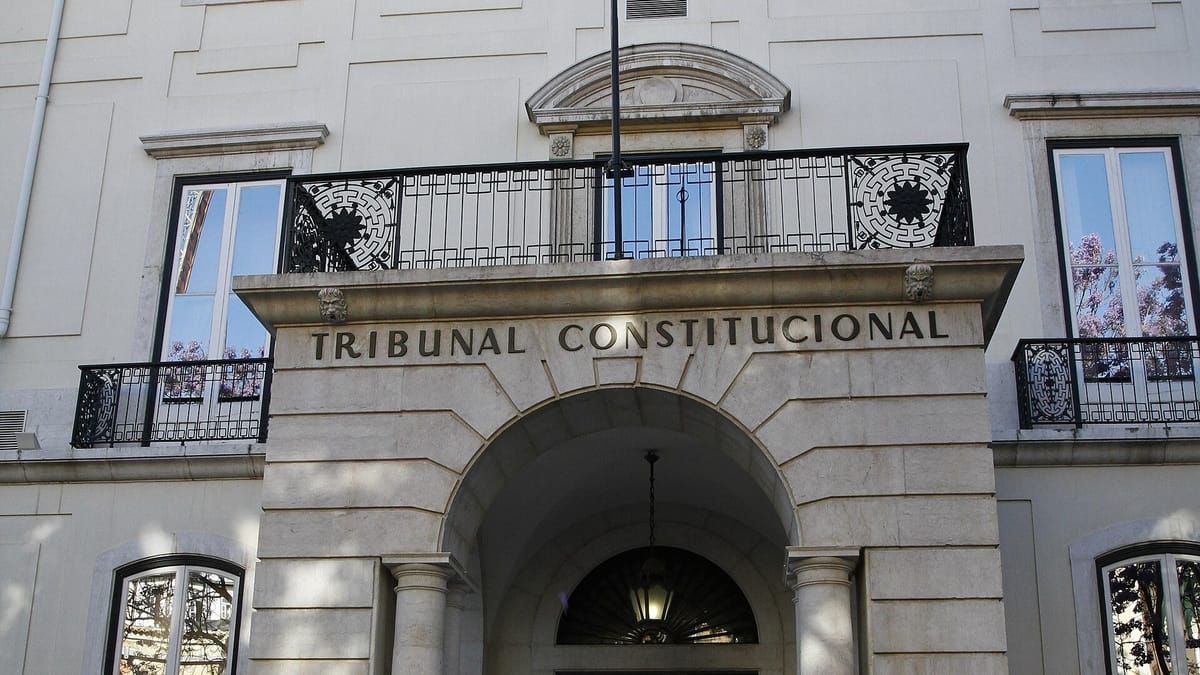
Feature image: the entrance of the Constitutional Court in Lisbon. Photo by Cruks (CC BY-SA 4.0), via Wikimedia Commons.