Medical Emergencies in Portugal in 2026 — A Practical Guide to 112, INEM, the SNS 24 Line, the Manchester Triage Colours and When an Urgencia Visit Is Free
When something goes wrong, knowing whether to dial 112, call the SNS 24 line, or go straight to an urgencia can change the outcome. A practical guide to Portugal's emergency-medicine system, the Manchester triage colours, and what a hospital visit actually costs.
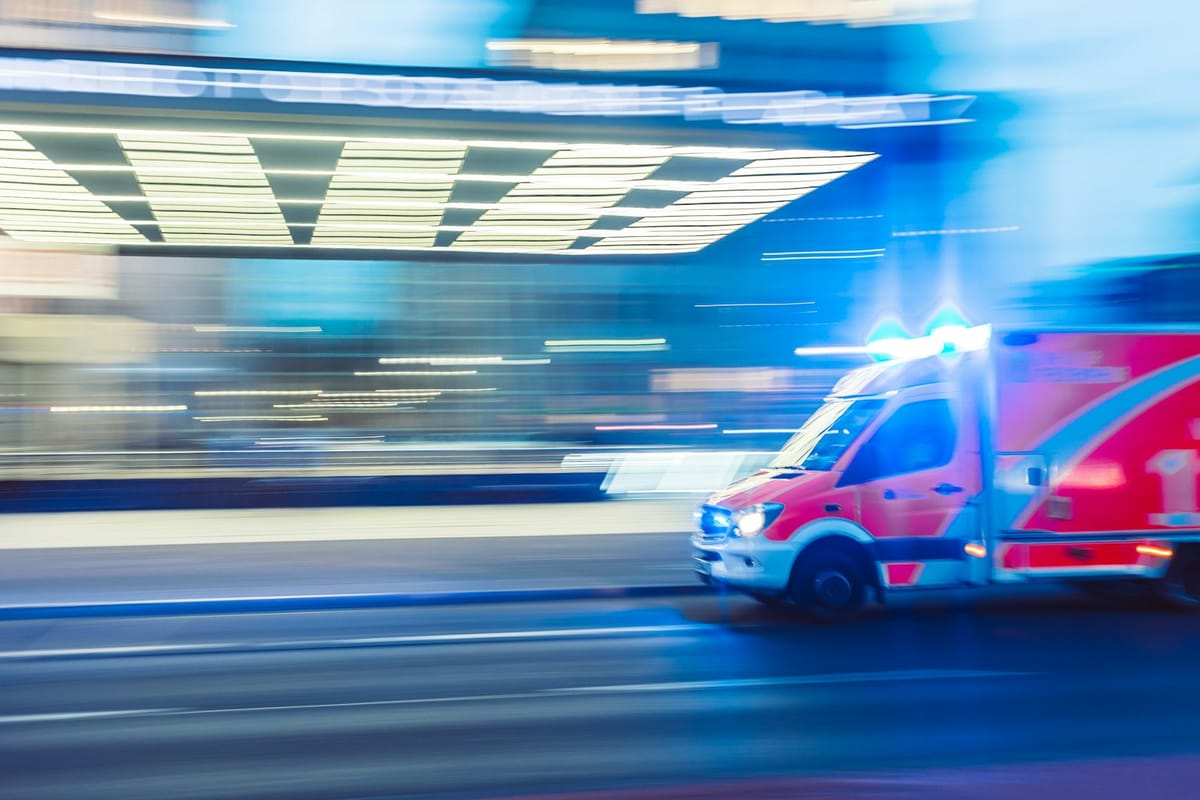
Nobody plans a medical emergency, but in a new country it pays to know the system before you need it. Portugal's emergency-medicine network is well organised once you understand its parts — a single emergency number, a national medical-emergency institute, a 24-hour health line, and a colour-coded triage system that decides how fast you are seen. This guide walks through who to call, what happens next, and what it costs, so that in a crisis you are reacting from knowledge rather than panic.
The three numbers that matter
Almost everything starts with one of three contacts:
- 112 — the European emergency number. This is the one to dial for any genuine, time-critical emergency: a suspected heart attack or stroke, serious accident, difficulty breathing, heavy bleeding, loss of consciousness, or any situation where a life may be at risk. It is free, works from any phone with or without credit, and covers medical, fire and police emergencies. Operators can route you to medical dispatch and many handle English.
- INEM — the national medical-emergency institute. You do not call INEM (Instituto Nacional de Emergência Médica) directly. When you dial 112 with a medical emergency, the call is passed to INEM's CODU (Centro de Orientação de Doentes Urgentes, the urgent-patient coordination centre), which triages your call by phone and dispatches the right resource.
- SNS 24 — the health advice line, on 808 24 24 24. This is the number for everything that is worrying but not immediately life-threatening: a high fever, a nasty but stable injury, a sick child overnight, uncertainty about whether to go to hospital. Nurses assess your symptoms, give advice, and — importantly — can refer you to the right level of care. As we explain below, getting a referral from SNS 24 before going to hospital can also save you money.
112 or SNS 24? How to choose
The rule of thumb: if a life or limb is in immediate danger, dial 112. If you are unsure, frightened, or simply need guidance on where to go, call SNS 24 first. The line exists precisely to keep emergency departments for true emergencies and to direct everyone else to a centro de saúde (health centre), an out-of-hours service, or a pharmacy. Using it well is not just good citizenship — it usually means faster, cheaper and more appropriate care for you.
What happens when you call 112
Once a medical call reaches INEM's CODU, a clinician decides what to send. Portugal fields a tiered fleet of emergency vehicles:
- SBV (Suporte Básico de Vida) ambulances, crewed by technicians trained in basic life support, for the majority of calls.
- SIV (Suporte Imediato de Vida) ambulances, with a nurse on board and more advanced equipment.
- VMER (Viatura Médica de Emergência e Reanimação), a rapid-response car carrying a doctor and a nurse for the most serious cases.
- Emergency-medicine motorcycles in dense urban areas, and medical helicopters for remote locations or time-critical transfers.
The dispatcher stays on the line, may give you instructions — how to perform CPR, control bleeding or position the patient — and tells you which hospital you are likely heading to. Keep your phone free, your door accessible, and someone ready to flag the ambulance down.
The hospital urgencia and the Manchester triage colours
Hospital emergency departments in Portugal are called serviços de urgência. On arrival you are assessed using the Manchester Triage System, which assigns a colour band according to clinical urgency — not order of arrival. The bands, with their broad target times to first medical assessment, are:
- Vermelho (red) — Emergent: immediate. Life-threatening; seen at once.
- Laranja (orange) — Very urgent: around 10 minutes.
- Amarelo (yellow) — Urgent: around 60 minutes.
- Verde (green) — Standard: around 120 minutes.
- Azul (blue) — Non-urgent: around 240 minutes.
This is why a person who arrives after you may be seen first: a chest pain bumped to orange jumps a sprained ankle triaged green. If you are given a green or blue band, expect a long wait — and consider whether a health centre or SNS 24 would have served you better. The colour is not a judgement of how much your problem matters; it is a clinical sorting tool to make sure the sickest are treated first.
Urgencia versus emergencia
Portuguese distinguishes between emergência — an immediate threat to life requiring instant intervention — and urgência, a serious situation that needs prompt but not split-second care. The hospital department handles both, but the triage colour is what determines how the distinction plays out in your wait. Understanding it helps set expectations: a true emergência moves fast; an urgência graded green will not.
What it costs — and how to pay nothing
Here is one of the most useful things a resident can know. Since June 2022, user co-payments (taxas moderadoras) were abolished across almost the entire Serviço Nacional de Saúde (SNS, the national health service) — GP visits, specialist appointments and exams are free at the point of use. The one significant exception is the hospital emergency department: a taxa moderadora can still apply when you turn up at an urgência without a referral and are not subsequently admitted.
The practical takeaway is powerful: if you call SNS 24 (or your médico de família) first and they refer you to the emergency department, the co-payment does not apply. Walk in off the street for a non-urgent problem and you may be charged — broadly in the region of 14 to 20 euros depending on the type of emergency department — if you are sent home rather than admitted. Many people are exempt from taxas moderadoras altogether, including children under 18, pregnant women and new mothers, and people on low incomes or with certain chronic conditions. To get into the system in the first place, you will need a número de utente — see our guide to registering with the SNS as a foreign resident.
Two further points on cost. Treatment at a private hospital emergency department is not covered by the SNS and is billed in full unless you have private health insurance; check what your policy covers for emergencies. And EU and EEA visitors can use public emergency care on the same terms as residents by presenting a European Health Insurance Card (Cartão Europeu de Seguro de Doença); non-EU visitors should carry travel insurance.
Pharmacies, poison control and after-hours help
Not every problem needs a hospital. A farmácia de serviço (duty pharmacy) operates on a rotation so that one is always open out of hours in each area; pharmacists can manage minor ailments and advise whether you need further care. SNS 24 can point you to the nearest one, and our guide to pharmacies in Portugal explains the duty rotation and the paperless-prescription system. For poisoning — a child swallowing something, a medication mix-up, a suspected overdose — the CIAV (Centro de Informação Antivenenos, the poison information centre) runs a dedicated line on 800 250 250. SNS 24 also offers a mental-health option for psychological crises.
Recognise the big three: heart, stroke, choking
For a few conditions, speed changes everything — dial 112 immediately:
- Heart attack: central chest pain or pressure, possibly spreading to arm or jaw, with sweating, nausea or breathlessness.
- Stroke: use the FAST check — Face drooping, Arm weakness, Speech difficulty, Time to call. Even if symptoms pass, get help.
- Choking or anaphylaxis: inability to breathe, swelling of the face or throat, sudden widespread rash after a sting, food or medicine. If you carry an adrenaline auto-injector, use it and still call 112.
What this means for you
- If you are new and have no médico de família yet: save 112 and 808 24 24 24 in your phone now. SNS 24 is your front door until you are assigned a family doctor.
- Families with children: learn your nearest paediatric urgência, keep each child's número de utente handy, and remember children are typically exempt from co-payments. For pregnancy and newborn emergencies, see our guide to having a baby in Portugal.
- Retirees and those with chronic conditions: keep an up-to-date list of your medications and diagnoses in your wallet and on your phone; it speeds triage enormously. Check whether your condition qualifies you for a taxa moderadora exemption.
- Tourists and short-stay visitors: carry your EHIC (if EU/EEA) or travel insurance details. Public emergency care will treat you; payment terms depend on your cover.
- Non-EU residents: register with the SNS as soon as you are eligible so you have a número de utente — it is the key that unlocks subsidised emergency care.
Spend ten minutes today doing the boring preparation: programme 112 and 808 24 24 24 into every phone in the household, find your nearest emergency department and duty pharmacy, and make sure everyone knows that calling SNS 24 first is usually the smartest move. In an emergency, that small head start is the difference between scrambling and acting.