Registering with the SNS in Portugal
Getting your health service user number (número de utente) and joining a local health centre (centro de saúde).
Last verified: September 2026.
Who this is for
- You live in Portugal, have a NIF (tax number), and want to sign up with the public health service.
- You hold an EU registration certificate, or a non-EU residence permit or the receipt for one.
- You have a health number but no family doctor, or your record is marked incomplete.
Not for you if: You want to know how the public and private systems fit together, what care costs, or how insurance works: read "Healthcare in Portugal".
Updated September 2026. New registration rules under Despacho 14830/2024 and Despacho 3118/2026 set out exactly what data your record needs, a single-visit service now issues the NIF, NISS, and health number together for foreign residents, and the co-payment section has been corrected: since June 2022 the only remaining fee is for unreferred hospital emergency visits.
Your SNS user number is the nine-digit number that identifies you in Portugal's public health service. Every legal resident, EU or not, can have one, and without it you cannot join a health centre, get a family doctor, or collect a subsidised prescription. Registration is free and is done in person at the health centre that covers your address. It takes 15 to 30 minutes at the desk, and the number is issued on the spot. This guide is the step-by-step version: what to bring, where to go, and what happens next.
What the número de utente is
The número de utente (health user number, formally the Número Nacional de Utente or NNU) is a nine-digit number that identifies you in the Serviço Nacional de Saúde (SNS, the National Health Service). It lives in the Registo Nacional de Utentes (RNU, the National Register of Users), a database run by the ACSS (Administração Central do Sistema de Saúde, the central health administration).
The number is permanent, national, and free. It is assigned once and never changes, even if you move to the other end of the country. Without it you cannot be enrolled at a centro de saúde (health centre), be put on the list for a médico de família (family doctor), collect a subsidised prescription at a pharmacy, or use the SNS 24 app.
Portuguese citizens get the number automatically. It is printed on the back of the Cartão de Cidadão (citizen card). Foreign residents have to ask for it, because the Título de Residência (residence permit) issued by AIMA does not carry it.
One important distinction. Having a number is not the same as having full cover. Your RNU record has a status:
| Status | What it means |
|---|---|
| Registo atualizado (updated record) | All required data is on file, including a valid residence document. The SNS pays for your care. You can enrol at a centro de saúde and join the family doctor list. |
| Registo em curso (record in progress) | Something is missing. You have 180 days to complete it. Care is billed to you or a third party in the meantime, with legal exceptions (see below). |
| Registo incompleto (incomplete record) | The 180 days ran out. You keep the number but cannot enrol in primary care until you complete the data. |
Your goal on the first visit is a registo atualizado. That is what the document list below is designed to achieve.
Who can register
Under the Lei de Bases da Saúde (Lei 95/2019) and the Estatuto do SNS (Decreto-Lei 52/2022), the SNS covers everyone legally living in Portugal, whatever their nationality:
- Portuguese citizens (automatic).
- EU, EEA, and Swiss citizens living here, whether working, studying, retired, or self-sufficient.
- Non-EU citizens holding a residence permit of any type (D7, D8, D2, work, study, family reunification, CPLP permit, and so on), or who have applied for one and hold the AIMA receipt.
- Applicants for and beneficiaries of international protection.
- EU pensioners and posted workers covered by an S1 form from their home country.
Children under 18 are treated more generously. A minor needs neither a residence permit nor a NIF to get a registo atualizado, and gets a 90-day grace period after turning 18 to produce them.
People without a residence permit who have lived in Portugal for more than 90 days can still get a number and receive urgent care, plus maternal and child health, vaccination, and a few other services at SNS expense, by presenting an atestado de residência (residence certificate) from their junta de freguesia (parish council). This is the route set out in Despacho 25360/2001 and kept in the current RNU regulation.
Tourists and short-stay visitors do not register. EU visitors use the EHIC (European Health Insurance Card, CESD in Portuguese) for medically necessary care. Everyone else pays or uses travel insurance.
Before you go: the documents to gather
The RNU regulation lists the data a foreign resident's record must contain: name, sex, date of birth, nationality, country of birth, identity document type and number, NIF, full Portuguese address, and a valid residence document. That list translates into the following folder.
| Document | What is accepted | Notes |
|---|---|---|
| Identity | Passport or national ID card (EU citizens), Título de Residência, or Cartão de Cidadão | Original plus a photocopy saves time |
| NIF (tax number) | The NIF certificate or any Finanças document showing it | No NIF, no registo atualizado (except for minors). Get the NIF first. |
| Residence document | Título de Residência from AIMA; Certificado de Registo de Cidadão da União Europeia (CRUE) from the câmara municipal for EU citizens; the AIMA receipt showing a pending application; or an atestado from the junta de freguesia for the 90-day route | Required for a full record; not required for under-18s |
| Proof of address | Rental contract, comodato (loan-for-use) agreement, a water, electricity, or gas bill, or the residence document if it shows your address | The address sets which centro de saúde you belong to |
| S1 form (EU pensioners and some workers only) | The S1 issued by your home social security | Register it with Segurança Social first (see below) |
| Vaccination record (children, optional) | Your home-country vaccination book | The centre transcribes it into the Portuguese schedule |
NISS (social security number) is not on the mandatory list for the health record. Bring it if you have it, but you should not be turned away for lacking it.
A note on the CRUE for EU citizens: you apply for it at your câmara municipal within 30 days after completing three months of residence in Portugal, under Lei 37/2006. If you are still inside your first three months, your passport or ID card plus proof of address is what you have, and you may be given a registo em curso until the CRUE arrives.
A note on the atestado de residência: the junta de freguesia issues it on the spot in most parishes, usually with two witnesses who are registered voters in the parish. Fees vary by junta and are small. It is the standard bridge for people who have a home but no bill or registered lease in their name yet.
Where to go
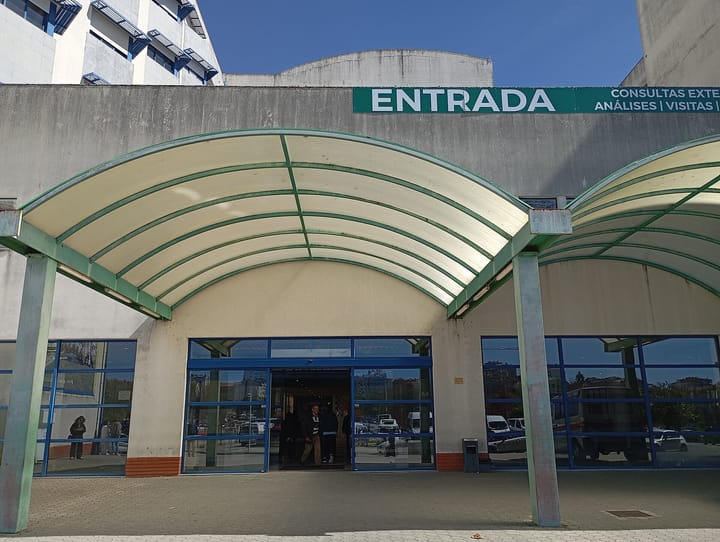
You register at the centro de saúde that covers your address. Since 2024, primary care is organised under Unidades Locais de Saúde (ULS, Local Health Units), which group the hospitals and health centres of an area. Inside each ULS, the health centres are still grouped in ACES (Agrupamentos de Centros de Saúde), and each centre runs one or more family health teams, either a USF (Unidade de Saúde Familiar) or a UCSP (Unidade de Cuidados de Saúde Personalizados). You do not choose between these; your address does.
To find your centre:
- Use the health unit locator on the SNS 24 portal (sns24.gov.pt).
- Call SNS 24 on 808 24 24 24 (24 hours, English available) and ask which centre serves your postcode.
- Ask at your junta de freguesia, which knows the local catchment map.
Most centres open 08:00 to 20:00 on weekdays. Some larger ones have Saturday morning hours. Check the hours of your unit before you go, and go early in the day. No appointment is needed for registration.
Step by step: registering at the centro de saúde
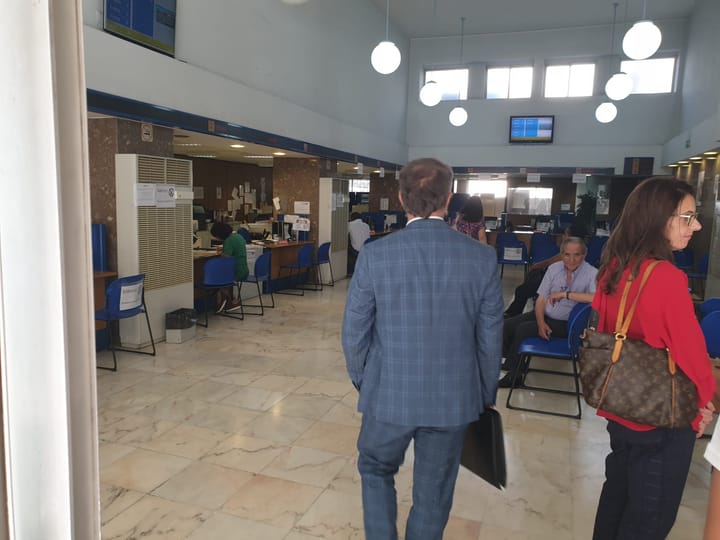
- Go to the reception desk (the secretariado or balcão de atendimento) during opening hours. Say "Gostaria de me inscrever" (I would like to register) or ask for "inscrição como utente do SNS."
- Hand over your documents. Staff will scan or photocopy them and enter your data into the RNU.
- Give a Portuguese mobile number and an email address. The SNS uses these to contact you if anything is missing, and the SNS 24 app uses the mobile number for prescription codes.
- The número de utente is issued on the spot. Ask for it in writing (a printout or a note). There is no physical card any more for foreign residents; the number itself is what you need.
- Ask to be enrolled in the centre's primary care list ("inscrição nos cuidados de saúde primários"). This is a separate step from getting the number, and it is what puts you in the queue for a family doctor.
- Ask whether a médico de família is available. If yes, you will be told the name of the doctor and the team. If not, you go on the waiting list and are told how to be seen in the meantime.
- Confirm your record is a registo atualizado before you leave. If staff say something is missing, ask exactly what, and note the 180-day deadline.
The whole thing takes 15 to 30 minutes at the desk, plus whatever queue there is. It costs nothing.
If your record is "em curso"
The SNS will contact you by phone at registration and again 90 days later if data is still missing. After 180 days the record becomes incompleto. You can complete it at any time by taking the missing document to any SNS health centre or hospital, or by updating your details in the SNS 24 portal or app. Do not let it drift: an incomplete record cannot be enrolled in primary care, and the vacancy on the family doctor list goes to someone else.
The alternative route: NIF, NISS, and número de utente in one visit
Since March 2025, foreign residents in a regular situation can request all three identification numbers in one go through the "números de identificação para estrangeiros" service run by AIMA. It is open to anyone who has applied for or holds a residence permit, EU citizens, and applicants for or beneficiaries of international protection.
The request is made in person at selected Espaços Cidadão (citizen service desks; the gov.pt service page currently lists twelve, in cities including Lisboa, Porto, Braga, Cascais, Faro, Lagos, Olhão, Setúbal, Loures, and Oeiras), or online through the gov.pt reserved area if you already hold an active Chave Móvel Digital (CMD, the digital mobile key). You need your passport. The numbers arrive by email and can be consulted later at area-reservada.digital.gov.pt or in the gov.pt app.
Two cautions. First, this route gives you the number, but it does not enrol you at a centro de saúde or put you on a family doctor list. You still need to go to your health centre (step 5 above) with proof of address. Second, the list of participating Espaços Cidadão is expanding; check gov.pt for the current one before travelling.
Apart from this service, there is no general online form for foreign residents to request a número de utente. The gov.pt service page for health centre registration says plainly that you register at the centre and get the number there if you do not have one.
Special cases
EU pensioners and workers with an S1 form
If your home country's social security pays for your healthcare (state pensioners, posted workers, and some cross-border workers under EU Regulation 883/2004, plus UK pensioners covered by the Withdrawal Agreement), get the S1 form from your home authority before you move. In Portugal, register the S1 at a Segurança Social office first, then take your S1, passport, residence document, and NIF to your centro de saúde. You are then treated exactly like a Portuguese-resident utente, with the same co-payment rules.
CPLP citizens
Holders of the CPLP residence permit, and Brazilian and other CPLP citizens holding any other AIMA residence title, register on the same terms as any other third-country resident. The AIMA receipt for a pending application is accepted as the residence document while you wait for the card.
People with a chronic condition or ongoing prescriptions
Register first, then book a first consultation (see below) and bring your home-country prescriptions, recent test results, and any imaging. The family doctor or duty doctor converts the regimen into a Portuguese prescription. Specialist referrals within the SNS go through this doctor.
Living away from your registered address for a while
If you spend up to 12 months elsewhere in Portugal for work or study, you can ask for a temporary enrolment at the centre where you are staying. Your home enrolment is suspended, not lost.
What if there is no family doctor?
This is the most common disappointment, so plan for it. On 24 August 2026 the ACSS reported 1,364,561 people enrolled in primary care but waiting for a family doctor, out of 10,769,099 enrolled. Coverage is 98 percent in the North, 83 percent in the Alentejo, 80 percent in the Algarve, and 74 percent in Lisboa and Vale do Tejo. If you are registering in Porto, Braga, or most of the North, the odds are good. In Lisbon, Setúbal, and the Algarve, expect a wait that may run to months.
Being on the waiting list does not stop you being seen. You can:
- Book a consulta aberta or consulta de recurso (open or duty consultation) at your centre. You see whichever doctor is on duty that day.
- Use the centre's serviço de atendimento complementar (extended-hours urgent service) for same-day problems, where the centre has one.
- Call SNS 24 on 808 24 24 24 for triage and advice. If SNS 24 or the centre sends you to a hospital emergency department, you pay no fee.
- Renew chronic prescriptions through the SNS 24 app.
Priority on the list goes to family groups, pregnant women, people with several chronic conditions, and families with children under 12 (Despacho 40/2025, as amended). Once you are assigned a doctor, the assignment lasts until you move catchment.
One new rule to know: under Despacho 3118/2026, a person with an assigned family doctor who has had no contact with any SNS service for more than five years can be removed from that doctor's list so the place goes to someone waiting. You keep your number and your enrolment; you just go back on the waiting list. Any SNS contact in five years (a consultation, a hospital visit, a vaccination) resets the clock.
Costs: registration and co-payments
Registration is free. Enrolment is free. The family doctor list is free.
Taxas moderadoras (co-payments) were largely abolished from 1 June 2022 under Decreto-Lei 37/2022. Family doctor consultations, prescribed tests and imaging, hospital outpatient consultations, surgery, and hospital admission carry no fee. The only remaining charge is a hospital emergency department visit where you turned up without a referral from your centro de saúde, from SNS 24, or from INEM, and were not admitted.
| Hospital emergency without referral | Fee |
|---|---|
| Urgência básica (basic emergency service) | €14.00 |
| Urgência médico-cirúrgica (medical-surgical) | €16.00 |
| Urgência polivalente (polyvalent, the large hospitals) | €18.00 |
| Cap per visit including any tests done there | €40.00 |
You pay nothing if SNS 24 or your centre referred you, or if you were admitted. The practical rule: call 808 24 24 24 before going to a hospital emergency department unless it is clearly life-threatening.
Exemptions from even this fee cover pregnant women, everyone under 18, people with a disability of 60 percent or more, blood and organ donors, transplant recipients, firefighters, asylum seekers and refugees, cancer patients from diagnosis, and households in insuficiência económica (economic hardship). In 2026 that means average monthly household income per person at or below 1.5 times the IAS, that is €805.70 (IAS 2026: €537.13). The hardship exemption is not automatic: request it at the centre or in the SNS 24 portal ("pedir isenção de taxas moderadoras"), Finanças checks your income, and it is reassessed every year on 30 September.
Prescription medicines are a separate matter. The state pays a percentage of the price of subsidised medicines (comparticipação), and you pay the rest at the pharmacy. That percentage depends on the medicine, not on your registration.
Common problems and how to fix them
"We need a utility bill, not the atestado." The RNU regulation accepts the residence permit, a rental contract, a comodato, or a utility bill as proof of address, and the atestado from the junta for the 90-day route. If the desk refuses a document the regulation accepts, ask calmly to speak to the head of the unit, and if that fails, use the complaint routes below.
"Come back when you have the residence card." The AIMA receipt for a pending application is an accepted residence document. Under-18s need no residence document at all. If you are told otherwise, point to the RNU regulation (Regulamento do Registo Nacional de Utentes, ACSS, March 2025) or ask the ERS.
No NIF yet. Get it first. Finanças issues it at any Serviço de Finanças, and foreign residents can get it together with the NISS and health number at the Espaços Cidadão service above.
Language. Staff at centres in the interior and smaller towns may speak little English. SNS 24 has English-speaking nurses 24 hours a day; call them from the desk if you get stuck, or bring a Portuguese-speaking friend for the first visit.
Nobody called about my missing data. Do not wait. Take the document to any SNS unit or upload it in the SNS 24 portal. The 180-day clock runs regardless.
Wrong address on record after a move. Go to the new centre with proof of the new address and ask to transfer ("Gostaria de transferir a minha inscrição"). Records move electronically. You can only be enrolled at one centre at a time.
Complaints. In order: the director of the centro de saúde; the ERS (Entidade Reguladora da Saúde, the health regulator) at ers.pt, which handles patient complaints about public and private providers; or the Livro de Reclamações at livroreclamacoes.pt, which routes health complaints to the ERS.
After you are done
- Write the number down. Store it with your NIF and NISS. You will be asked for it at every pharmacy and every consultation.
- Set up the SNS 24 app the same day (iOS and Android). Log in with Chave Móvel Digital or with your número de utente plus a password. The app shows your digital user card, active prescriptions, test results, vaccination record, and your enrolment details, and it is where you renew chronic prescriptions and request exemptions. Activate the CMD if you have not already; it is worth it for this alone.
- Book a first consultation within the first couple of months, through the app, by phone to the centre, or at the desk. It opens your clinical file and, if you have a doctor, starts the relationship.
- Keep your data current. Update your address and phone number in the app or at the desk whenever they change. A stale phone number is how records end up incompleto.
- Keep proof. The printout with your number and the enrolment confirmation are useful later if you apply for an EHIC from Portugal, move between centres, or take out private insurance.
Sources
- gov.pt, Inscrever-se no centro de saúde: https://www.gov.pt/servicos/inscrever-se-no-centro-de-saude (registration at the centre; number issued there if you do not have one; page updated 12 May 2026)
- gov.pt, Migrantes: cuidados de saúde em Portugal: https://www2.gov.pt/migrantes-viver-e-trabalhar-em-portugal/migrantes-cuidados-de-saude-em-portugal (data needed for SNS cover; temporary enrolment up to 12 months)
- gov.pt, Pedir os números de identificação fiscal, segurança social e nacional de utente para estrangeiros: https://www.gov.pt/servicos/pedir-os-numeros-de-identificacao-fiscal-seguranca-social-e-nacional-de-utente-saude-para-estrangeiros (single-request service, eligibility, Espaços Cidadão)
- gov.pt, Consultar os números de identificação para estrangeiros: https://www.gov.pt/servicos/consultar-os-numeros-de-identificacao-fiscal-seguranca-social-e-nacional-de-utente-saude-para-estrangeiros (where to consult the numbers afterwards)
- ACSS, Registo Nacional de Utentes: https://www.acss.min-saude.pt/2025/07/16/registo-nacional-de-utentes/ (record statuses, mandatory data, Despacho 14830/2024, Despacho 40/2025, Despacho 3118/2026)
- ACSS, Regulamento do Registo Nacional de Utentes (March 2025): https://www.acss.min-saude.pt/wp-content/uploads/2016/10/Regulamento-RNU_anexo.pdf (accepted identity, residence, and address documents; rules for minors; 180 days)
- ACSS, simplification of NNU access for foreign citizens (17 March 2025): https://www.acss.min-saude.pt/2025/03/17/acss-reforca-simplificacao-no-acesso-ao-numero-nacional-de-utente-para-cidadaos-estrangeiros/ (single-request service launch)
- ERS, FAQ on the RNU and primary care enrolment: https://www.ers.pt/pt/utentes/perguntas-frequentes/faq/o-registo-nacional-de-utentes-rnu-e-a-inscricao-nos-cuidados-de-saude-primarios/ (statuses, priority groups, five-year rule, transfers, legal references)
- ERS, FAQ on access by foreign citizens: https://www.ers.pt/pt/utentes/perguntas-frequentes/faq/acesso-de-cidadaos-estrangeiros-a-prestacao-de-cuidados-de-saude-no-servico-nacional-de-saude/ (atestado route, 90 days, minors, what is covered without a permit)
- ERS, FAQ on taxas moderadoras: https://www.ers.pt/pt/utentes/perguntas-frequentes/faq/taxas-moderadoras-do-sns/ (what is still charged, exemptions, IAS 2026 and the €805.70 threshold, Portaria 480-A/2025/1)
- ULS Santa Maria, taxas moderadoras: https://www.ulssm.min-saude.pt/2022/12/07/taxas-moderadoras/ and FAQ PDF https://www.ulssm.min-saude.pt/wp-content/uploads/2025/05/2024.07.23_FAQ_taxas_moderadoras.pdf (Decreto-Lei 37/2022, the €14, €16, €18 amounts, €40 cap)
- gov.pt, Certificado de registo para cidadão da UE: https://www.gov.pt/servicos/pedir-o-certificado-de-registo-para-cidadao-da-ue-eee-suica-familiar-de-nacional-da-ue-eee-suica (30 days after three months; Lei 37/2006)
- UK Government, Healthcare in Portugal: https://www.gov.uk/guidance/healthcare-in-portugal (S1 registration at Segurança Social then the health centre)
- Diário de Leiria, 30 August 2026, citing ACSS data of 24 August 2026: https://www.diarioleiria.pt/2026/08/30/sns-com-87-de-cobertura-medica/ (numbers without a family doctor, regional coverage)
- Diário de Notícias on Despacho 3118/2026: https://www.dn.pt/sociedade/utentes-que-no-vo-ao-centro-de-sade-h-cinco-anos-deixam-de-ter-mdico-de-famlia (five-year no-contact rule)
- Cuatrecasas on Decreto-Lei 54/2024: https://www.cuatrecasas.com/pt/portugal/farmaceutico-saude/art/extincao-das-administracoes-regionais-de-saude (extinction of the ARS; ULS structure)
- Junta de Freguesia de Ramalde, atestados: https://www.jf-ramalde.pt/servicos/atendimento-geral/atestados (two-witness requirement for the atestado de residência)
Last verified September 2026. Rules and fees change; check the official source before acting.