With Two Landfills Almost Full, the Government Plans a Waste-to-Energy Plant for the Algarve
The Algarve sends about 85% of its rubbish to landfill and its two sites are nearly full. On a visit to Faro, the environment minister set out the government's answer: a waste-to-energy plant, with a tender to study the site and technology due on 15 October. Critics warn it could undercut recycling.
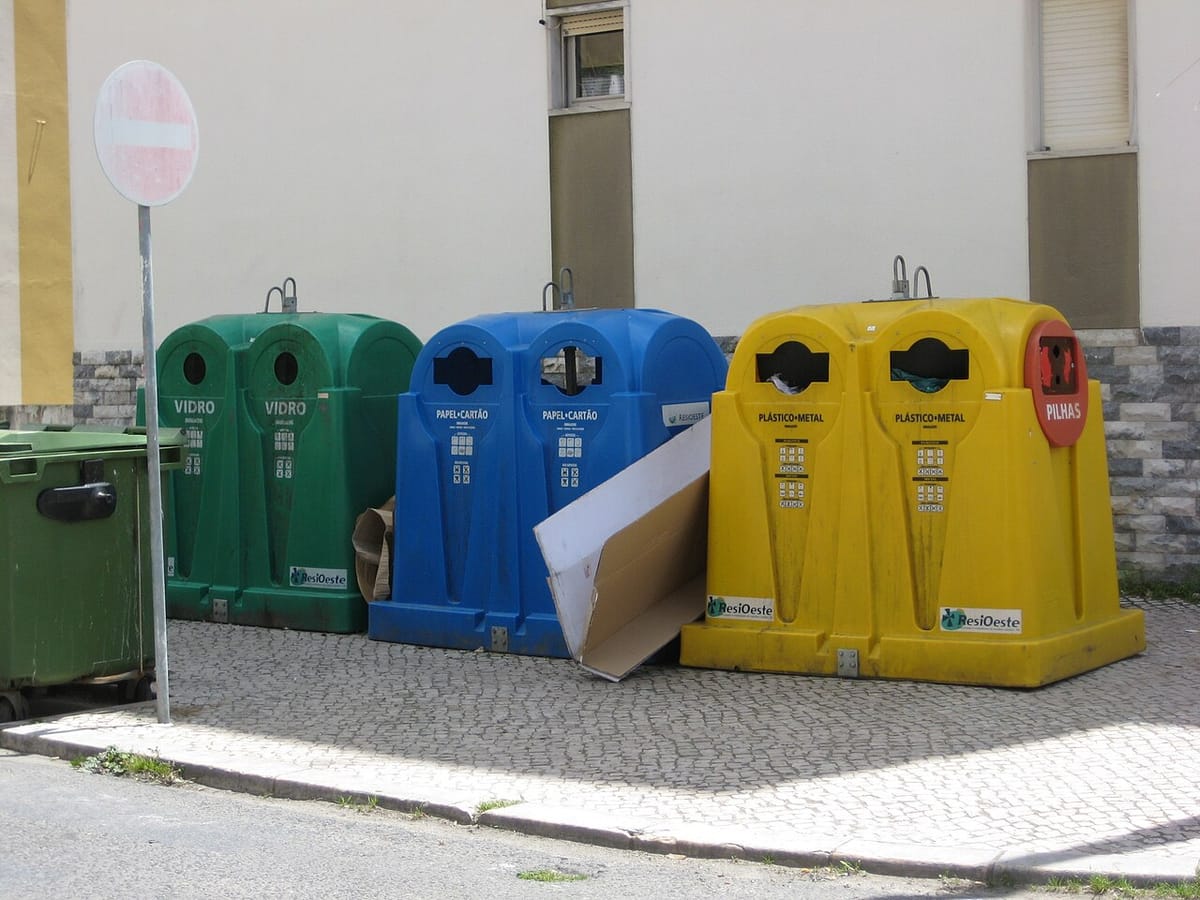
The Algarve buries far more of its rubbish than almost anywhere else in Portugal, and its two landfills are running out of room. On 8 August, the Minister for the Environment and Energy, Maria da Graça Carvalho, used a visit to Faro to sketch out the government's answer: a waste-to-energy plant that would burn the region's municipal waste to generate electricity, rather than pile it ever higher in the ground.
The numbers behind the plan are stark. The Algarve produces around 400,000 tonnes of municipal waste a year, and sends roughly 85% of it to landfill — well above the national average of about 56%, and a world away from the European Union's targets of no more than 14% landfilled by 2030 and 10% by 2035. "It is not sound policy to build more landfills when we need to get down to 10% and we are at 85%," the minister argued. The government prefers the term "valorização energética de resíduos" (energy recovery from waste) to the blunter "incineration," but the principle is the same: waste that would otherwise be tipped is instead combusted, with the heat turned into power.
Nothing is decided yet. The Agência Portuguesa do Ambiente (Portuguese Environment Agency, APA) will run the process, and plans to launch a tender on 15 October to study both the technical solution and where the plant should go — the same staged approach used for the Algarve's planned desalination plant. No site has been chosen, no capacity in tonnes has been set, and no cost has been put on the Algarve unit, which the minister said would draw on available EU funding. Whatever emerges is to be agreed with the region's 16 municipalities, represented by the intermunicipal community AMAL.
The timing is dictated by the landfills themselves. The two sites that serve the region — one in the east, at Loulé, and one in the west, at Portimão — have only around one and a half to two years of space left between them. As a stop-gap, the government intends to open one new cell at each, buying roughly seven and a half more years of capacity, to about 2035. The energy-recovery plant is meant to be ready to take over from landfilling around that same date, closing the gap before the region runs out of options.
The strategy is not without critics. The environmental association Zero has opposed the incineration component of Portugal's wider national waste plan, calling it an "unjustified investment" that risks pulling the country away from its recycling goals rather than towards them. It argues the money would be better spent reinforcing mechanical-biological treatment and high-quality separate collection, and points out that burning urban waste to make electricity is a relatively dirty source of power, emitting on the order of 777 grams of CO2 per kilowatt-hour — roughly double that of fossil gas. The Algarve plant is widely understood to be one of two energy-recovery units — the other slated for the centre of the country — around which a national investment of some €1.5 billion has been discussed, though those figures belong to the broader strategy rather than to the 8 August announcement.
For residents, the practical stakes are real but still some way off. If the tender proceeds on schedule, the coming months will bring a study, a location, and — almost certainly — a debate in whichever municipality is picked, since few communities welcome an incinerator on their doorstep. What is not in doubt is the underlying squeeze: the Algarve is close to the limit of what it can bury, and the choices now on the table are between more landfill, more burning, or a good deal more recycling than the region currently manages. The government has signalled which way it wants to go; the next year will show whether the Algarve agrees. On the Portuguese waste and recycling file, the environment minister's admission that the Volta deposit-return scheme has a bin-picking problem, a shortage of machines and a hospitality trade still adjusting is the latest development. For where national policy on this is heading to 2030, the waste strategy the Cabinet has now put on the statute book covers Resolução do Conselho de Ministros n.º 181/2026, which adopts the Estratégia TERRA+, splits 1.644 billion euros of investment support across five heads, and records that 54 percent of urban waste still went to landfill in 2024 with 13 of the 32 landfills down to roughly a fifth of their capacity.