Hauliers and Bus Firms Get a Second Claim on Fuel Aid: Up to 70 Percent of Their Extra Costs From October to December
Decreto-Lei 213/2026 lets licensed hauliers and bus operators claim 70 percent of their extra fuel costs for the last quarter, minus anything passed on to customers and the flat payment already received. No new money: claims go to the IMT after December.
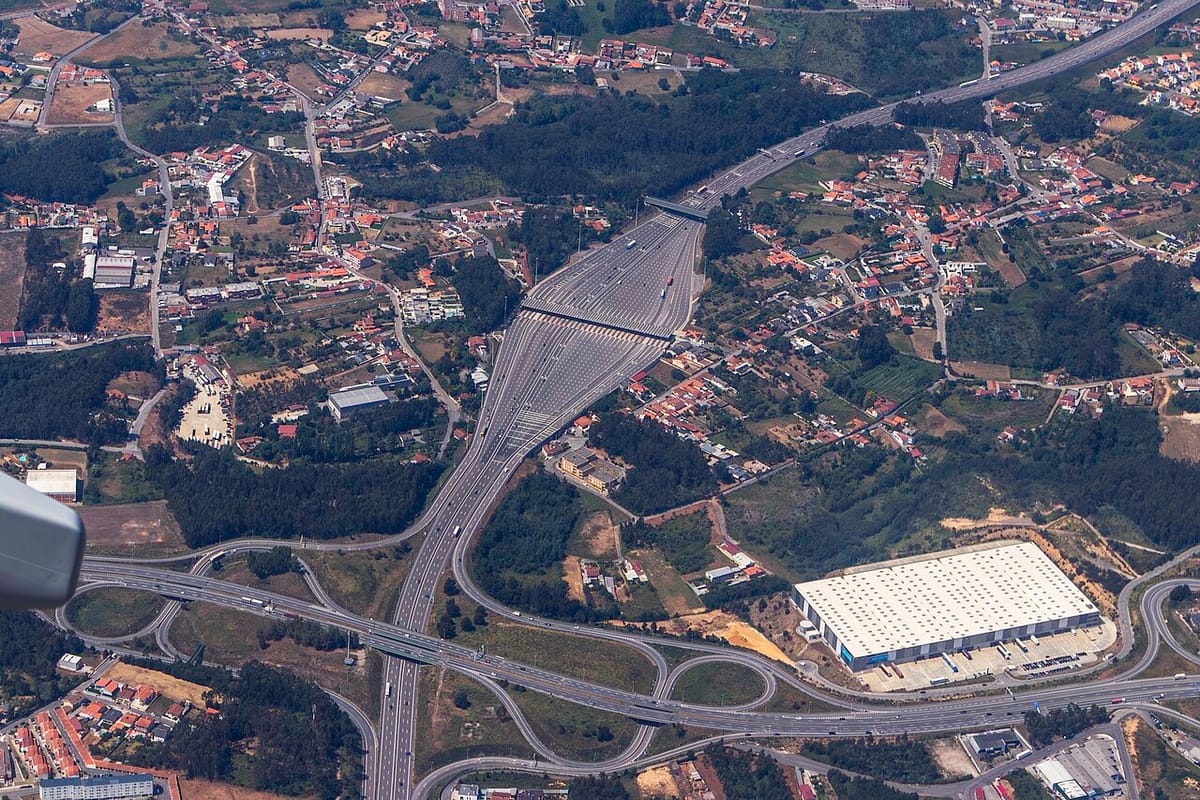
Road hauliers and bus companies can now claim back up to 70 percent of what dearer fuel cost them between October and December, on top of the flat per-vehicle payments the Government approved in October. Decreto-Lei n.º 213/2026, published in the Diário da República (the official gazette) on Thursday 5 November, came into force the next day.
The new scheme is optional. Operators can claim under it on its own, or as a top-up to the fixed amounts in Decreto-Lei n.º 199/2026, the decree President Seguro signed in early October. Unlike that decree, the new one pays according to how much fuel each operator actually used and how much more it paid for it.
Who can claim
- Hauliers who carry goods for others, licensed for that work by the Instituto da Mobilidade e dos Transportes (IMT, the Institute for Mobility and Transport) in the third quarter of 2026, for licensed lorries that run on fossil fuels and have a valid inspection.
- Public bus and coach operators holding a valid licence, for buses and coaches (categories M2 and M3) in public service, including those running on liquefied or compressed natural gas.
Firms carrying their own goods are excluded, as is transport linked to farming, fishing and aquaculture. So are companies that were already "in difficulty" under EU rules on 28 February 2026, unless they are micro or small firms that are not in insolvency proceedings and have no unpaid rescue aid.
How the payment is worked out
The decree compares two prices, both taken from the Direção-Geral de Energia e Geologia (DGEG, the Directorate-General for Energy and Geology):
- a historical price: the average weekly price of the operator's fuel between 1 January and 1 March 2026;
- a market price: the average price of the same fuel between 1 October and 31 December 2026.
The difference, multiplied by the fuel the operator can prove it used in that quarter, gives its "extraordinary costs". From that, the operator must subtract anything it passed on to customers: fuel surcharges, price rises, indexation clauses, or extra public service compensation from councils and transport authorities. The aid is 70 percent of what is left.
If the operator also receives the fixed payment under the October decree for the same vehicles and period, the two together cannot exceed that 70 percent. The new scheme pays only the difference, and nothing if the fixed payment already covers it.
An example, using our own arithmetic. The October decree assumes a lorry of 35 tonnes or more uses 2,100 litres a month, and pays 457.80 euros for it. Suppose such a lorry used 6,300 litres over the quarter, diesel cost 30 cents a litre more than in January and February, and the haulier passed nothing on. Its extra cost would be 1,890 euros, and 70 percent of that is 1,323 euros. Taking off the 457.80 euros already paid would leave a top-up of 865.20 euros. The real figure depends on DGEG's averages and on each operator's own receipts.
What the October decree already pays
- Lorries, by gross weight: 118.20 euros up to 3.5 tonnes, 280.80 euros from 3.5 to 7.5 tonnes, 286.20 euros from 7.5 to 35 tonnes, and 457.80 euros at 35 tonnes and over, each including a small amount for AdBlue.
- Buses and coaches: 420 euros per vehicle.
The new decree brings no new money. It draws on the same allocations set in the October decree: 30 million euros for goods transport and tow trucks, and 5 million euros for public passenger transport. Payments stop when that money runs out.
How and when to apply
- Claims are made after the quarter ends, online through the IMT website, on a form the institute will provide. The IMT will set the deadline by regulation; it was not yet published when this was written.
- A claim must list the vehicles, include proof of fuel bought in Portugal during the quarter, state any fixed payment received for the same vehicles, and declare what was passed on to customers, or that nothing was.
- The operator's tax and Social Security affairs must be in order before the IMT pays.
- Contracts, price lists and invoices from 1 January 2026 must be kept for 10 years, because the IMT can check the declared pass-through. Money paid on a false or incomplete declaration has to be returned, with interest.
- The IMT will publish the name of every operator that receives more than 100,000 euros, with the amount and date.
Why now, and what it means beyond the industry
The decree applies a temporary European Commission framework for state aid during the Middle East crisis, adopted on 5 May 2026, which lets governments cover up to 70 percent of transport firms' extra fuel costs. The Council of Ministers approved it on 24 September, the President signed it on 29 October, and it covers only the last quarter of 2026, to avoid overlapping with earlier aid.
For passengers and shoppers, nothing changes directly: the money goes to the operators. But the rule that anything passed on to customers is deducted means operators that added fuel surcharges get less. Taxis, fire brigades, charities and the private ambulance firms that were promised fuel aid in October are not covered by this decree. At the pump, diesel and petrol were forecast to fall from Monday 9 November.