Government Extends Fuel Aid to Private Patient Transport Firms, and Ambulances Call Off Monday's Bridge Protest
The Health Ministry says firms that drive SNS patients to dialysis, cancer treatment and other non-urgent appointments will join the fuel aid decree. No amount or start date yet; the ambulance league has suspended its protest and opens talks today.
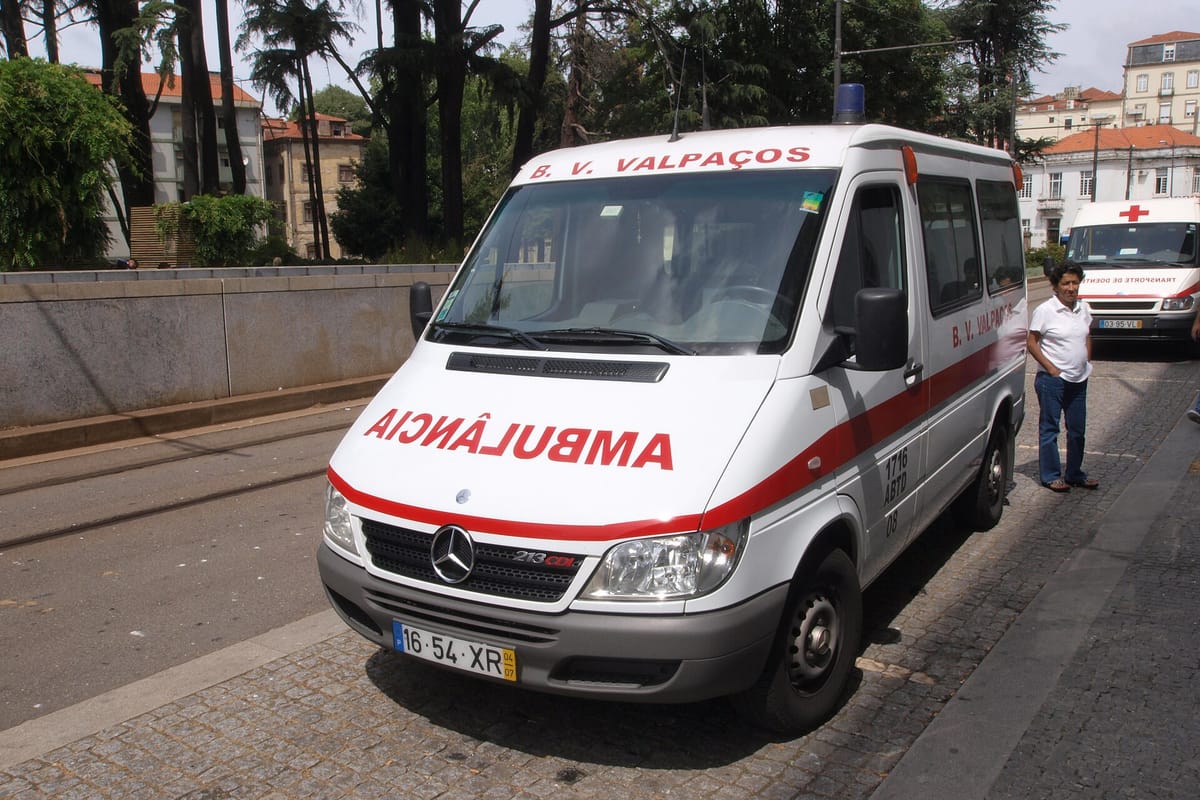
The Government will add private firms that carry SNS (Serviço Nacional de Saúde, the National Health Service) patients to non-urgent appointments to its fuel aid scheme, the Ministério da Saúde (Ministry of Health) said in a two-paragraph statement released on Sunday evening and posted on the government portal on Monday morning. In response, the firms called off the slow drive of about 100 ambulances across Lisbon's 25 de Abril Bridge planned for Monday.
What the Government said
The ministry said non-urgent patient transport companies will be brought within Decreto-Lei (Decree-Law) n.º 199/2026 of 7 October, the second round of extraordinary, temporary support for fuel and AdBlue costs. It said the decision recognises the firms' role in patients' access to care and its concern for the continuity of an essential service.
The statement does not say how much the firms will receive, from when, or how they will apply. As published, the decree's list of beneficiaries in its Article 7 covers taxi firms, social sector bodies and humanitarian firefighters' associations, but not private patient transport companies, and no act changing it appeared in Monday's Diário da República (the official gazette). For comparison, the decree gives taxis, and fire brigade vehicles other than their heavy Class S appliances (patient transport vehicles included), 10 cents a litre on an assumed 400 litres a month: 120 euros a vehicle, paid once. Those payments come out of a 3 million euro envelope shared by taxis, the social sector and fire brigades. Applications are made online to the IMT (Instituto da Mobilidade e dos Transportes, the Institute for Mobility and Transport) within 10 working days of the form going live. Whether the patient transport firms will get the same terms, and from which pot, has not been stated.
Protest off, talks on
The Liga Portuguesa de Ambulâncias (LPA, the Portuguese Ambulance League) suspended the protest on Sunday evening, according to Lusa reports carried by Renascença and a league statement sent to Jornal Económico. The league welcomed the decision as correcting an unfair inequality. It said the first meeting of a negotiation with the Government was set for Monday.
Fuel was only one of the league's three demands. It is also seeking a revision of the prices the SNS pays for patient transport, which have been fixed since 2023, and payment of overdue bills by SNS bodies. The league told Jornal Económico that the sector's structural problems are far from solved. Last week the firms had warned they could stop SNS trips. According to Lusa, via Observador, the SNS recorded more than four million non-urgent patient journeys in 2025, about half of them by private firms, mostly to cancer treatment, haemodialysis, physiotherapy and consultations.
What it means for patients
The league never announced a date for halting trips, and the only action it had called, Monday's protest drive, is off. Whether the threat of a stoppage stays off now depends on the talks over prices and late payments.
Your right to free transport has not changed. According to the ERS (Entidade Reguladora da Saúde, the Health Regulator), it must be prescribed by an SNS doctor. It covers patients who need prolonged, continuous care, such as dialysis, whatever their income, and patients on low incomes whose condition justifies it. If a trip you are entitled to does not arrive, contact first the health unit that requested it; if that fails, you can complain to the ERS. Our guide explains who qualifies for free transport to hospital appointments.