Porto's Oldest Metro Cars Lose Their Air-Conditioning Above 35°C, and the Government Admits a Fix Is Years Away
In a written answer to Parliament, the government has admitted that Metro do Porto's 72 oldest Eurotram carriages lose their air-conditioning above about 35°C. Rather than scrap the fleet, it is fitting new compressors to 20 units and buying 22 new trains — a fix measured in years, not weeks.
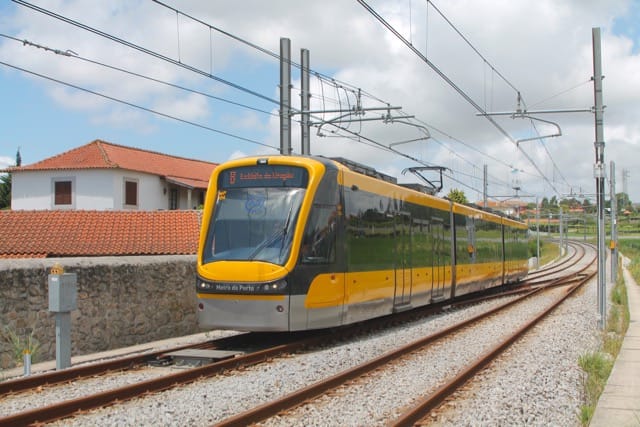
The government has conceded that the backbone of the Metro do Porto network — the 72 oldest carriages in the fleet — is not built for the summers Portugal now gets. In a written answer to Parliament, the Ministério das Infraestruturas e Habitação (Ministry of Infrastructure and Housing) acknowledged that the air-conditioning on these Eurotram units cuts out once the temperature climbs past roughly 35°C, leaving passengers to sweat through the hottest days of the year.
The explanation is a mix of engineering and bad timing. When the trains were bought around a quarter of a century ago, they were designed against a maximum thermal reference of about 35°C, drawn from the weather projections the Instituto Português do Mar e da Atmosfera (Portuguese Institute for the Sea and the Atmosphere) had available at the time. Above that ceiling, the cooling system shuts down "due to high pressure." The result, riders have reported, is air that swings from cold to lukewarm within the same carriage — a problem the operator blames on the vehicles' age and their large glazed surfaces, which act like a greenhouse in direct sun.
The complaints are not new. In early July, during an earlier hot spell, air-conditioning failures forced an "indeterminate" number of trains out of service and back to the Guifões workshops in Matosinhos, and both Line A (Estádio do Dragão to Senhor de Matosinhos) and Line F (Fânzeres to Senhora da Hora) ran a "serviço degradado" (reduced service). Metro do Porto said at the time that it was "aware of the failures in the air-conditioning system of some Eurotram compositions" and that it "regrets the discomfort caused to customers," while admitting it was difficult even to say how many units were affected.
What makes the situation awkward is that these are not spare trains the company can simply sideline. According to the ministry, the 72 Eurotram are "the only equipment able to operate without restrictions" across three of the network's lines — the Blue, Yellow and Orange routes — so pulling them en masse is not an option. A company source told the Lusa news agency that a full overhaul of the cooling system is close to impossible on vehicles of this design: doing it properly would either eat into passenger capacity or mean scrapping all 72 trains outright. "The problem really is the cooling capacity of the equipment," the source said; "the way they are designed makes improvements very difficult."
Rather than a wholesale replacement, the fix is incremental. The current concession contract provides for reconditioning the existing units and fitting higher-performance equipment: compressor replacement on 20 vehicles, of which eight are already done, alongside the acquisition of 22 new trains better suited to extreme heat. The ministry framed the malfunctions as "sporadic," averaging one to two a year, and noted that the ageing fleet still has around a decade of useful life left — roughly a third of what is typical for this class of railway vehicle.
The opposition is unconvinced that the heat is the real story. The Partido Comunista Português (Portuguese Communist Party), through its CDU coalition, argued that the Metro's difficulties are "much older" than any heat wave, pointing to an accumulation of complaints and renewing its call to end the private subconcession that runs the operation and return it to public management.
For residents and visitors who rely on the Porto metro, the practical upshot is modest but real: on the hottest afternoons of July and August, carriages on the busiest lines can turn uncomfortable, and there is no quick cure. The trains themselves keep running — this is a comfort problem, not a safety one — but the deeper fix, new vehicles and rebuilt cooling, is a project measured in years, not weeks. Anyone crossing the city at rush hour in a heat wave would be wise to carry water and not count on the air-conditioning. On the Porto transport file, our report on Porto's mayor setting a 31 December limit for the second phase of the metrobus and naming the contractor as the reason the works on Avenida da Boavista are running late sets the latest reference.