Pharmacies in Portugal in 2026 — The Receita Sem Papel Codes, the Farmácia de Serviço Rotation, the Farmácias Portuguesas Saúda Card, App da Farmácia Home Delivery, and a Practical Guide for Foreign Residents Across the Counter
Portugal has 2,920 community pharmacies, the Receita Sem Papel system runs every prescription through three SMS codes, the Farmácia de Serviço rotation keeps one open in every freguesia, and a fresh Greater Porto delivery app launched on 1 May. The practical 2026 guide for foreign residents.
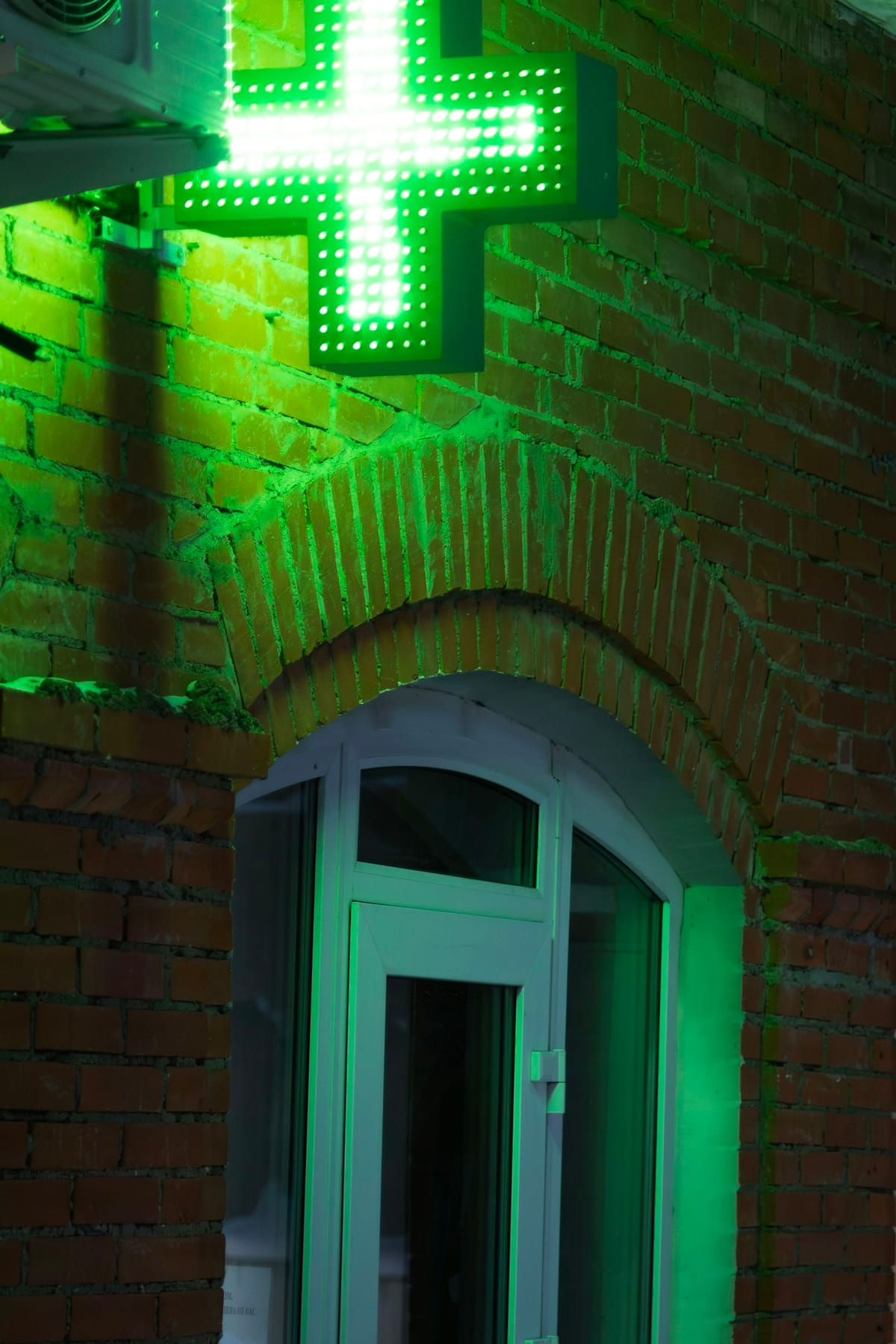
Portugal has 2,920 community pharmacies, an average of 4.1 pharmacists in each, and roughly 595,700 patient interactions a day across the network — figures published by the Associação Nacional das Farmácias (ANF) for 2026. The country is licensed at one pharmacy per 3,500-3,800 residents in the urban centres and per 2,800-3,200 in the rural interior, the densest community-pharmacy network in Western Europe per capita after Greece. For foreign residents, that means a pharmacy is almost always within a few minutes' walk of where they live; what differs from the home-country baseline is the regulatory framework that surrounds it. This guide walks the practical mechanics — how the prescription system works in 2026, how to fill at any pharmacy nationwide, how to find one open at 03:00 on a Sunday, what the loyalty cards do, what the new home-delivery apps cover, and where the over-the-counter line actually sits.
The Regulator: Infarmed and the Two Statutes
Pharmacy practice in Portugal sits under the Autoridade Nacional do Medicamento e Produtos de Saúde — Infarmed — which licenses every pharmacy, registers every pharmacist with the Ordem dos Farmacêuticos, and authorises every medicine on sale. Two statutes govern the day-to-day: Decreto-Lei 307/2007 (the regime jurídico das farmácias de oficina), which sets the licensing, ownership and dispensing rules; and Decreto-Lei 109/2014, which regulates retail pharmacy operations and home-dispensing licences. Pharmacy ownership in Portugal was deregulated in 2007 — pharmacists and non-pharmacist investors can hold capital — but a single owner cannot hold more than four licences nationally, which has kept the network fragmented compared with the multi-hundred-store chains of the UK or France. The largest groups (Holon, Bem-Estar, Farmácias Portuguesas) are loyalty / co-purchasing networks rather than corporate chains.
The Receita Sem Papel: Three Codes, Two Validity Windows
The Receita Sem Papel (paperless prescription) system has been live since 2015 and now covers essentially every public-system prescription written in Portugal. When a doctor prescribes — at a Centro de Saúde, in an SNS hospital outpatient clinic, or in a private consultation — the prescription is generated electronically through the Prescrição Eletrónica Médica (PEM) platform run by SPMS, the SNS shared-services arm. The patient receives the prescription details via SMS to the mobile number registered on their utente file, and (if an email is on file) by email as well.
Each prescription carries three codes the patient needs to dispense it:
- Número da Receita — the prescription identifier (a long numeric string), printed at the top of any paper receipt and at the top of the SMS / email message.
- Código de Acesso e Dispensa — a six-digit code provided only to the patient. The pharmacy uses this to validate the dispensing claim against PEM. Without it, the prescription cannot be filled.
- Código de Direito de Opção — a four-digit code that confirms the patient's right to choose between the prescribed branded product and a substitute generic with the same active ingredient. Patients are asked at the counter whether they want the lowest-priced equivalent or the specific brand the doctor named.
The validity window depends on the prescription type. Prescrição aguda — for acute conditions, typically antibiotics, anti-inflammatories, short courses — is valid for 30 days from issue. Prescrição crónica — also called PRN ('para os medicamentos de uso continuado') and used for chronic-disease repeat dispensing such as anti-hypertensives, statins, thyroid hormone, oral diabetic agents, hormonal contraceptives — is valid for 6 months from issue and can be partially dispensed multiple times within that window without a fresh consultation. Partial dispensing is one of the system's design features: a patient can fill 30 days of a 6-month chronic prescription this month, return next month, hand the same codes to the same or any other pharmacy, and have the next 30 days dispensed against the remaining balance.
The SNS24 app — the Government's official health portal, available on iOS and Google Play, and accessible at sns24.gov.pt with Chave Móvel Digital authentication — keeps a live list of every active prescription tied to the utente number, including the three codes. A patient who has lost the SMS can open the app, retrieve the access code, and walk into a pharmacy with the phone screen as the only document needed. The app also flags partial-dispensation balance and validity expiry.
Filling at Any Pharmacy in the Country
Receita Sem Papel is national. A prescription written in Faro can be filled in Bragança; a 12 May Lisbon-issued repeat can be filled in Coimbra on 14 May; a chronic prescription issued by a Madeira hospital can be filled in mainland Portugal without conversion. The only thing the pharmacy validates is the access code and the utente identity (or the proxy authorisation, see below). There is no longer any requirement to return to the original prescribing doctor or clinic for refills inside the validity window.
Family-member proxy is allowed and routine. A spouse, parent, adult child or other authorised representative can fill a prescription on the patient's behalf using the access code and the patient's utente number. Pharmacies will not normally request the patient's identity card if the access code matches; some will request the proxy's own ID for the dispensing log, particularly for controlled medications.
SNS Reimbursement and the Co-Payment Bands
Reimbursable medicines (which is most of them — Infarmed maintains the comparticipated-medicine list as Annex II to Decreto-Lei 48-A/2010) sit in four reimbursement bands tied to the therapeutic group and the patient's status: Escalão A (90% of reference price reimbursed), Escalão B (69%), Escalão C (37%), Escalão D (15%). For patients on the Regime Especial — pensioners on the minimum old-age pension, low-income utentes — the reimbursement rate adds 5 percentage points across the board, and many Escalão A items become free at point of dispensation.
The patient pays only the residual at the counter; the pharmacy claims the SNS share through the Centro de Conferência de Faturas. The reference-price system means that if a patient elects (via the Código de Direito de Opção) to take a branded product more expensive than the cheapest generic with the same active ingredient and dose, they pay the difference between the reference price and the chosen product's retail price in addition to the residual co-payment.
Farmácia de Serviço: Night, Weekend and Holiday Cover
Every freguesia (parish) has a rotating Farmácia de Serviço on duty from 22:00 (or earlier in some rural concelhos) to 09:00 the following morning, and one pharmacy stays open continuously through Sundays and public holidays in each catchment area. The roster is set by Infarmed regional delegations on a quarterly cycle, published on the freguesia notice board, displayed on a permanent sign at every pharmacy door, and accessible online at farmaciasdeservico.net, on the Infarmed website's Pesquisa de Farmácias de Serviço tool, and via the SNS24 app's pharmacy-finder. In the larger urban concelhos (Lisboa, Porto, Coimbra, Braga, Faro), at least three to five pharmacies are simultaneously on the night-and-weekend roster; in rural concelhos the rotation may run between two or three pharmacies on a weekly cycle. After-hours dispensing carries a small surcharge (the taxa de serviço) of around €2.50, payable in cash or card at the counter.
The Three National Networks: Holon, Bem-Estar, Farmácias Portuguesas
Three loyalty / co-purchasing networks dominate the branded-pharmacy landscape, none of them a corporate chain:
- Farmácias Portuguesas — the largest network, run by ANF itself, with roughly 1,800 of the 2,920 pharmacies inside the Saúda card programme. The Cartão Saúda accumulates points on purchases of OTC products, parapharmacy items and SNS-co-payment residuals, redeemable against a points catalogue. Sign-up is free at any participating pharmacy with NIF; foreign residents can join with their Portuguese NIF and a passport.
- Holon — around 200 pharmacies branded under a single visual identity, with a clinical-services-forward positioning (vaccination, blood-pressure monitoring, glucose monitoring, weight management programmes). Holon pharmacies are recognisable by the orange-and-white facade and the Holon-branded interior fittings.
- Bem-Estar — a smaller network with a wellness focus, particularly strong in the Centro and Alentejo regions.
Independent pharmacies — those not affiliated to any of the three — make up the balance. Pricing on prescription medicines is identical across all of them (Infarmed sets the maximum retail price; the SNS reimbursement is fixed); pricing differs on OTC, parapharmacy, dermocosmetics and homeopathy, where each pharmacy is free to set its own margin.
Home Delivery: App da Farmácia and the New Greater Porto Service
Decreto-Lei 109/2014 authorised home dispensing of medicines by licensed pharmacies, and the Infarmed registry currently lists several hundred pharmacies authorised for home delivery. The largest Portugal-wide platforms are Farmácias Portuguesas Online (parapharmacy and OTC, with delivery via CTT or third-party courier in 24-72 hours), Saudemed and FNAC Saúde. For prescription medicines, delivery is restricted to authorised pharmacies and requires the same access code at the point of online order; the order is dispensed by a registered pharmacist and shipped under temperature-controlled conditions when the active ingredient requires it.
On 1 May 2026, Farmácia Sá da Bandeira and Farmácia Avenida launched App da Farmácia, a free Greater Porto delivery service covering Porto, Vila Nova de Gaia, Matosinhos, Maia, Gondomar, Rio Tinto, Ermesinde and Valongo. The app accepts prescription uploads, runs real-time stock checks, delivers same-day across the eight-municipality footprint at no charge, and connects users with a pharmacist by phone or WhatsApp. iOS and Google Play. The launch is the most aggressive delivery footprint by a non-chain pharmacy on the Porto bank to date and follows several similar single-pharmacy delivery launches in Lisboa and the Algarve over the last two years.
OTC, Parapharmacy and the Dispensing Line
The over-the-counter line in Portugal is more restrictive than in the UK, the US or much of northern Europe. Antibiotics, anti-inflammatories above ibuprofen 400 mg / paracetamol 500 mg, antihistamines above OTC dose, all opioid analgesics, all psychotropics, all benzodiazepines, all hormonal contraceptives require a prescription. Paracetamol up to 500 mg, ibuprofen up to 200 mg, simple cough syrups, hydration salts, antihistamines at OTC dose (loratadine, cetirizine), nasal saline sprays, simple antifungal creams, vaginal antifungals up to 150 mg fluconazole single dose, and a defined list of cold-and-flu remedies are available without a prescription. The pharmacist may refuse OTC sale if clinical concerns arise (most commonly with combination paracetamol-codeine products) and may direct the patient to a doctor.
Parapharmacy items — dermocosmetics, baby-care products, dietary supplements, medical devices, optical lenses, hearing-aid batteries — sit in a less regulated space and are sold both in pharmacies and in dedicated parafarmácia retail outlets (which are licensed under Decreto-Lei 134/2005 and cannot dispense prescription medicine).
Vaccination, Blood Tests and Other Pharmacy Services
Pharmacies in Portugal are licensed to deliver a defined set of clinical services beyond dispensing. Influenza vaccination is administered at most pharmacies during the autumn-winter campaign without a prescription; COVID-19 vaccination remains available at participating pharmacies for the relevant cohorts; HPV catch-up vaccination for adults runs through participating pharmacies under the Programa Nacional de Vacinação extension. Pharmacies also routinely offer blood pressure measurement (€0-€2), capillary glucose testing (€2-€4), cholesterol screening (€5-€10), HIV / hepatitis rapid testing (subsidised under public-health programmes in the Lisboa and Porto metropolitan areas), weight, BMI and waist-circumference measurement, and medication review for chronic patients on multi-drug regimens. The Holon network in particular runs branded clinical-services modules; Farmácias Portuguesas under the Cuidamos programme offers similar services across the Saúda network.
How to Set Up as a Foreign Resident
For new arrivals, the practical sequence is:
- Get a Portuguese NIF at any AT counter or online via the Portal das Finanças.
- Register with the SNS at the local Centro de Saúde with NIF, passport and proof of address; receive the utente number.
- Activate Chave Móvel Digital at the AMA shop or any Loja do Cidadão. CMD is required for SNS24 app access.
- Register a Portuguese mobile number on the utente file at the Centro de Saúde so that prescriptions arrive by SMS.
- Sign up for Cartão Saúda at a Farmácias Portuguesas pharmacy if loyalty points matter; otherwise no loyalty enrolment is required to receive SNS reimbursement.
- Identify a regular pharmacy for chronic-prescription continuity — many pharmacies offer a personal pharmacist for repeat patients, holding the medication review file and flagging interactions.
What This Means in Practice
- Carry the access code, not the prescription. Once SMS-issued, the six-digit Código de Acesso e Dispensa is the only thing the pharmacist needs along with the utente number. Bring a phone, not a piece of paper.
- Generic substitution is the default. Unless the doctor has opted out of substitution at the prescribing screen, the pharmacy will offer the cheapest equivalent generic. The Código de Direito de Opção lets the patient overrule and pay the brand premium.
- Chronic prescriptions live for 6 months. The repeat-dispensing window cuts the number of doctor visits required for stable conditions to one or two a year — a meaningful difference from the 30-day repeat regime common in many European countries.
- Family-member proxy is normal. Spouses, adult children or other authorised representatives can fill on the patient's behalf with only the codes and the utente number.
- Night and weekend cover is universal. The Farmácia de Serviço rotation guarantees one pharmacy is open in every freguesia 24/7. The roster is on the door of every pharmacy, on Infarmed's portal and in the SNS24 app.
- Home delivery is patchy but expanding. Lisboa, Porto and Algarve coastal urban areas are best covered. The 1 May Greater Porto launch of App da Farmácia is the most recent footprint expansion.
- OTC is narrower than the US/UK norm. Antibiotics and most analgesic combinations require prescription. Plan accordingly when travelling from countries with looser OTC regimes.
- Reimbursement claim is automatic. The patient pays only the residual; the pharmacy handles the SNS claim. There is no patient-side paperwork.
- Vaccination at the pharmacy is routine. Influenza and COVID-19 are walk-in at most pharmacies; the price is set under the SNS schedule.
For foreign residents new to Portugal, the pharmacy network is one of the most accessible parts of the health system — denser than the GP network, simpler to engage with, faster than scheduling a Centro de Saúde appointment for routine queries, and integrated with the SNS through a paperless rail that has had a decade to mature. The biggest practical adjustment compared with home-country norms is the OTC narrowness — being unable to walk in for an antibiotic without a prescription — and the upside is the chronic-prescription longevity, the universal night roster, and a reimbursement system that handles itself silently at the counter.