INEM Plans to Transfer 54 Ambulances to Hospital Units and Convert 46 Life-Support Vehicles, and Its Unions Call It a Dismantling
INEM will move 100 vehicles out of its own fleet — 54 emergency ambulances handed to hospital units and 46 SIV life-support ambulances turned into lighter cars. Management calls it integration; the workers' committee and the STEPH union call it a dismantling, and have called an August assembly.
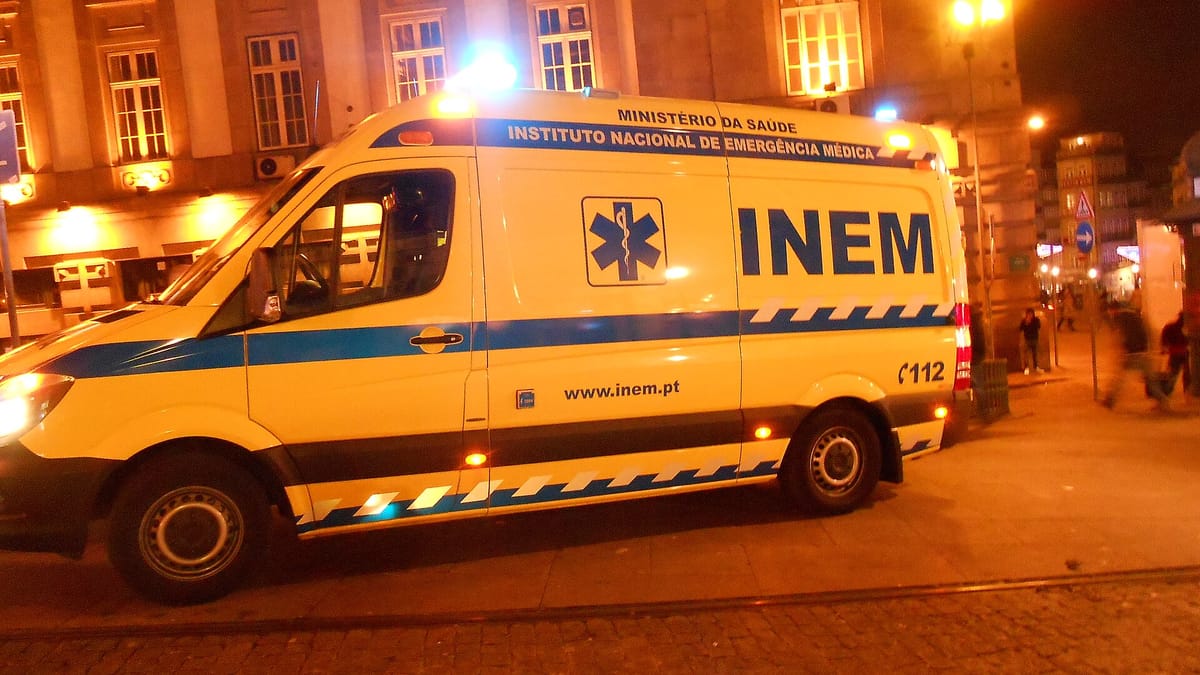
A reorganisation of Portugal's pre-hospital emergency fleet has opened a rift between the country's medical-emergency institute and the people who crew its ambulances. INEM (Instituto Nacional de Emergência Médica, the National Institute of Medical Emergency) confirmed over the weekend that it intends to move 100 vehicles out of its directly run operation — a shift its leadership frames as tighter integration with hospitals, and its workers denounce as a dismantling of the emergency network.
The plan surfaced publicly on Friday 25 July, when INEM's president, Luís Mendes Cabral, set out the changes in an interview with public broadcaster RTP. By Sunday, the institute's Workers' Committee (Comissão de Trabalhadores) and the pre-hospital technicians' union had issued their own, sharply different account of what the reorganisation means on the ground.
What is actually changing
Two moves make up the bulk of the 100-vehicle figure. First, 54 emergency medical ambulances would be transferred from INEM to the Unidades Locais de Saúde (Local Health Units, or ULS) — the regional bodies that now run most of the public health service. Second, 46 SIV ambulances — the Suporte Imediato de Vida (Immediate Life Support) units, staffed to stabilise critical patients — would be converted into lighter response cars and folded into 39 ULS.
According to the Sindicato dos Técnicos de Emergência Pré-Hospitalar (Pre-Hospital Emergency Technicians Union, STEPH), turning the SIV units into "light cars" strips them of the capacity to transport patients, and the integration into the ULS would reduce the current count of 46 such vehicles. The Workers' Committee puts the reach of the changes at 71 municipalities, including Lisbon and Porto.
Two names for the same plan
INEM insists nothing is being cut. The eventual transfer of ambulance management to the ULS, the institute says, "does not imply the elimination of these means, which will continue to serve the populations and remain integrated into the device" — the dispositivo being the coordinated national emergency system. The stated goal is to knit pre-hospital care more closely to hospital services under a single chain of command.
The staff see it differently. The Workers' Committee has called the reorganisation a "dismantling of what should be reinforced," and rejected the label of a refundação (refoundation) that the institute has used, arguing that management is dressing up subtractions as renewal. Technicians warn that thinning INEM's own transport capacity will push more of the load onto the Bombeiros (firefighters) and the Cruz Vermelha (Red Cross), and raise the risk for patients in a system already stretched. The Health Minister, Ana Paula Martins, has not made the government's position clear to the workforce.
The dispute is the operational sharp end of a reform that has been building for months. President of the Republic António Seguro signed a new charter for INEM in July, bringing AI-assisted triage and a non-doctor board, and the institute's finances have been under pressure — its 2025 loss widened to €7.6 million as payments to the Bombeiros and the Red Cross climbed and hundreds of posts sat vacant. The current fight is over how that reform touches the ambulances themselves.
What This Means for Expats
- 112 and the emergency number do not change: Whatever the outcome, the way you call for help — 112, routed to INEM — is unaffected. The dispute is about who owns and staffs the vehicles behind the scenes, not the front door. Our guide to medical emergencies in Portugal walks through how the system works.
- Coverage could feel uneven during the transition: Reassigning 100 vehicles across 71 municipalities is a large logistical change. If you live outside the big cities, it is worth knowing which local resources — INEM, firefighters, Red Cross — actually respond in your area, because that mix is what is being rearranged.
- Watch early August: The Workers' Committee has scheduled a general assembly for the start of the month and says it will go ahead unless the plans are "clearly altered." Industrial action in emergency services is the point to watch.
- It is a stress test of a bigger reform: The ambulance question sits inside INEM's broader restructuring. How it is resolved will signal how the institute's new charter is put into practice.
For patients, the practical stakes are simple: whether an ambulance that can carry a critically ill person still reaches them as quickly as it does today. That is the question the coming weeks — and the workers' assembly — will test.