One in Six Travellers Turned Away at EU Borders in 2025 Had Already Used Their 90 Days; in Portugal, Brazilians Account for 45 of the 65 Such Cases
Eurostat counts 22,455 refusals of entry in 2025 for exceeding the 90/180-day limit, 16.9 percent of the EU total. In Portugal the overstay ground is rarer, but relatives visiting immigrants should count their days: the Entry/Exit System now records every stay.
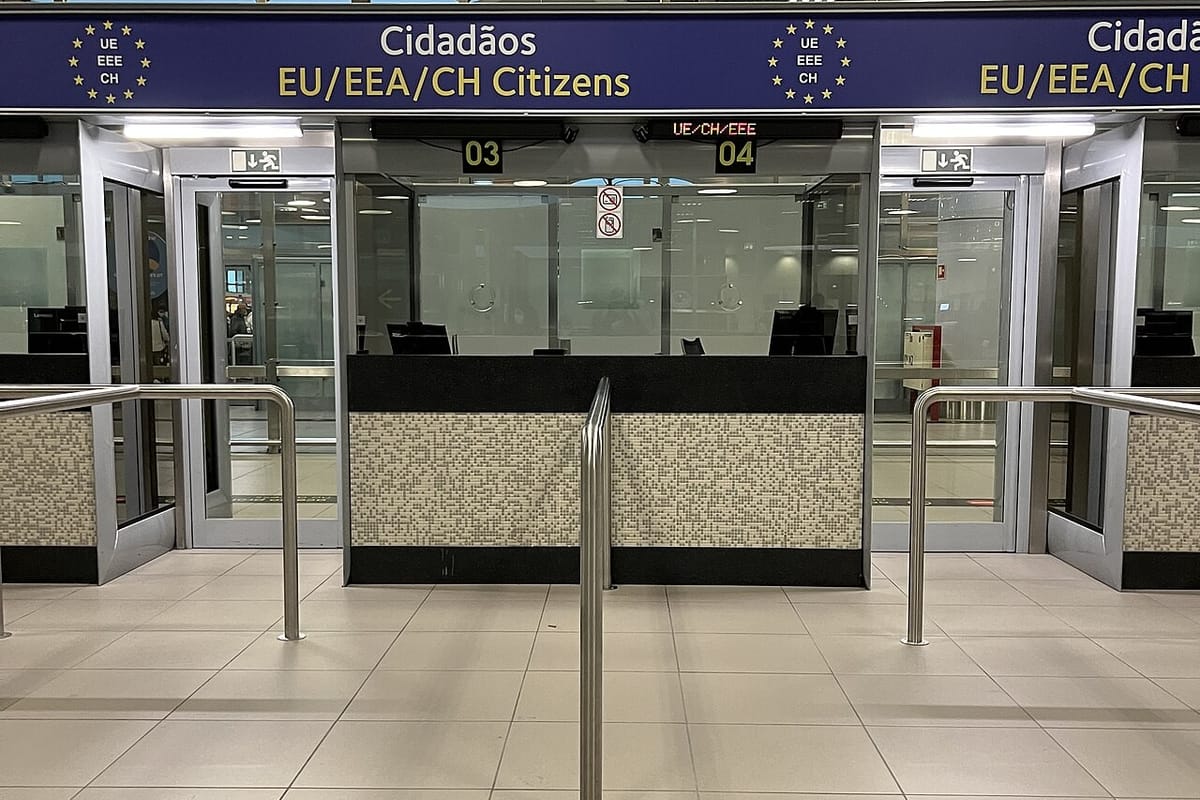
Almost one in six non-EU travellers turned away at the European Union's external borders in 2025 had already used up their 90 days, Eurostat figures show. Of the 132,600 refusals of entry recorded across the EU last year, 22,455 (16.9 percent) were issued because the person had already stayed three months in a six-month period, making the 90/180-day limit the second most common ground after an unjustified purpose of stay.
The overstay ground is concentrated at land borders: 18,570 of those refusals were made there, and Poland alone issued 12,120.
Portugal's position
In Portugal, the rule plays a much smaller part. The country refused entry to 2,135 people in 2025, up from 1,740 in 2024, all at airports, as we reported in May. The breakdown by reason and nationality in the same Eurostat dataset shows that 65 of those refusals (about 3 percent) were for exceeding the 90 days, up from 40 in 2024. Brazilians accounted for 45 of the 65.
The main ground in Portugal was that the purpose and conditions of the stay were not justified: 1,170 refusals, more than half the total. No valid visa or residence permit followed with 400, up from 245. Eurostat also recorded 100 refusals in Portugal for refusing to provide biometric data, a ground with none recorded in 2024; the figures do not say where or when in the year these occurred.
By nationality, Brazilians were the largest group refused in Portugal (750, against 720 in 2024), followed by Angolans (395, up from 220). Nationals of São Tomé and Príncipe, Cabo Verde and Guinea-Bissau came next with 95 each, then British citizens with 75 (Eurostat rounds to the nearest five).
How the 90/180-day rule works
The rule is set by the Schengen Borders Code (Regulation (EU) 2016/399). Non-EU visitors may stay up to 90 days in any 180-day period, which, Article 6 says, "entails considering the 180-day period preceding each day of stay". In practice, on any given day, count back 180 days: if the days spent in the Schengen area in that window add up to more than 90, the visitor is over the limit. Days anywhere in the Schengen area count, not only days in Portugal, and the window rolls forward; it does not reset on a fixed date.
Someone who arrives over the limit, or who is judged to have no justified purpose or enough money for the stay, can be refused at the border by a written decision giving the reasons, under Article 14 of the Code. The person may appeal, but the appeal does not suspend the refusal.
The Entry/Exit System now keeps count
Since 10 April 2026, the EU's Entry/Exit System (EES) has been fully operational, replacing passport stamps with an electronic record of each short-stay visitor's entries, exits and refusals, according to the European Commission. The Commission says this allows "the automatic detection of overstayers". The EES regulation (Regulation (EU) 2017/2226) provides for an automated calculator of the 90-day limit.
Holders of a Portuguese residence permit or a long-stay visa are outside the EES and the 90-day count. Relatives visiting them on a short stay are not. For immigrants whose parents or siblings come for long visits, the safest course is to count the days back over the previous 180 before booking, including any time spent elsewhere in Schengen. A visit that runs over can lead to a refusal on the next trip, and the system now records every day.
For what can happen to someone found in Portugal after their time runs out, see our report on how police have handled overstaying.