Police Officers Treated Overstaying as a Crime, the Ombudsman's Inspectors Report, and the PSP Says 500 Have Since Been Retrained
Irregular stay in Portugal is an administrative offence punished with a fine, not a crime. The Ombudsman's anti-torture inspectors found officers in Beja who thought otherwise, and handcuffs to match.
Staying in Portugal without a valid visa or residence permit is an administrative offence, not a crime. Yet officers at several police stations told inspectors from the Provedoria de Justiça (Ombudsman's Office) that they believed it was a crime, and in Beja that belief led to people being handcuffed. The finding sits in a report that the Ombudsman, Luísa Neto, delivered to parliament on 23 September. The PSP (Public Security Police) has since said it has retrained officers.
The report comes from the Mecanismo Nacional de Prevenção (National Prevention Mechanism, or MNP), the Ombudsman's anti-torture inspectorate. In 2025 it made 10 visits connected with border and migration control, interviewed 42 foreign nationals and read 123 case files.
What the inspectors found
"The MNP found, in contacts with officers at several stations, the mistaken perception that mere irregular entry or stay in national territory is criminal in nature, because it can lead to detention," the report says. It calls the situation "particularly worrying" in the specialised team of the Beja unit, which inspectors visited unannounced on 8 October 2025.
Part of the problem, the inspectors suggest, is software: the code in the PSP's internal system for these cases is the same as the codes used for immigration crimes. They recommended a separate code that makes clear the case is "a mere administrative offence".
The label matters because it shapes treatment. The report says foreigners taken to a station so their papers can be checked are usually handcuffed, on the basis of a PSP standing order that, the inspectors point out, makes handcuffs compulsory only for people held on suspicion of a crime.
What the law says
Under Article 192 of the Lei de Estrangeiros (Foreigners Act, Law 23/2007), overstaying is punished with a fine: 80 to 160 euros for up to 30 days, rising in steps to 500 to 700 euros for more than 180 days. Police may still detain a person found in Portugal irregularly, but only for the purpose of removal: Article 146 requires that the person be brought before a judge within 48 hours. The crimes in the act are different acts, such as helping someone enter illegally, a marriage of convenience, or coming back while under an entry ban (Article 187).
The report adds that only failing to obey a notice to leave the country immediately amounted to aggravated disobedience, a crime, and it cites Article 138(4) for that. That paragraph no longer exists: Law 62/2026, the immigration reform in force since 11 September, revoked it. The report, which covers 2025, does not mention the change.
The police response
The inspectors recommended that the PSP's national command issue internal guidance. The report records that in April 2026 the PSP issued a technical standard stating expressly that detention for illegal stay is administrative and exists only for removal proceedings, and calls it "a positive development".
A PSP source told the Diário de Notícias (DN) newspaper on 1 October that the Beja officers were trained early this year, that more than 500 officers have now had specific training, and that some of the cases flagged were in fact crimes because the person had breached a Schengen entry ban.
For readers, the practical point is unchanged: an expired permit or overstay can bring a fine and removal proceedings, but not a criminal record. Anyone who believes they were wrongly treated can complain to the Ombudsman; see our guide to complaining to the Provedor de Justiça. The same report's findings on prisons were covered on 26 September, and the changes made by Law 62/2026 on 10 September.
Sources: MNP 2025 annual report, section 4.8, and the Beja visit summary, Provedoria de Justiça; Law 23/2007, consolidated text; Law 62/2026, Diário da República (all in Portuguese). The PSP's training figures are as reported by DN.
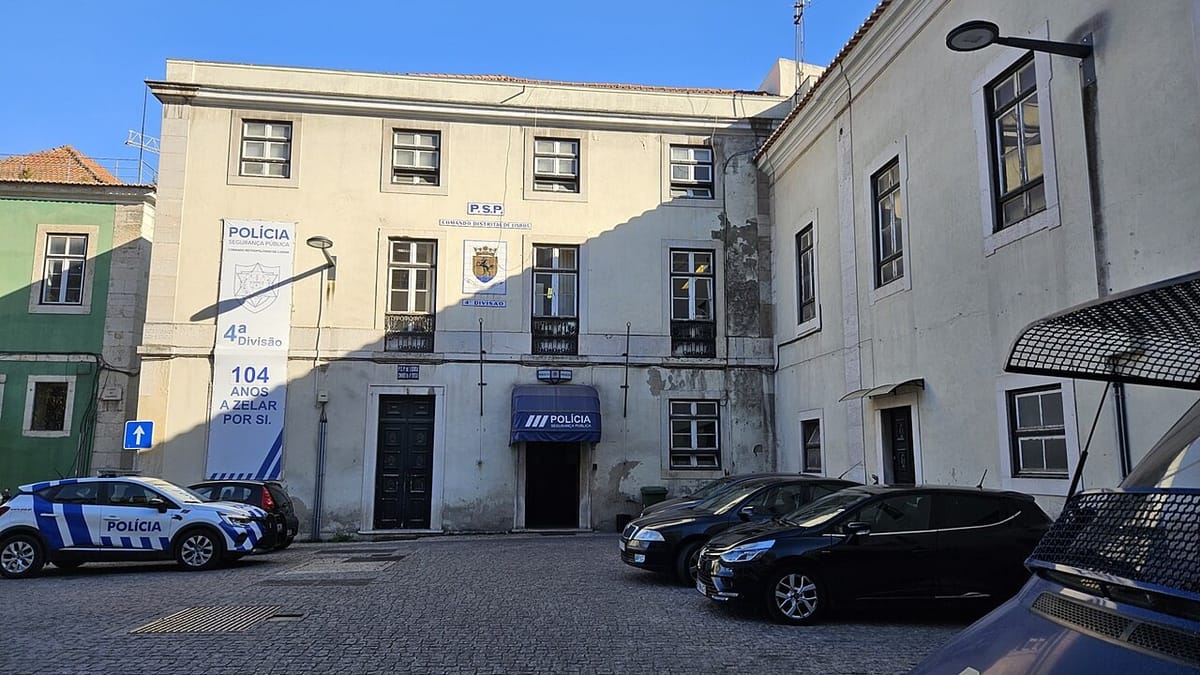
Feature image: the PSP's 4th Division station in Alcântara, Lisbon. Photo by GualdimG (CC BY-SA 4.0), via Wikimedia Commons.