Complaining to the Ombudsman (Provedor de Justiça) in Portugal
Researched and written with AI tools from official sources. How we make our guides
How to complain free of charge to Portugal's Ombudsman when AIMA, the tax office, Social Security, or a council treats you unfairly or ignores you.

Last verified: September 2026.
Who this is for
- A public body such as AIMA, the tax office, or Social Security has ignored you or stalled for months.
- You think a council, public hospital, or public service company treated you unfairly or broke the rules.
- You are not Portuguese, or you live abroad, and a Portuguese public body has wronged you.
Not for you if: you need a judge to order the state to act fast. Read "Getting an Urgent Court Order against the State in Portugal". For a problem with a shop or private firm, read "Filing a Consumer Complaint in Portugal (Livro de Reclamações)".
The Ombudsman (Provedor de Justiça) is an independent state body that looks into complaints against public bodies in Portugal. Complaining is free, you do not need a lawyer, and the law sets no time limit for making a complaint. Anyone can use it, whatever their nationality. The Ombudsman cannot overturn a decision, but it can question the body and recommend a fix. In recent years, 60% of cases closed within 90 days and 85% within a year.
Who can complain, and about what
Anyone can complain: Portuguese citizens, foreign nationals, and stateless people. Companies and associations can complain too. The rules set no residence condition, and you do not have to be the person harmed.
You can complain about something a public body did, or failed to do, that you think is illegal or unfair. That covers:
- government departments and agencies, national, regional, or local, including councils;
- public institutes, such as AIMA or Social Security;
- the armed forces and the police;
- independent regulators;
- public companies, and companies that run a public service under a state concession;
- professional bodies (ordens).
Delay counts. Complaints about AIMA are a large share of the Ombudsman's work. In 2025, 15,342 people complained, and 31% of them complained about the entry and residence of foreign nationals. The Ombudsman's report for that year says AIMA often took well over a year to decide residence applications.
What the Ombudsman cannot do
The Ombudsman has no power to cancel, reverse, or change a public body's decision. It cannot give binding orders. Its tools are questions, inspections, and recommendations.
It will not take on:
- disputes between private people or private companies, such as a landlord, an employer, or a bank (the public bank Caixa Geral de Depósitos is an exception);
- a matter a court or the Public Prosecutor's Office is dealing with, or has already decided;
- complaints about foreign governments or EU institutions (for EU bodies, go to the European Ombudsman);
- anonymous complaints.
It can look at unreasonable delay in a court case, but those complaints go through the councils that oversee judges and prosecutors.
Before you complain
Complain to the public body itself first. The Ombudsman treats a complaint as premature if the body has not had a chance to answer. In 2025, a quarter of the complaints it turned away at the first check were turned away for this reason.
Keep a copy of what you sent and any reply. Note the dates, reference numbers, and the names of anyone you spoke to.
How to complain
- Gather your evidence: letters, emails, receipts, photos, appointment slips, and the body's reply, if any.
- Write a short, clear account. Say which body you are complaining about, what happened, and what you want.
- Explain what you have already done to sort it out with that body, and what it said.
- Give your full name, address, and phone number. The Ombudsman does not accept anonymous complaints.
- Send it by the online form on the "Submeter Queixa" page, by email, by letter, or by phone. You can also hand it in at the Ombudsman's office.
- If you prefer, give it to any Public Prosecutor's office (Ministério Público). It must pass the complaint on at once.
If you complain in person or by phone, staff write it down and ask you to sign it where you can. If you fear for your safety, you can ask for your identity to be kept confidential.
Where to send it
- Online form: the "Submeter Queixa" page on provedor-jus.pt. If the form does not work, use one of the other routes.
- Email: [email protected].
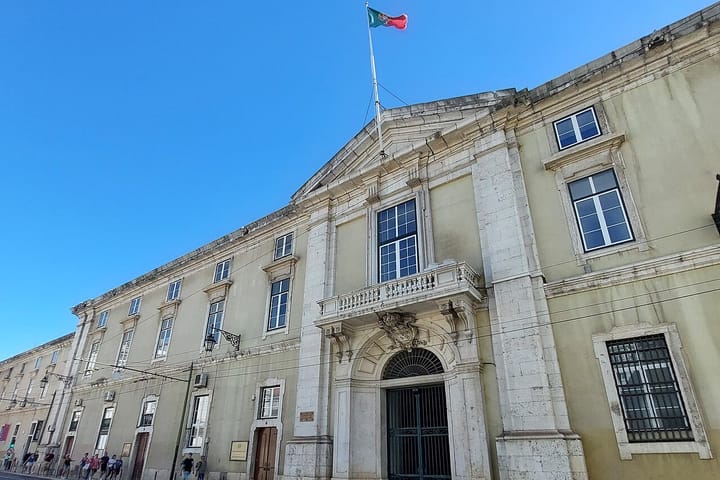
- Post, or in person: Provedor de Justiça, Palácio Vilalva, Rua Marquês de Fronteira, 1069-452 Lisboa. The public desk opens Monday to Friday, 09:00 to 17:00.
- Phone: +351 213 926 600, or the general line 800 200 084.
- Azores: Solar da Madre de Deus, Apartado 144, 9700-033 Angra do Heroísmo, or [email protected].
- Madeira: Palácio de São Lourenço, Av. Zarco, 9001-902 Funchal, or [email protected]. The Funchal office is not taking visitors in person for now.
In 2025, most complaints arrived by email (55%) or through the online form (36%).
What happens next
- Staff first check that the complaint is within the Ombudsman's remit. You are told whether a case is opened or refused.
- If it is outside the remit, you are told, and where possible pointed to the right body.
- If a case opens, staff contact the public body, ask for information, and may inspect its offices without notice. Public bodies must cooperate. Refusing without good reason is a crime.
- The Ombudsman may close a minor case with a warning to the body, or with the body's explanation.
- In serious cases, it sends a formal recommendation. The body must say within 60 days whether it will follow it. A refusal must give reasons. The Ombudsman can then go to the minister in charge, or to Parliament.
- You are told when your case closes, and why.
You always get an answer or some guidance. How long it takes depends partly on how fast the public body replies. Of the full complaints closed in 2025, just over half ended because the body put the problem right during the inquiry.
You cannot appeal the Ombudsman's decision to a court. You can only ask the Ombudsman to look at it again.
Free helplines for children, older people, and people with disabilities
The Ombudsman runs three free phone lines. Staff give advice and can contact the service involved for you. The lines open on working days from 09:30 to 17:30, with an answering machine at other times.
- Children's line (Linha da Criança): 800 20 66 56. For children at risk, neglect, school problems, and parental responsibility questions.
- Older people's line (Linha do Cidadão Idoso): 800 20 35 31. For rights and support in health, Social Security, housing, facilities, and services.
- Disability line (Linha do Cidadão com Deficiência): 800 20 84 62. For rights and support in health, Social Security, housing, facilities, and services.
If you may also need a court
A complaint to the Ombudsman does not stop any deadline running. This includes the deadline to appeal a decision within the public body, or to take it to court. If you have received a decision you want to challenge, act on that deadline as well. The Ombudsman must always tell you what court options you have.
If the Ombudsman thinks a legal route suits your case better, it may simply refer you there.
This guide is general information, not legal advice.
Sources
This guide is written from official Portuguese and EU sources and, for prices and contact details, the providers' own websites.
- Provedor de Justiça, Perguntas Frequentes (FAQ) (Portuguese; who can complain, no time limit, bodies covered, what is outside the remit, ways to complain, what to include, free of charge, no lawyer, 85% within a year and 60% within 90 days)
- Provedor de Justiça, FAQ: File a complaint (English; complain to the body first, no anonymous complaints, link to the online form)
- Provedor de Justiça, Submeter Queixa (Portuguese; complain to the body first, name and contacts needed, online form, alternative routes)
- Provedor de Justiça, A quem mais pode dirigir uma queixa (Portuguese; private banks and Caixa Geral de Depósitos, courts, court delays and the oversight councils, foreign and EU bodies, European Ombudsman)
- Provedor de Justiça, Contactos (Portuguese; Lisbon address and hours, phone lines, email, Azores and Madeira offices, Funchal desk closed for now)
- Provedor de Justiça, Contacts (English; general line 800 200 084)
- Provedor de Justiça, Linha da Criança (Portuguese; number, hours, free call, what it covers)
- Provedor de Justiça, Linha do Cidadão Idoso (Portuguese; number, hours, free call, what it covers)
- Provedor de Justiça, Linha do Cidadão com Deficiência (Portuguese; number, hours, free call, what it covers)
- Provedor de Justiça, Estatuto do Provedor de Justiça, Lei n.º 9/91, as amended by Lei n.º 30/96, Lei n.º 52-A/2005 and Lei n.º 17/2013 (Portuguese only; bodies covered (article 2), no power to annul and deadlines not suspended (article 22), no time limit (article 24), how to complain, confidentiality and the Public Prosecutor route (article 25), inspections (article 21), first check (article 27), duty to cooperate (article 29), closure (article 31), referral and court options (article 32), minor cases (article 33), no appeal (article 36), 60-day reply to recommendations (article 38), free of charge (article 39))
- Assembleia da República, Constituição da República Portuguesa, artigo 23.º (Portuguese only; the Ombudsman's constitutional role, no decision-making power)
- Provedor de Justiça, Relatório de Atividade 2025 (Portuguese only; 15,342 complainants, 31% on entry and residence of foreign nationals (chart 22-B), AIMA delays (section 3.1), closure reasons (chart 15), premature complaints (chart 16), how complaints arrived (chart 3))
Last verified September 2026. Rules and fees change; check the official source before acting.