The SNS Anti-Fraud Commission Has Sent Procurement Cases to Prosecutors, but Eight Months In It Has Given No Numbers
Judge Carlos Alexandre says the commission has referred public-procurement cases to prosecutors and the Court of Auditors and flagged anomalous prescribing, without saying how many cases or how much money.
Eight months after it started work, the commission set up to fight fraud in the Serviço Nacional de Saúde (National Health Service, or SNS) has sent public-procurement cases to prosecutors and to the Court of Auditors. It has also flagged what it calls "anomalous patterns" in the way medicines and medical devices are prescribed and dispensed. Its president, Judge Carlos Alexandre of the Lisbon Court of Appeal, disclosed this on Friday in a written answer to the Lusa news agency.
What he did not disclose is just as telling. The answer gives no number of cases, no sums of money, no hospitals or suppliers, and no period beyond the commission's eight months of work.
What the commission says it has done
According to Lusa, the Comissão de Combate à Fraude no SNS (SNS Anti-Fraud Commission, or CCF-SNS) has handled complaints that reached it by email and from public bodies. On procurement, the judge said, the commission's "analysis and systematisation" of the cases "supported sending them to the Ministério Público" (Public Prosecutor's Office), which leads criminal investigations, and to the Tribunal de Contas (Court of Auditors), which polices the legality of public spending. A referral is not a charge: it is now for prosecutors to decide whether to open an inquiry, and nothing published so far says they have.
The prescribing findings went a different way. They described "misuse of the system" and led to recommendations to the bodies concerned rather than referrals. The commission has also drafted proposals to change the rules on prescribing and dispensing medicines, medical devices and dietetic products.
A preliminary review, he said, found "critical weaknesses": a habit of reacting rather than preventing, rules in need of revision, and too little internal control and systematic monitoring. The commission wants automatic alerts and risk indicators added to the platform the SNS shared-services body, SPMS, uses to track waste.
How the commission works
The body was created by Council of Ministers Resolution 182/2025, published in the Diário da República (official gazette) on 26 November 2025. Its mission is to "centralise, coordinate and carry out" fraud prevention and detection across all areas of SNS spending. Its president must be a magistrate, appointed for three years; Carlos Alexandre, best known as the investigating judge in several of Portugal's biggest corruption cases, was named in December. Its six permanent members come from the Polícia Judiciária (criminal police), the finance and health inspectorates (IGF and IGAS), SPMS, the central health administration (ACSS) and Infarmed, the medicines regulator.
The resolution also states that the members take no orders from ministers. The commission must report suspected fraud to the competent authorities, and they can propose inspections and audits. The commission does not prosecute or punish anyone itself.
When the numbers should appear
Point 19 of the resolution requires the commission to send an annual report on the previous year's work to the justice and health ministers every January. Its first full report, covering 2026, is therefore due in January 2027. The resolution does not say it must be published, so whether readers see the figures behind Friday's announcement depends on the ministers or the commission choosing to release them.
Health procurement has drawn scrutiny before. On Monday we reported that the Court of Auditors had refused to clear a 13.5 million euro contract for Évora's radiotherapy unit, and prosecutors brought charges in the twins case. Neither is linked to the commission's referrals, which it has not identified.
Sources: Judge Carlos Alexandre's written answer to Lusa, 2 October 2026, as carried by RTP; Council of Ministers Resolution 182/2025, Diário da República; Council of Ministers communiqué, 11 December 2025 (all in Portuguese).
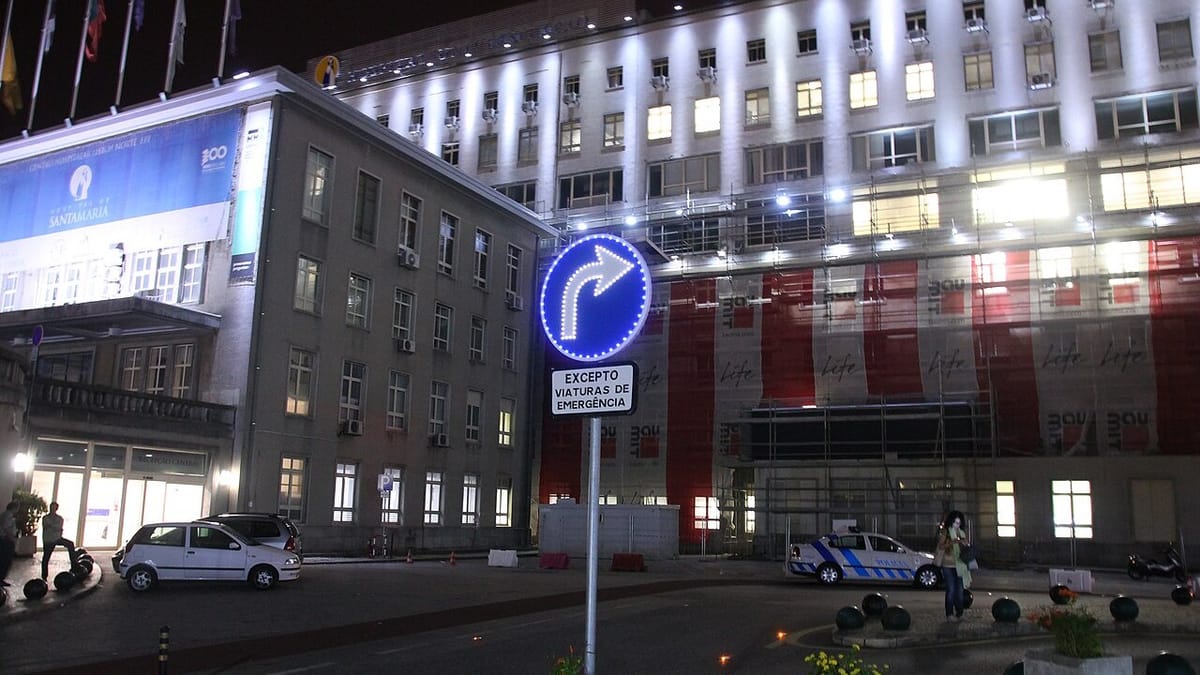
Feature image: Hospital de Santa Maria, Lisbon, one of the SNS's largest hospitals. Photo by Draceane (CC BY-SA 4.0), via Wikimedia Commons.