Court of Auditors Refused to Clear a 13.5 Million Euro Contract to Run Évora's Radiotherapy Unit, Saying the Health Service Skipped Partnership Rules
The newly published ruling says the Central Alentejo health unit signed a deal with ATRYS without the studies and approvals a public-private partnership needs. Évora's unit has been shut since 1 June.
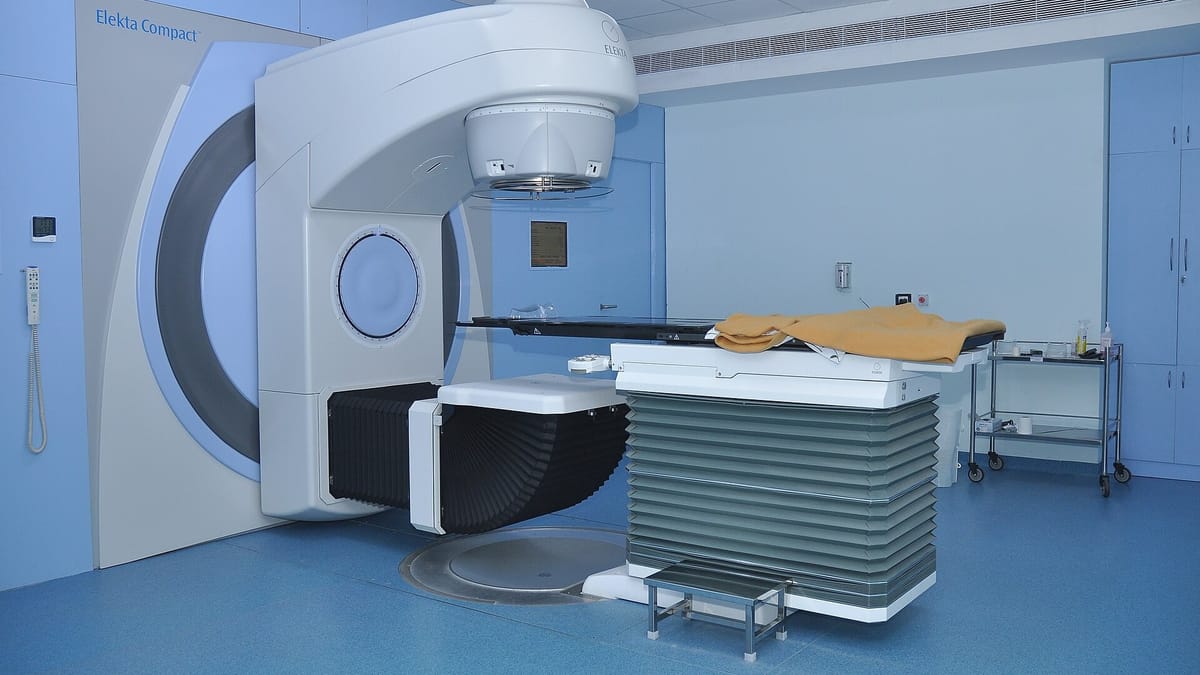
The Tribunal de Contas (Court of Auditors) blocked a 13.5 million euro contract to run the radiotherapy unit at Évora's hospital because the regional health service skipped the procedure the law requires for a public-private partnership, the court's ruling shows. The ruling, dated 17 July, was posted on the court's website on 21 September. In September the Bloco de Esquerda (Left Bloc) said the contract had been annulled by the court without the grounds being known.
Cancer patients from the Évora area have not been treated at the unit since 1 June. The Unidade Local de Saúde do Alentejo Central (ULSAC, the Central Alentejo local health unit) said in a statement reported by the Lusa news agency on 9 September that the unit is closed for a full renovation and new equipment, and that treatment in Évora will resume only once technical tests, compulsory licences and clinical safety checks are complete. It gave no date. Patients are being treated in Santarém, Faro or Lisbon, the Lusa report said.
What the health unit signed
The ULSAC opened a public tender in February 2026 for a "concession to operate the radiation oncology unit", with a base price of 18,658,209 euros over a maximum of five years. Three companies bid: ATRYS Portugal Centro Médico Avançado, Mercurius Health and Joaquim Chaves Oncologia. The tender was decided on lowest price, and on 12 May the ULSAC signed contract 421/26 with ATRYS for 13,500,435 euros, for four years from 1 May 2026, renewable for one more year.
Under the contract, ATRYS was to run the unit without interruption, including while the old linear accelerators, the machines that deliver radiotherapy, were replaced. During that work it had to send patients to another unit in the national network, chosen to be as close as possible to each patient's home. It also had to buy a new planning CT scanner, immobilisation equipment and software, and pay for work on the building, all of which would pass to the hospital free of charge at the end. The ULSAC had separately bought new accelerators for 4,118,000 euros plus VAT.
Before the new contract, the ULSAC had signed a direct award with Joaquim Chaves Oncologia on 28 April, worth 487,662.37 euros and lasting 61 days, "to ensure the continuity of the concession" of the unit, according to the public procurement portal BASE.
Why the court said no
Public contracts of this size must be cleared by the court in advance (its "visto") before they can be paid. The court found two problems.
First, it ruled that the deal was a public-private partnership. It was a long-term contract under which a private company takes on the operation of a public service, part of the investment and financing, and the risk that fewer patients than expected come through the door. Under the law on public-private partnerships, such deals must first go through studies of their budget impact and value for money, a matrix of risks, and approval from the health and finance ministries, before any tender. The law exempts only partnerships costing the public sector less than 10 million euros and involving less than 25 million euros of investment. This one cost 13.5 million, so it did not qualify. A separate law on management partnerships in health was not followed either.
The ULSAC argued that partnerships usually involve large private investment, while the private investment here was "very small, less than one million euros including works and equipment", and that it lacked the know-how to set up a partnership, a "complex and slow" process. In its reply to the court it acknowledged that it had not carried out the studies and approvals the partnership law requires.
The judges said a clean public tender does not cure the omission, and that a lack of expertise or time is not a legal reason to skip a mandatory regime. They found a "total omission of the legally required procedure", which makes the contract void.
Second, the court found that the spending over several years had not been authorised in advance by the health and finance ministers, as the law on public commitments requires. The ULSAC said it had applied for that authorisation on 23 April and expected it "at any moment". The court said an application is not an authorisation.
"Referred to Lisbon"
The ULSAC warned the court that refusing the contract would mean no radiotherapy for the region and would force "patients from the whole Alentejo region to be referred to Lisbon", making daily trips for long courses of treatment, with the transport paid by the state.
The judges answered that they were "not indifferent" to the care at stake, but that the public interest is protected "not outside financial legality, but through it". The difficulty, they wrote, came from the health unit's own failure to follow the law, "and nothing prevents the contract from being relaunched" under the proper procedure. The ULSAC told the court that it would bear a partnership in mind "in a future contract".
The ruling is marked as not yet final, which means it could still be appealed. The court's decision does not say how the unit will be run once the new equipment is licensed, and the ULSAC's September statement did not say either.
If you are being treated
- While the Évora unit is closed, patients are being treated in Santarém, Faro or Lisbon, according to the Lusa report.
- If you are a patient of the Évora hospital and need radiotherapy, ask your hospital team where you have been referred and how transport to treatment works.
- Complaints about access or delays can be made in the hospital's complaints book or to the health regulator, as explained in our guide to disputing a hospital or clinic bill.
Spending on cancer care in Portugal has risen fast: hospital cancer-drug bills have tripled in a decade.
Sources: Tribunal de Contas, Acórdão n.º 08/2026 (1.ª Secção/Subsecção), Processo 1191/2026, 17 July 2026, posted 21 September 2026; BASE public procurement portal, contracts 14873638 (ATRYS) and 14724986 (Joaquim Chaves Oncologia); ULSAC statement reported by Lusa, 9 September 2026.