Portugal's Doctors Demand a National Earthquake-Resilience Audit of Hospitals and Regular Disaster Drills
The Ordem dos Medicos (Medical Association) wants a nationwide assessment of how well Portugal's hospitals would withstand a major earthquake, plus regular disaster drills, warning that a quake-damaged hospital becomes 'a catastrophe within a catastrophe' just when patients need it most.
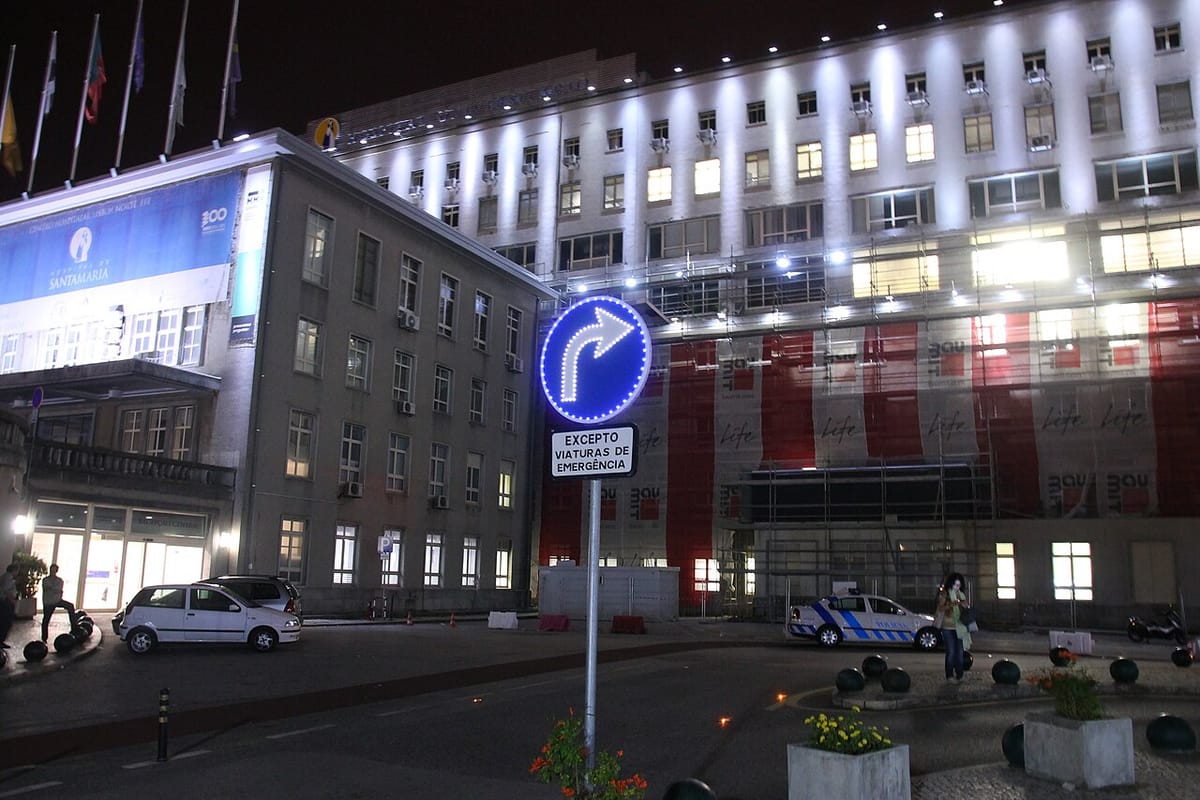
Portugal's medical establishment wants to know a simple but uncomfortable thing: if a major earthquake struck tomorrow, how many of the country's hospitals would still be standing and working when the injured arrived? On Wednesday the Ordem dos Médicos (Medical Association) called for a national assessment of the seismic resilience of Portuguese hospitals, backed by regular, realistic disaster drills — arguing that the buildings meant to save lives in a catastrophe are themselves among the least prepared to survive one.
The warning lands in a country that sits on one of Western Europe's more active seismic settings and that has spent the summer feeling the ground move. A magnitude 3.4 tremor rattled the Alentejo before dawn earlier this month, and seismic swarms in the Azores have kept volcanic alerts elevated, including the raised alert on Pico. None caused damage. The point the doctors are making is that Portugal should not wait for the one that does.
What the Ordem dos Médicos is asking for
The Medical Association's proposal has two pillars. The first is a formal, nationwide evaluation of how well hospital infrastructure would withstand a strong earthquake — an audit that identifies structural vulnerabilities, sets investment priorities, and produces credible continuity-of-care plans for each unit. The Ordem wants that assessment carried out jointly by the health authorities, Civil Protection, INEM (the National Institute of Medical Emergency), hospital administrations, frontline health professionals and technical experts, rather than treated as a paperwork exercise inside a single ministry.
The second pillar is practice. The doctors want periodic exercises that test, under conditions close to a real event, how hospitals, pre-hospital emergency teams, firefighters and Civil Protection actually coordinate when the system is under stress. The priority throughout is keeping the services that matter most in a mass-casualty event running: emergency departments, intensive care units and operating theatres.
That means going well beyond the walls and floors. The Ordem stresses that a functioning hospital in a disaster needs guaranteed backup power, working communications, and secure supplies of water, oxygen, medicines and blood, alongside protected information systems and usable evacuation routes. It is a checklist that reads a lot like the one Portugal has been drawing up for other kinds of shock — the government recently opened a €25 million tender for energy storage to keep hospitals and water systems running through a blackout, and the Bank of Portugal built a national payment-resilience plan after the April 2025 Iberian blackout.
'A catastrophe within a catastrophe'
The clinical argument was put bluntly the same day by Nelson Olim, a specialist in humanitarian, conflict and disaster medicine. Speaking to RTP, he said that for people living in seismic zones — "as is the Portuguese case" — it is well worth thinking about the importance of reinforcing the structural capacity of hospitals. His concern is a grim feedback loop: a hospital that is itself damaged by a quake stops being part of the response and becomes part of the emergency, "themselves in a situation of catastrophe," at exactly the moment demand for care spikes.
That scenario is not hypothetical elsewhere. Modern earthquake medicine is shaped by cases where hospitals collapsed or were evacuated mid-crisis, forcing the transfer of critically ill patients and knocking out surgical capacity in the first hours, when survival odds fall fastest. The lesson repeatedly drawn is that hospital buildings are critical infrastructure in the strict sense — they have to keep operating, not merely avoid killing the people inside them.
Why Portugal, and why now
Portugal's seismic risk is not a modern discovery. The 1755 Lisbon earthquake and the tsunami and fires that followed destroyed much of the capital and remains one of the deadliest natural disasters in European history, and the same offshore fault zones southwest of the mainland, together with the tectonically active Azores, keep the hazard live. Lisbon and the Algarve sit in the highest-risk bands of the national seismic map, and much of the country's building stock — hospitals included — predates modern anti-seismic construction standards.
Successive studies of Portuguese public buildings have flagged that a significant share of hospitals and schools were built before today's codes and have never been systematically retrofitted. The Ordem dos Médicos is effectively asking the state to turn that general anxiety into a specific, funded programme: survey the buildings, rank them by risk, fix the worst, and rehearse the plan. What it is not proposing is a single grand construction project; the emphasis is on knowing the national capacity first, then investing where the gap between need and readiness is widest.
What this means for foreign residents
- It is a preparedness call, not an alarm. No new earthquake has been forecast. The doctors are pressing for planning and investment, and there is no reason for residents to change daily routines because of this statement.
- Know your building's seismic reality. If you live in Lisbon, the Setúbal peninsula or the Algarve — the higher-risk zones — it is worth knowing whether your home was built to modern anti-seismic standards, and keeping a basic emergency kit (water, torch, documents, a battery power bank) as Civil Protection advises.
- Emergency care is 112, and the SNS is the backbone. In any major incident the public system leads the response through INEM and hospital emergency departments. Private insurance rarely helps in a mass-casualty event; make sure you and your family can navigate the public emergency route.
- Watch for a funded follow-through. The signal to track is whether the government commits money and a timetable to hospital retrofitting and drills, or whether the proposal stays on paper. That, not the headline, is what will actually change readiness.
- Learn the drill culture if you have children in school. Portugal runs periodic earthquake exercises (the large-scale "A Terra Treme" simulation among them); knowing the drop-cover-hold-on routine is the single most useful individual preparation.
Whether the appeal translates into budget lines and building works is now a political question. But the Ordem dos Médicos has reframed an old worry in operational terms: Portugal's hospitals are not just places that treat disaster victims — in the wrong quake, they could become victims themselves, and the time to find out which ones is before the ground moves, not after. On the alert now standing over São Miguel, our report on the Furnas volcanic alert, which put a fourth Azorean volcanic system at V1 and came with an eight-day expiry the other three never had sets the latest reference.