A Magnitude 3.4 Earthquake Rattles the Alentejo Before Dawn, With No Damage Reported
A magnitude 3.4 earthquake struck about 18 km east of Odemira at 03:08 on Monday, felt across the Beja and Setúbal districts at intensity IV–V but causing no injuries or damage, according to IPMA, which also logged a smaller, unfelt tremor off Cape St Vincent.
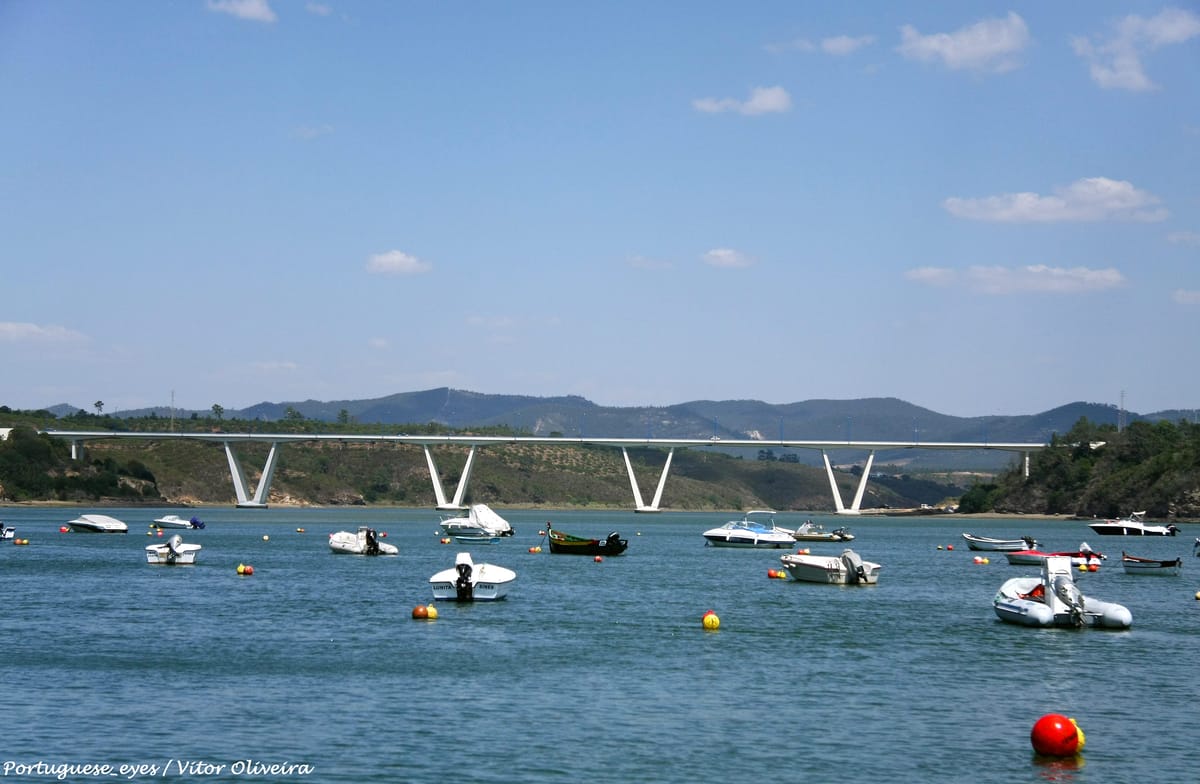
Residents across a swathe of southern Portugal were woken before dawn on Monday when a magnitude 3.4 earthquake struck the Alentejo coast. The sismo (earthquake) hit at 03:08, with an epicentre roughly 18 kilometres east of Odemira, according to the Instituto Português do Mar e da Atmosfera (Portuguese Institute for the Sea and Atmosphere, IPMA). The institute reported no personal injuries and no material damage.
Although modest in magnitude, the quake was widely felt because it was shallow and close to inhabited areas. IPMA recorded a maximum intensity of IV to V on the modified Mercalli scale (escala de Mercalli modificada) in Odemira itself — the level at which a tremor is felt clearly indoors, windows and doors rattle, and sleeping people are woken. The shaking was also reported in Almodôvar, Beja, Ourique and Santiago do Cacém, spreading across the districts of Beja and Setúbal.
It was not the only movement overnight. IPMA also logged a smaller tremor of magnitude 2.5 at 00:13, off Cabo de São Vicente (Cape St Vincent), the south-western tip of the Algarve. That one was too weak to be felt and caused no alarm, but it was a reminder that the seabed off Portugal's south-west is one of the more seismically restless corners of Europe.
That restlessness has deep roots. South-western Portugal sits near the boundary between the African and Eurasian tectonic plates, the same broad fault zone that produced the catastrophic 1755 Lisbon earthquake and the tsunami that followed. Nothing about Monday's tremor approaches that scale — the energy released by a magnitude 3.4 event is millions of times smaller than the great quake of 1755 — but the memory helps explain why even a minor shudder before dawn sets phones buzzing and prompts a flurry of calls to family.
Seismologists stress that small earthquakes of this kind are routine and are not, in themselves, a warning of anything larger to come. Portugal records dozens of low-magnitude events every year, most of them offshore and unfelt. The value of an episode like this one lies less in the shaking than in the reminder it offers: that the ground beneath the Alentejo and the Algarve is live, and that basic preparedness — knowing where to shelter, keeping heavy objects secured — is sensible in a region with this geological history.
IPMA, which runs the national seismic network, monitors activity continuously and publishes communiqués after any felt event. For residents jolted awake on Monday morning, the institute's message was reassuring in its brevity: the earth moved, it was felt across several municipalities, and nothing broke. Anyone who feels a tremor is asked to report it through IPMA's online questionnaire, which helps the institute map how far and how strongly each event was felt — data that, over time, sharpens the picture of exactly where Portugal shakes. On the alert now standing over São Miguel, our report on the Furnas volcanic alert, which put a fourth Azorean volcanic system at V1 and came with an eight-day expiry the other three never had sets the latest reference.