General Daily Briefing: Sunday, 13 September 2026

Good morning. Here is your Sunday briefing for 13 September 2026: the day's essential Portugal stories for residents, expats and anyone keeping an eye on the country, running from the 130 beds behind the country's new return law to the seven buildings the nation voted for on Saturday night.
- Immigration: Portugal has 130 places in which to hold people it intends to remove, and the PSP wants 306 of them by the second half of 2027.
- Borders: irregular migrants are increasingly arriving in Lisbon and Porto by coach and train from elsewhere in Europe, and the border unit is moving its attention to the terminals.
- Industry: seventy-one Portuguese footwear-chain companies open a week of Milan trade fairs carrying the results of two Recovery Plan research projects.
- Heritage: the Castelo de Leiria and the Se de Lisboa head the new Seven Wonders of Portugal, chosen on Saturday night from 147 candidates.
- Infrastructure: the A1 was finished 35 years ago today, and now carries 2.6 times the daily traffic of the year it was completed.
- Tourism: the navigable Douro carried 1.39 million passengers last year, and the operators say locks and quays are what limit the next million.
Building Work on Your Own House in Portugal in 2026
Portuguese law exempts more domestic building work from council control than its reputation suggests, and the 2024 Simplex reform widened the list further. Our new guide sets out exactly where the lines fall: the 10 square metre shed, the 1.8 metre wall, what counts as maintenance and what tips over into a licensable work, the heritage rule that cancels the whole exemption list at a stroke, and what the fines look like if you get it wrong.
After a Car Accident in Portugal in 2026
Signing a declaracao amigavel at the roadside halves every deadline your insurer is working to, which is the single most useful thing to know before it happens. Our new guide covers what the law guarantees you after a collision: two working days to first contact, thirty to a decision, eight to payment, double-rate interest when the insurer is late, and what the Fundo de Garantia Automovel does when the other driver has no cover at all.
Portugal Has 130 Places to Hold the People It Plans to Remove
Superintendente-Chefe Joao Ribeiro, deputy national director of the PSP and head of the Unidade Nacional de Estrangeiros e Fronteiras, told the Lusa news agency that the country's entire capacity for holding foreign nationals facing removal is 130 places, spread across the Centro de Instalacao Temporaria in Porto, the Unidade Habitacional de Santo Antonio and the equivalent spaces at Lisbon and Porto airports. The Faro space is closed for building work. "With the expansion of the Unidade Habitacional de Santo Antonio, we are meeting the targets Portugal is obliged to meet," he said, and put the goal at 306 places in the second half of 2027. The context is the new return and asylum law, in force since Friday, which lengthens the maximum stay in such a centre to 180 days, renewable for the same period again. Asked how longer detention squares with a fixed number of beds, he pointed to voluntary return with reintegration support. Forced removal, he said, depends on the other government: some confirm a national in days, others take "four months or more". Portugal lost 30 million euros of European funding earmarked for two new centres, and the unit also wants a national screening centre beside Lisbon airport for people who claim asylum at an air border.
More Irregular Migrants Are Reaching Lisbon and Porto by Coach and Train
In the same interview, the head of the PSP's borders unit said the force has identified "risk factors" in road and rail arrivals into the Lisbon and Porto metropolitan areas. "There are people in an irregular situation in other countries who are looking to move around inside the Schengen area, changing from country to country," Ribeiro said. The phenomenon, which EU officials call secondary movement, is "not exactly new", but on the unit's data and its officers' impressions it is growing. The PSP can run what he called mobile border control at coach stations and railway stations, and will be watching both those hubs and the presence of particular national communities over the coming months, without specifying which. Often Portugal is not the destination: he gave Ireland as an example of a country reachable from here only by air, and said the country is being used as a platform of access to other member states. The unit now has 1,504 officers on airport security and border control, 706 of them at Lisbon, but Ribeiro put that at 80 percent of the recommended capacity. "Our external borders represent a risk factor, but what worries us at this moment turns out to be the secondary movements."
Seventy-One Portuguese Footwear Companies Open a Milan Week
APICCAPS, the Portuguese footwear and leather goods association, counts 71 companies from the sector at three Milan trade fairs this week: 32 at Micam from Sunday to Tuesday, 31 at Lineapelle from Tuesday to Thursday, and eight at Simac Tanning Tech. It is the first of about ten overseas actions scheduled from September with AICEP and support from Compete 2030, taking nearly 100 Portuguese companies into international markets within two months. The association is candid about the backdrop: a "general slowdown in world footwear trade", with Portuguese footwear exports down 2.1 percent to 813 million euros in the first half. What the companies are carrying is the output of two Recovery Plan projects. BioShoes4All, shown at Lineapelle, involved 69 partners and about 60 million euros over four years, and produced more than 200 results including materials made from agro-industrial waste, water-based finishes and high bio-content rubbers. FAIST, at Simac, is an investment near 50 million euros that delivered 34 new products, processes and services aimed at small personalised production runs. APICCAPS president Luis Onofre called the wider programme, worth more than 100 million euros, the largest investment cycle in the industry's history.
Leiria's Castle and Lisbon's Cathedral Head the New Seven Wonders of Portugal
The Novas 7 Maravilhas de Portugal were announced at Saturday night's national final, one winner in each of seven categories. They are the Castelo de Leiria (castles), the Se de Lisboa (religion), the Roman ruins of Sao Cucufate at Vila de Frades in Vidigueira (history), the Aqueduto da Usseira in Obidos (great works), the markets of Olhao (twentieth-century architecture), the Tiago Cabaco Winery in Estremoz (twenty-first-century architecture) and the garden of the Paco Episcopal in Castelo Branco (tourism). The competition began with 147 heritage sites from the mainland and the islands and narrowed through regional rounds to 21 national finalists, three per category, across 14 television programmes. The theme this time was built heritage, historic and contemporary, which is how a working wine producer came to share a list with the seat of the Lisbon patriarchate. It is the first edition since 7 July 2007, and the organisers, who hold an affiliation with the New7Wonders Foundation, mark 20 years of the project in 2027. The vote carries no legal protection and no funding: what it carries is attention, which for Sao Cucufate, the Usseira aqueduct and the Castelo Branco garden is the whole point.
The A1 Turned Thirty-Five on Sunday
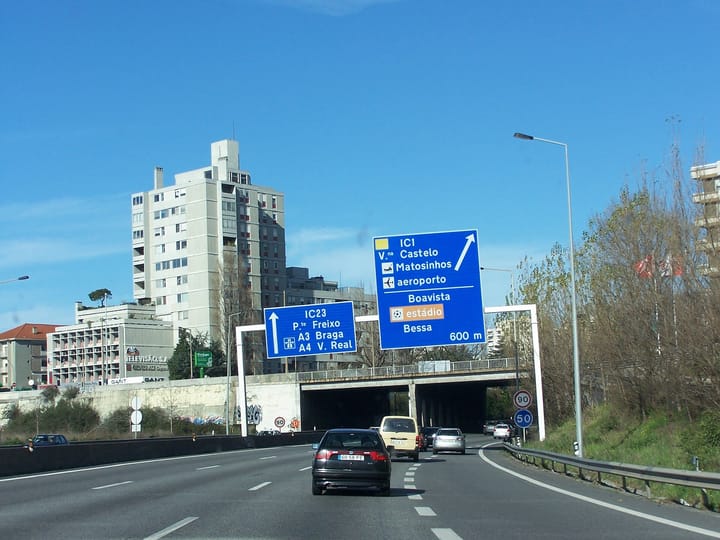
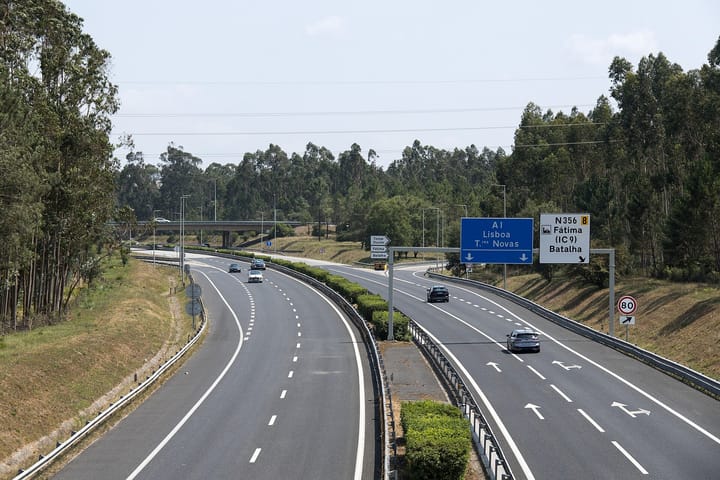
Portugal's busiest motorway was completed on 13 September 1991, when the stretch between Torres Novas and Condeixa-a-Nova opened and joined Lisbon to Porto without a break, 30 years after the first section to Vila Franca de Xira. Joaquim Mendes, one of the Brisa engineers on that final stretch and now 83, told Lusa what changed: "Before the motorways it took practically a day to get up there. Then the country got shorter. It stopped being 800 kilometres long and became 300 or 400." The work ran through rock, stable soils and water-sensitive clays that could not be used in construction, and threw up mines and caves near Fatima along with the need for wildlife crossings through the Serra de Aire e Candeeiros. He remembers a woman who lay down in front of the machinery, and a completion ceremony that was "above all political". For Brisa it was a hinge: the company went from about 200 kilometres of motorway to a network approaching a thousand within a few years. In a note marking the anniversary, Brisa says the A1 runs about 300 kilometres and carried an average of 42,885 vehicles a day in 2025, more than double the 1991 figure and 2.6 times the traffic of the year it was finished.
Locks and Quays Are the Ceiling on Portugal's Water Tourism
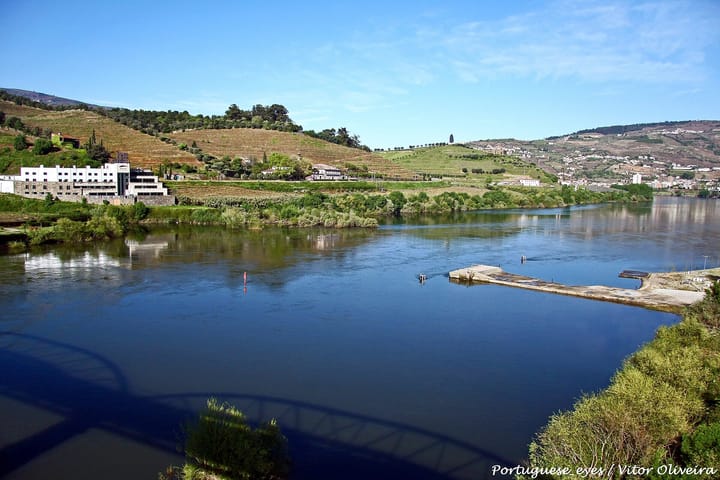
The Via Navegavel do Douro carried 1,388,646 passengers in 2025 against 1,377,858 the year before, an eighth consecutive year of growth, on figures from the Associacao das Actividades Maritimo-Turisticas do Douro. Behind that sat 113 operators, 252 vessels and close to 17,000 lock passages. Short cruises remain the largest segment and hotel ships keep growing, with Americans dominant in that upper tier and Spain gaining ground in day trips. The wider sector is larger still: 2,577 registered maritime-tourism vessels inside a fleet of more than 73,000 recreational craft, and an ACAP study cited by the Forum Oceano cluster putting recreational boating at more than 6,000 companies, 10,000 workers and 556 million euros of turnover, twelfth in Europe. The constraint everyone names is physical. The Douro association points to the locks and their operational capacity as the single factor most limiting growth, alongside the quays and port infrastructure, environmental sustainability and a shortage of qualified staff. Nationally, Ruben Eiras of Forum Oceano says marinas and quays in busy areas run out of capacity in high season while inland stretches have no mooring at all, and that financing aimed specifically at nautical tourism is scarce.