Portugal Has 130 Places to Hold the People It Plans to Remove, and the PSP Wants 306 by Late 2027
The head of the national foreigners and borders unit told Lusa the estate meets Portugal's obligations today. The return law that came into force on Friday lets people be held in it for up to 360 days.
Portugal has 130 places in which to hold a foreign national it intends to remove from the country. That is the whole national stock, and the head of the police unit that runs the system wants it at 306 by the second half of 2027.
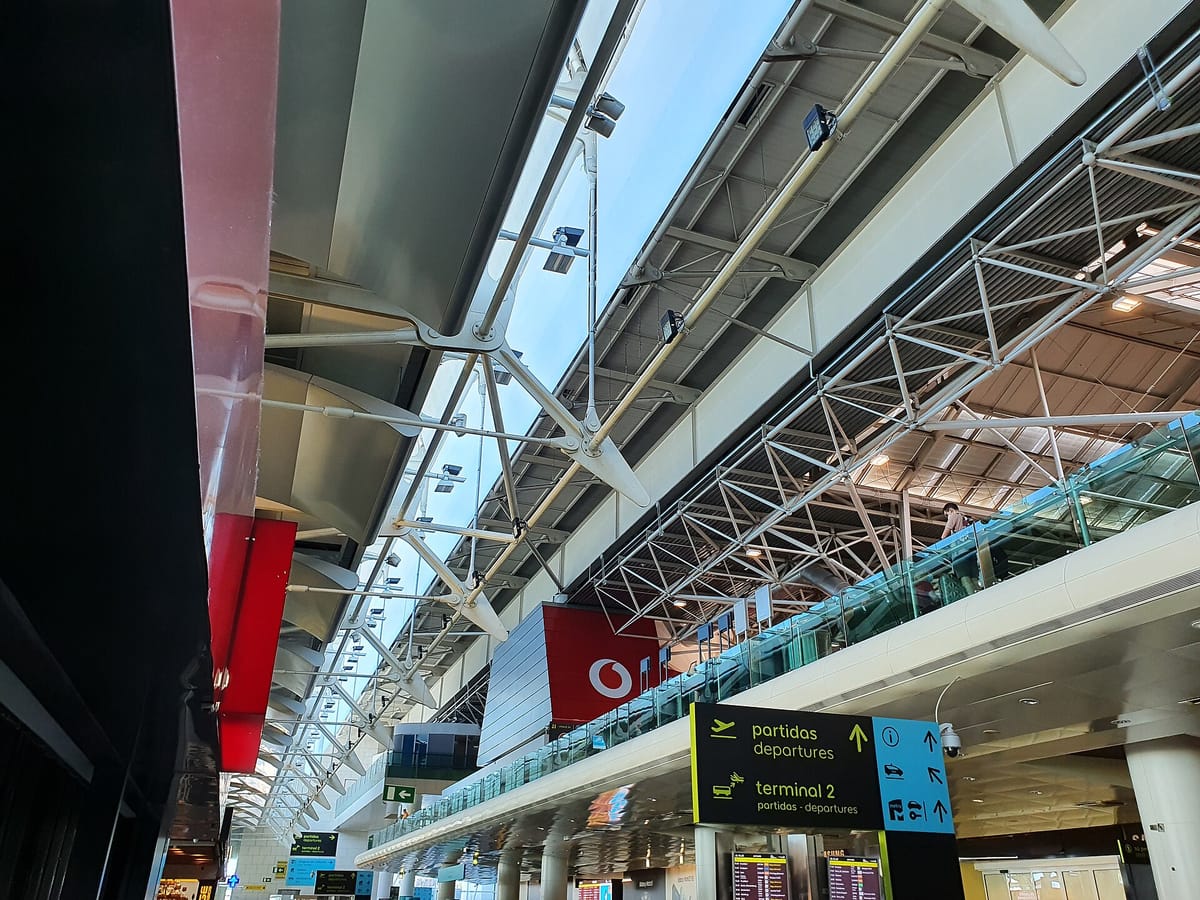
The figure comes from an interview given to the Lusa news agency by Superintendente-Chefe Joao Ribeiro, deputy national director of the PSP and the officer in charge of the Unidade Nacional de Estrangeiros e Fronteiras (UNEF), the national foreigners and borders unit that inherited the work of the abolished SEF. The 130 places are spread across the Centro de Instalacao Temporaria in Porto, the Unidade Habitacional de Santo Antonio, and the spaces treated as equivalent to temporary installation centres at Lisbon and Porto airports. The equivalent space at Faro airport is shut for building work.
"At this moment, with the expansion of the Unidade Habitacional de Santo Antonio, we are meeting the targets Portugal is obliged to meet," Ribeiro told Lusa. The obligation he refers to has just been rewritten. The new return and asylum law came into force on Friday, after the President promulgated it at the end of August and the Constitutional Court had cleared it unanimously. Among other things it lengthens the maximum stay in a temporary installation centre to 180 days, renewable for the same period again, allows parents and children to be separated in some circumstances, and permits the removal of minors from national territory.
Longer detention against a fixed number of beds
Lengthening detention without lengthening the estate is an arithmetic problem, and Ribeiro was asked about it directly. His answer was that the PSP is betting on people leaving of their own accord. "We place a great deal of emphasis on removal through voluntary return," he said. "Voluntary return means, in practical terms, agreeing to go back to the country of origin, receiving support so that you can restart your activity there, instead of our running a coercive process."
Coercive removal, he said, "always carries a negative charge", and it depends on a second government agreeing to take the person back. "That is the great Achilles heel of the whole model. There are countries that answer us quickly and the process is fast, and there are other countries where, precisely because of context and because of confirming that this citizen really is one of their nationals, it takes four months or more for them to accept him."
Thirty million euros that went unspent
Portugal lost 30 million euros of European money earmarked for building two temporary installation centres, and Ribeiro said finding "a quick solution" for new centres in Lisbon and Porto remains on the table. He wants enough capacity by 2028, and put the reason plainly: "If I increase enforcement and detect citizens in an irregular situation, I need somewhere to put them. The whole system is interconnected."
The unit also wants a national screening centre for irregular migrants, sited next to Lisbon airport and aimed particularly at people who claim asylum at an air border. It would, he said, allow the PSP "to carry out the screening and redirect all the cases scattered across the various places where international protection was requested". The building works and the contract are not finished. Since June, when the EU Pact on Migration and Asylum began to apply, the airports at Lisbon, Porto and Faro have each had screening facilities for arriving foreign nationals.