More Irregular Migrants Are Reaching Lisbon and Porto by Coach and Train, and the PSP Is Watching the Terminals
Secondary movement inside Schengen is now the borders unit's main worry, ahead of the external frontier. For many of those arriving, Portugal is a staging post rather than a destination.
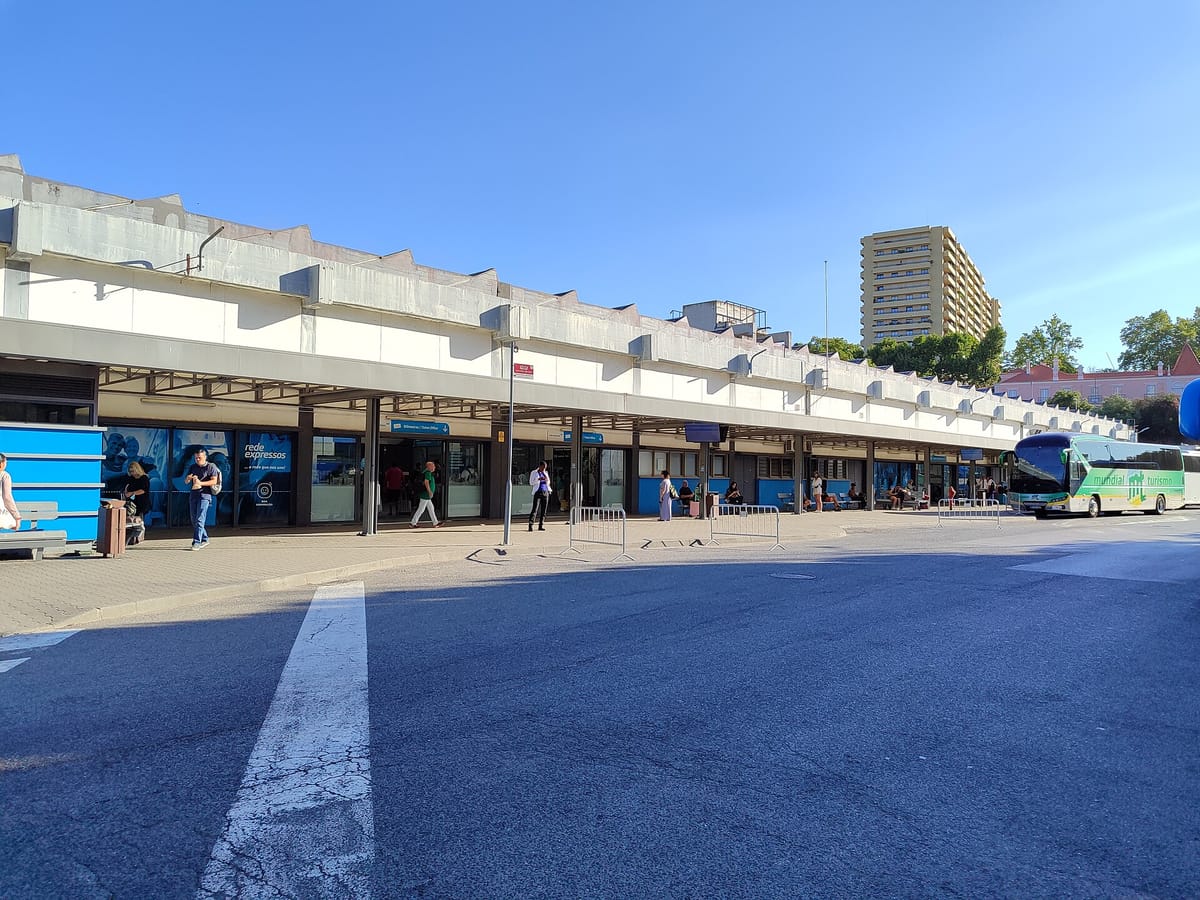
The people arriving in Portugal without papers are increasingly arriving on a coach from Paris or a train from Madrid rather than on a boat or a long-haul flight, and the PSP says the trend is strong enough to change where it puts its officers.
Superintendente-Chefe Joao Ribeiro, who heads the Unidade Nacional de Estrangeiros e Fronteiras (UNEF), told the Lusa news agency that the force has identified "risk factors" in road and rail flows into the Lisbon and Porto metropolitan areas. "There are people in an irregular situation in other countries who are looking to move around inside the Schengen area, changing from country to country," he said.
What he is describing is what EU officials call secondary movement: not a first entry into Europe, but a later hop between member states by someone who never obtained a legal status anywhere. Ribeiro was careful to say the phenomenon is "not exactly new". What has changed, on the unit's own data and its officers' impressions, is the volume. "These secondary movements in relation to Portugal have been increasing," he said.
Mobile checks at the terminals
People are arriving at the main coach stations and by rail, and the PSP has the legal power to run what Ribeiro called "a mobile border control" at those places. The typical case he sketched is someone who entered Europe elsewhere, spent time in the Netherlands, Belgium or France, never regularised, and drifted onward.
Often Portugal is not the destination. "The intention, very often, may not even be to stay in Portugal," he said, giving Ireland as an example of a country reachable from here only by air. That pattern, of people entering by land and leaving through a Portuguese airport, is part of what allows the unit to see the movement at all. It also means the country is being used, in his words, as a "platform of access" to other member states.
Ribeiro said the PSP will be paying attention over the coming months both to transport hubs and to the presence of particular national communities, without specifying which. He framed the whole question as one of reputation as much as enforcement: "The message often went round that it was easy to enter Portugal. Our first concern is that control should be efficient and effective."
The staffing behind it
The unit now has 1,504 officers working on airport security and border control, of whom 706 are at Lisbon, 325 at Porto, 215 at Faro, 115 in Madeira, 124 in the Azores and 19 at Beja. Even after that build-up, Ribeiro put the force at "80 percent of the recommended capacity", and said the next round of recruitment needs to be more technical: people trained to spot forged documents and to anticipate migration risks rather than simply to staff a booth.
The external frontier still counts, he said, but it is not what is keeping him awake. "Our external borders represent a risk factor, but what worries us at this moment turns out to be the secondary movements, what happens inside the EU space where Portugal can be used, and is being used in some situations." For those, he said, the unit relies on working arrangements with other countries' border forces rather than on anything it can do at the water's edge.