Emergency Numbers in Portugal and When to Call Them
Which number to call in Portugal for police, fire, ambulance, poisoning, sea rescue, or victim support, plus a printable list of every number.
Last verified: September 2026.
Who this is for
- Anyone living in or visiting Portugal who wants the right number before something goes wrong.
- New residents who want to know how police, fire, and civil protection work here.
- Visitors who have lost a passport or been the victim of a crime.
Not for you if: you need detail on ambulances, A&E triage, and hospital fees. Read "What to Do in a Medical Emergency in Portugal".
Portugal has one number for every emergency: 112. It is free, works from any phone, and reaches the police, an ambulance, or the fire service. For a health problem that is not life-threatening, call the SNS 24 line on 808 24 24 24 instead. It is also free. Other free lines cover poisoning, domestic violence, and victim support. Crimes that are not urgent can be reported online. This guide explains which number fits which situation and ends with a list you can print and keep by the phone.
When to call 112
Call 112 when a life, a person's health, property, or the environment is in immediate danger. Examples:
- someone is unconscious, not breathing, or has severe chest pain or bleeding
- a fire, a car crash, or a gas leak
- a crime happening now, or a person who is threatening you
- someone in trouble in the sea or a river
The call is free and works across the European Union. A police operator answers first and asks what happened and where. If you need an ambulance or firefighters, the call is passed to them. Stay on the line and follow the instructions.
Help the operator by saying:
- Where you are: street, number, town, or a landmark. On a motorway, give the kilometre marker.
- What happened and how many people are hurt.
- A phone number where they can reach you.
Most operators can take a call in English. Speak slowly and give the location first.
If you are deaf or cannot speak, the free MAI112 app lets you contact 112 by text or video. You register in the app in advance.
Do not call 112 for information, lost pets, or a doctor's appointment. A false call can be a crime, and it ties up a line someone else needs.
Health problems that are not emergencies: SNS 24
For readers with a health worry that is not life-threatening, call SNS 24 on 808 24 24 24. Nurses answer 24 hours a day and tell you what to do next. They may give home advice, book you into a health centre, or send you to A&E. The line is free.
SNS 24 is the right call for a fever, a stomach bug, a minor injury, or a question about medicines. It also saves you money. A hospital emergency visit can be free if SNS 24 sent you there. The full rules, the A&E triage colours, and the fees are in "What to Do in a Medical Emergency in Portugal".
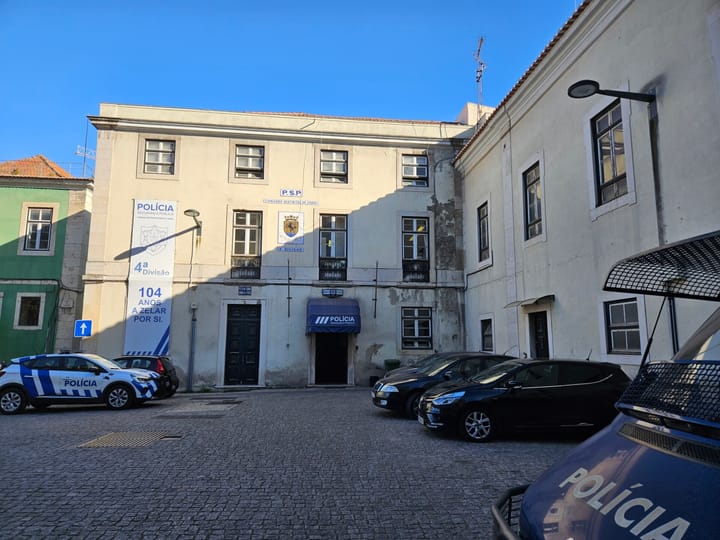
Police: PSP or GNR
Portugal has two main police forces. Which one you deal with depends on where you are.
- PSP (Polícia de Segurança Pública) covers cities and larger towns.
- GNR (Guarda Nacional Republicana) covers smaller towns, rural areas, and main roads. The GNR also polices the environment, including illegal burning.
You do not need to know which one to call in an emergency. Dial 112 and the right force is sent. For non-urgent matters, go to the nearest PSP station (esquadra) or GNR post (posto). Both take the same kinds of complaints.
How to report a crime
If the crime is happening now, call 112. Otherwise you have three options.
- In person. Go to any PSP station or GNR post and ask to make a complaint (queixa). Bring your passport or residence card. You have the right to a free interpreter. Ask for a copy of the report, since insurers and embassies ask for it.
- Online. The Queixa Eletrónica website lets you file a complaint for 18 types of crime, including theft, fraud, damage, assault, and domestic violence. Portuguese and foreign nationals can use it. You identify yourself with a Citizen Card, the Chave Móvel Digital, or in person later. It is not for emergencies.
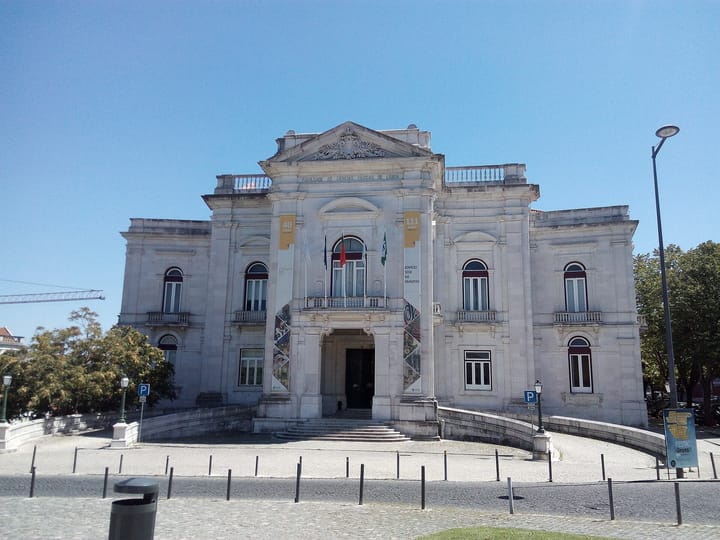
- At a tourist police station. The PSP runs tourist stations where officers speak foreign languages and help visitors with thefts and lost documents. - Lisbon: Palácio Foz, Praça dos Restauradores. Phone 213 421 623. - Cascais: Largo Mestre Henrique Anjos. Phone 214 814 067.
For some crimes there is a time limit to complain, usually six months. The steps, the deadlines, and what happens next are in "Reporting a Crime in Portugal".
Fire and civil protection
The fire service is reached through 112. Firefighters (bombeiros) handle fires, road rescues, and floods. They often also run ambulances.
Civil protection is run by ANEPC, the national emergency and civil protection authority. It coordinates the response to wildfires, storms, floods, and earthquakes. It also warns the public.
How you are warned
- SMS warnings. When a serious risk is forecast, ANEPC asks the mobile networks to send a text to every phone in the affected area. The sender is "AvisoPROCIV". You do not need to sign up, and it is free. Phones on foreign networks receive the text in Portuguese and English.
- Other channels. Warnings also go out on the ANEPC website, its social media, the MAI Mobile app, radio, and television. Locally, councils may use sirens, loudspeakers, or door-to-door visits.
If you get an AvisoPROCIV text, read it straight away and follow the safety advice in it.
Wildfire season
For everyone in rural or wooded areas, the critical fire period runs from 1 July to 30 September each year. The government can extend it if the weather stays hot and dry. During this period most outdoor burning is banned, and fireworks and some machinery near woodland are restricted. ANEPC has had a national rural fire danger warning in force since 1 July 2026.
If you see smoke or flames, call 112 at once. Give the location as precisely as you can. If a fire is near you, follow the instructions of the GNR and the firefighters, and leave early if told to.
Two guides go into detail:
- "Preparing for Wildfire Season in Portugal" covers the land clearing deadline, the buffer zones around houses, the fire risk map, and what to do when a fire comes.
- "Burning Garden and Farm Waste in Portugal" covers when you may burn, how to ask the council, and the fines.
Emergencies at the beach and at sea
If someone is in difficulty in the water, alert the lifeguard if there is one and call 112. Do not go in after them unless you are trained. Throw something that floats instead.
Lifeguards work only during each beach's bathing season. Outside it, nobody is watching the water. The Maritime Police (Polícia Marítima) enforce the beach rules and respond to coastal incidents. On a boat, call 112 by phone or use VHF channel 16.
The flags, the lifeguard hours, and the fines are in "Going to the Beach in Portugal".
Poisoning: CIAV
If someone has swallowed, breathed in, or touched something that may be toxic, call the Poison Information Centre (CIAV) on 800 250 250. It is run by INEM, the national medical emergency service. The call is free. The line also advises on pets that have eaten something harmful.
Have the product or its label in your hand when you call. If the person is unconscious, having a fit, or struggling to breathe, call 112 instead.
Domestic violence and victim support
If you or someone else is in danger now, call 112. The following lines are free and confidential.
- Domestic violence information line: 800 202 148. Open 24 hours a day, every day. You can also send a text to 3060 or email [email protected]. It gives information on rights, shelters, and support near you.
- APAV victim support line: 116 006. APAV, the Portuguese victim support association, helps victims of any crime and their families.
- Social emergency line: 144. It is free and open 24 hours a day, every day. It helps people in a social emergency, including victims of domestic violence.
Domestic violence is a public crime in Portugal. Anyone can report it, and the police must investigate even if the victim does not complain. You can report it at any police station or through Queixa Eletrónica.
If you are struggling with your mental health, see "Mental Health Support in Portugal".
Lost or stolen passport
Follow these steps in order.
- Report it to the police. Go to a PSP station, a GNR post, or a tourist police station. If it was stolen, you can also file online through Queixa Eletrónica. Keep a copy of the report.
- Contact your embassy or consulate. Only your own country can replace your passport or issue an emergency travel document. Most embassies are in Lisbon, and some countries have consulates in Porto or the Algarve. The Portuguese foreign ministry publishes a directory of the embassies and consulates in Portugal.
- Replace your other documents. For readers with a Portuguese residence card that was also lost, you will need to replace it separately. Your bank and card issuer should hear from you straight away if cards went too.
Before you travel, keep a photo of your passport and residence card somewhere you can reach without your phone, such as email.
If there is an earthquake
Portugal has real earthquake risk, especially around Lisbon, the Tagus valley, and the Algarve. Most tremors are small. ANEPC's advice is short: drop, cover, and hold on.
During the shaking
- Indoors: get down, protect your head and neck with your arms, and stay put. Shelter under a sturdy table or in an interior doorway. Keep away from windows. Do not use stairs or lifts.
- Outdoors: move away from buildings, walls, and power lines.
- Driving: stop away from bridges and buildings and stay in the car.
After the shaking
- Expect aftershocks.
- If you smell gas, do not light anything. Turn off gas, water, and electricity if it is safe.
- Use text messages rather than calls, so the network stays free for emergencies.
- Listen to the radio for instructions and keep roads clear.
- Call 112 only for serious injuries, fires, or gas leaks.
On the coast, a strong earthquake can be followed by a tsunami. If you feel a strong quake at the beach, or hear the coastal sirens, move inland or to high ground at once. Do not wait for an official warning.
Before it happens, fix tall furniture to the wall, agree a meeting point with your family, and keep a kit with water, food, a torch, a battery radio, and first aid supplies.
Printable list of numbers
Cut this out or save it on your phone.
| Situation | Number |
|---|---|
| Any emergency: police, ambulance, fire | 112 |
| Health advice, not an emergency (SNS 24) | 808 24 24 24 |
| Poisoning (CIAV) | 800 250 250 |
| Domestic violence information, 24 hours | 800 202 148 |
| Domestic violence by text | 3060 |
| Victim support (APAV) | 116 006 |
| Social emergency, 24 hours | 144 |
| Tourist police, Lisbon | 213 421 623 |
| Tourist police, Cascais | 214 814 067 |
| Your embassy or consulate | (write it here) |
| Your nearest PSP station or GNR post | (write it here) |
All the numbers above are free except the two tourist police stations, which are ordinary landlines.
Sources
This guide is written from official Portuguese and EU sources.
- INEM, the national medical emergency service: https://www.inem.pt (how 112 calls are handled)
- INEM, CIAV: https://www.inem.pt/2019/07/01/800-250-250-o-contacto-com-o-centro-de-informacao-antivenenos-do-inem-passa-a-ser-gratuito/ (poison line number and that it is free)
- SNS 24: https://www.sns24.gov.pt/canais-sns-24/ (SNS 24 line and channels)
- ERS, the Health Regulation Authority: https://www.ers.pt/pt/utentes/perguntas-frequentes/faq/o-acesso-a-cuidados-de-saude-atraves-da-linha-sns-24/ (808 24 24 24 is free to call)
- Government of Portugal, 112 for deaf citizens: https://www2.gov.pt/noticias/112-para-cidadaos-surdos (MAI112 app)
- Queixa Eletrónica, Ministry of Internal Administration: https://queixaselectronicas.mai.gov.pt/ (online complaints, the 18 crime types, who can use it, identification methods, not for emergencies). The list of crimes is set by Portaria 1593/2007.
- Queixa Eletrónica, domestic violence support page: https://queixaselectronicas.mai.gov.pt/micrositevd/apoios.html (800 202 148; 144, free, 24 hours, every day; APAV victim support 116 006)
- CIG, the Commission for Citizenship and Gender Equality: https://www.cig.gov.pt/area-portal-da-violencia/portal-violencia-domestica/servico-de-informacao-as-vitimas-de-violencia-domestica/ (800 202 148, SMS 3060, email, 24 hour service)
- ANEPC, warnings to the population: https://prociv.gov.pt/pt/prevencao-e-preparacao/monitorizacao-alerta-e-aviso/aviso/ (AvisoPROCIV SMS, roaming phones, other warning channels)
- ANEPC, rural fire danger warning 2026: https://prociv.gov.pt/pt/avisos-a-populacao/aviso-12-perigo-de-incendio-rural-2026/ (warning in force from 1 July 2026)
- ICNF, critical fire period: http://www2.icnf.pt/portal/icnf/resource/faqs/dfci/faq-periodo-critico (1 July to 30 September)
- ANEPC, earthquakes, prepare and protect yourself: https://prociv.gov.pt/pt/documentacao/sismos-prepare-se-e-proteja-se/ (earthquake advice)
- Turismo de Lisboa (ERT-RL), PSP tourist police station: https://www.ertlisboa.pt/pt/informacoes-uteis/seguranca/1-4-2882/ (Palácio Foz, Praça dos Restauradores; 213 421 623)
- Cascais Municipal Council, PSP tourist police station: https://www.cascais.pt/contactos/psp-esquadra-de-turismo (Largo Mestre Henrique Anjos; 214 814 067)
- Portal Diplomático, Ministry of Foreign Affairs: https://portaldiplomatico.mne.gov.pt/politica-externa/protocolo-do-estado-e-corpo-diplomatico-acreditado-em-portugal (directory of embassies and consulates in Portugal)
Last verified September 2026. Rules and fees change; check the official source before acting.