Donating Your Body to Science in Portugal
How to leave your body to a Portuguese medical school, what the school pays for, who it turns away, and how to object if you do not want it used.
Last verified: September 2026.
Who this is for
- Adults living in Portugal who want medical students to learn from their body after death.
- Families who need to know what to do when a relative who signed up dies.
- Residents who do not want their body used for teaching and want to say so.
Not for you if: you want to give organs for transplant. Read "Organ Donation in Portugal".
You can leave your body to a Portuguese university medical school, where students and doctors use it to learn anatomy. It costs you and your family nothing: the school pays to collect the body and to cremate it afterwards. Signing up takes one form, handed in or posted (Porto also takes email), and it never needs renewing. The law covers Portuguese citizens and foreign residents who die in Portugal. One thing matters more than any other: if you are on the national non-donor register, the Porto school, for one, cannot accept you.
What the law allows
The law lets university medical schools, forensic medicine services, and hospital pathology departments use bodies for teaching and research. A doctor must first confirm the death. The head of the department must then authorise the use.
Your body can be used this way in three situations:
- You said so while you were alive. You can change your mind at any time.
- You did not object and no one claims your body. If you never registered an objection, and no close relative or executor claims your body within 24 hours of learning of your death, it may be dissected.
- Parts, tissues, and organs. These may be taken for teaching and research if you never registered an objection.
The law also says:
- No one may buy or sell a body, or parts of one, for these purposes. It is a crime with a prison term of two to ten years.
- Your identity must not be revealed.
- Your body cannot be used in a way that gets in the way of a forensic examination.
- Any parts not kept for teaching are buried or cremated by the school.
Before you sign up
- Talk to your family. The school only learns of your death if someone calls it. NOVA Medical School in Lisbon says it has no access to health service systems that would tell it.
- Check the non-donor register. If you ever signed up to the national non-donor register (RENNDA), the Porto medical school will not accept your body. Cancel that registration first.
- Decide about the ashes. You can ask for your ashes to go back to your family once the studies end.
How to sign up
The steps differ slightly between schools. These are the two whose own pages we checked.
Faculty of Medicine, University of Porto (FMUP)
- Download the donation form (Norma de Doação) from the anatomy unit's page, or ask the unit to post you one.
- Fill in every field. Say on the form whether you want your ashes returned to your family.
- Tick the line confirming you are not on the non-donor register. You also agree to a blood test after death.
- Attach a copy of your Citizen Card (Cartão de Cidadão).
- Hand it in at the anatomy unit, post it, or email it to [email protected].
- Once the papers are checked, the school sends you a donor card. Carry it with you.
The address is Unidade de Anatomia, Alameda Professor Hernâni Monteiro, 4200-319 Porto. The phone is 22 551 36 16 (working days, 09:00 to 12:30 and 14:00 to 16:30).
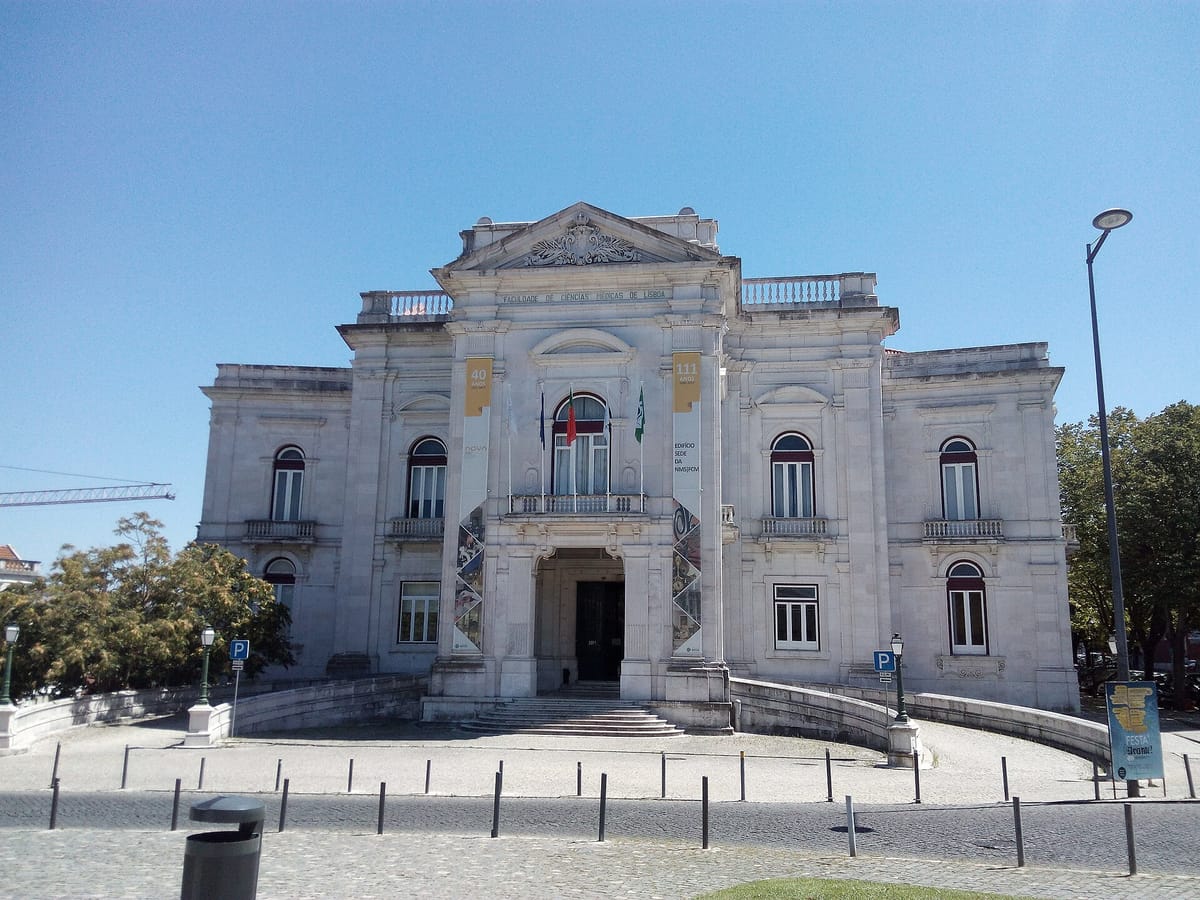
NOVA Medical School, Lisbon (NMS)
- Contact the donation office (Gabinete de Doação de Cadáveres) for the donation declaration.
- Either sign it in person at the school, Campo dos Mártires da Pátria 130, Lisbon, or sign it at home.
- If you sign at home, a notary, lawyer, or solicitor must certify your signature. Then post it back to the office.
You can reach the office at [email protected] or on 218 803 039 (Monday to Friday, 09:30 to 12:30 and 14:00 to 16:00). You must be an adult to donate to this school.
Other university medical schools may also accept donations. Ask them directly.
What happens after death
- A relative calls the school straight away. In Porto, call 22 551 36 16 on working days or 91 631 85 18 (08:00 to 22:00). In Lisbon, call 218 803 039 on weekdays. At weekends and on public holidays, the Lisbon school asks you to call its funeral agency, Agência Funerária Boa-Hora, on 213 639 153 or 213 639 165 (24 hours).
- The school checks the details. It confirms you are a registered donor and looks at the death certificate.
- The school sends its funeral agency. It collects the body from anywhere in mainland Portugal at no cost to the family.
- The family may hold a wake first. Both schools accept a wake or funeral ceremony, as long as the body reaches them within 72 hours.
When a school says no
A school may turn a body down if:
- the person died of a serious infectious disease;
- the death was violent, or its cause is unknown (NOVA Medical School lists both);
- the person is still on the non-donor register (Porto).
Both schools only collect on the mainland. If you live in the Azores or Madeira, ask the school before you sign up.
How long it takes and what it costs
- Cost to you: nothing. The law makes the school pay for transport to and from its premises. The two schools also pay for the cremation.
- How long the body stays: it depends on teaching needs. NOVA Medical School says one to two years is usual.
- Afterwards: the body is cremated. In Lisbon, the family may attend the cremation and keep the ashes. In Porto, the family collects the ashes in person if you asked for them.
- Renewal: none. Your donation stays valid until you cancel it.
If you do not want your body used
Because of the second and third situations above, doing nothing is not the same as saying no. If you object, register it with the national non-donor register (RENNDA).
- Get the Ministry of Health form. You can print it from the health service website.
- Hand it in at any health centre (centro de saúde) with your Citizen Card. It is free.
- Keep the copy the staff sign and give you on the spot.
- Your objection counts four working days after the form is received. A non-donor card follows within 30 days.
The law says objections to teaching and research use sit in their own file within the register. The register records the organs, tissues, or purposes you exclude. The version of the form we read offers boxes for transplant and for diagnosis or treatment, plus space to list specific organs. It has no separate box for teaching and research, so ask the staff how to record that objection. You can cancel an objection at any time with a new form.
The same register handles objections to organ donation for transplant. Our guide "Organ Donation in Portugal" explains that side.
This guide is general information, not legal or medical advice.
Sources
This guide is written from official Portuguese and EU sources and, for prices and contact details, the providers' own websites.
- Diário da República, Decreto-Lei n.º 274/99, de 22 de julho (use of bodies for teaching and scientific research; in force, no amendments listed) (Portuguese only)
- Faculdade de Medicina da Universidade do Porto, Unidade de Anatomia: Doação cadavérica (how to donate, contacts, hours) (Portuguese only)
- Faculdade de Medicina da Universidade do Porto, Perguntas e Respostas sobre a Doação de Corpo à Ciência (sign-up routes, donor card, RENNDA rule, collection, 72-hour limit, costs, refusals, ashes) (Portuguese only)
- Faculdade de Medicina da Universidade do Porto, Norma de Doação do Corpo ao Ensino (donation form: RENNDA declaration, blood test consent, ashes choice) (Portuguese only)
- NOVA Medical School, Universidade NOVA de Lisboa, Doação do corpo à ciência (adults only, no cost, contacts, hours) (Portuguese only)
- NOVA Medical School, Universidade NOVA de Lisboa, Perguntas e Respostas sobre a Doação (signing in person or with a certified signature, what happens after death, refusals, one to two years, cremation and ashes, weekend funeral agency numbers) (Portuguese only)
- SNS 24, Registar como não dador (how to register an objection, four working days, 30-day card, no cost, data recorded) (Portuguese only)
- Serviço Nacional de Saúde, Impresso RENNDA (the Ministry of Health objection form) (Portuguese only)
Last verified September 2026. Rules and fees change; check the official source before acting.