Flying a Drone in Portugal in 2026: A Practical Guide to Registration at 250 Grams, the 120 Metre Ceiling and Compulsory Insurance Above 900 Grams
The EU and Portuguese rules for flying a drone in Portugal: when you must register with ANAC, the A1, A2 and A3 subcategories, the online pilot test, compulsory insurance above 900 grams, no-fly areas, aerial photo authorisation and fines.
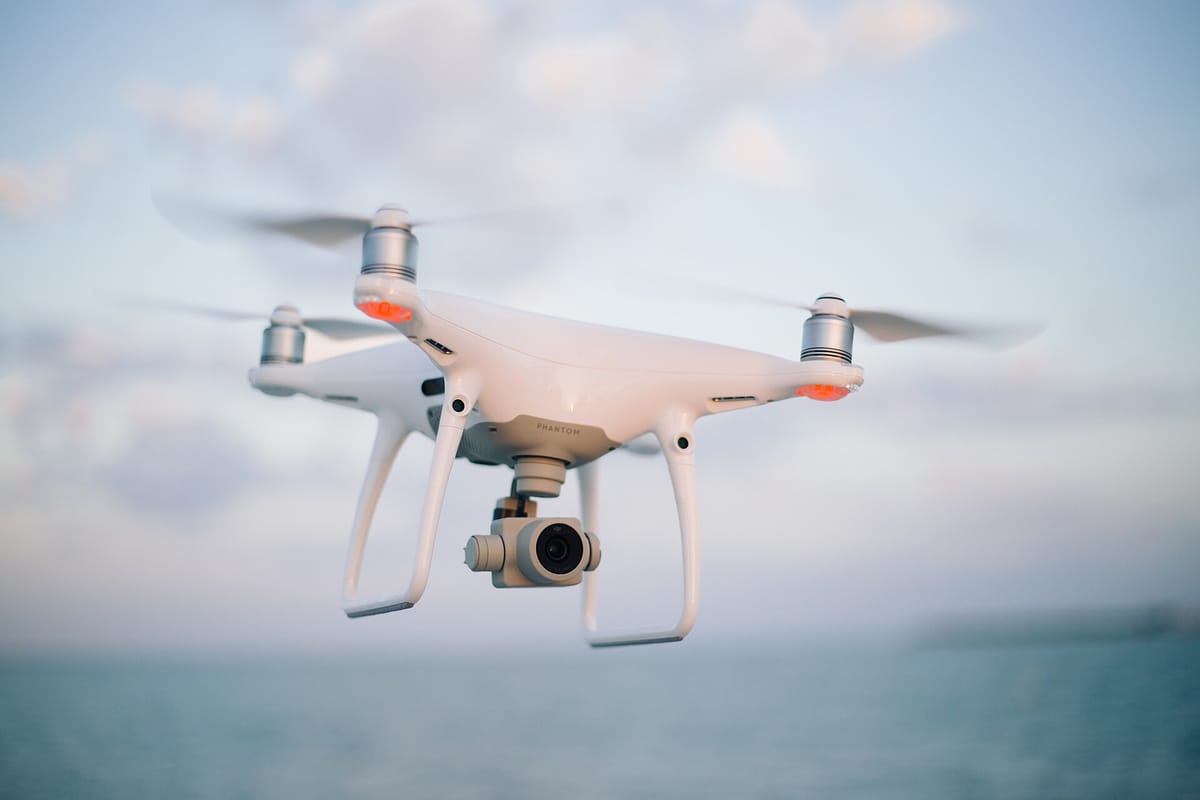
Drone rules in Portugal come in two layers: a common European rulebook that applies in every EU country, and a Portuguese layer on top covering insurance, fines, no-fly areas and aerial photography. This guide walks through both.
Drone rules change, so check the official texts listed at the end before you fly.
Who sets the rules
Since 31 December 2020, civil drones across the EU have been governed by two European regulations. Commission Implementing Regulation (EU) 2019/947 covers how drones are flown and by whom; Commission Delegated Regulation (EU) 2019/945 covers the drones themselves, including the C0 to C4 class labels. Both apply directly in Portugal.
Portugal's own law adds to them. Decreto-Lei n.º 87/2021 (Decree-Law 87/2021) names the Autoridade Nacional da Aviação Civil (National Civil Aviation Authority, ANAC) as the competent authority for drone operations, sets the fines for breaking the EU rules and provides for Portugal's geographical zones. Decreto-Lei n.º 58/2018 (Decree-Law 58/2018), as amended, still contains the compulsory insurance requirement. Its original registration rules were repealed in 2021 because registration is now handled under the EU regulation.
The three categories: open, specific and certified
Every drone flight falls into one of three categories, based on risk.
- Open category: low-risk flying. No prior authorisation or declaration is needed.
- Specific category: anything that breaks one of the open-category limits, such as flying beyond visual line of sight or above 120 metres. You need an operational authorisation from ANAC, or a declaration under one of the EU standard scenarios.
- Certified category: the highest-risk operations, such as flying over assemblies of people with a certified drone, carrying people or carrying dangerous goods that could pose a high risk to third parties. The drone and the operator must be certified.
A flight stays in the open category only if all of these conditions are met:
- the drone weighs less than 25 kg at maximum take-off mass;
- you keep it at a safe distance from people and never fly it over assemblies of people;
- you keep it in visual line of sight at all times, except in follow-me mode or with an unmanned aircraft observer, as the regulation allows;
- it stays within 120 metres of the closest point of the ground;
- it carries no dangerous goods and drops nothing.
The rest of this guide focuses on the open category, where most hobby flying happens.
The 120 metre ceiling
In the open category, the drone must stay within 120 metres of the closest point of the earth's surface. If you take off from a hill or fly over uneven ground, you measure from the terrain below the drone, not from where you are standing. There is one narrow exception: within 50 metres horizontally of an artificial obstacle taller than 105 metres, you may fly up to 15 metres above that obstacle, but only at the request of whoever is responsible for it.
Under Portuguese law, flying above the permitted height is classed as a very serious offence.
Registration: the 250 gram threshold
Under the EU rules, it is you, the operator, who registers, not the drone (unless the drone is of a type that requires certification). In the open category you must register if your drone:
- has a maximum take-off mass of 250 grams or more, or could transfer more than 80 joules of kinetic energy to a person on impact; or
- carries a sensor able to capture personal data, such as a camera, unless it complies with the EU toy safety directive (Directive 2009/48/EC).
In practice, this means most camera drones need registration even when they weigh less than 250 grams, unless they are sold as toys. Any flight in the specific category requires registration whatever the drone weighs.
For immigrants, the key point is where to register. You register in the EU country where you live. If Portugal is your country of residence, you register with ANAC, and you may be registered in only one member state at a time. Operators who live outside the EU register in the first EU country where they intend to fly.
Once registered, you receive a unique operator registration number. You must display it on every drone that meets the registration conditions. The European Union Aviation Safety Agency (EASA) explains that you register once, however many drones you own, and that your number must also be uploaded into your drone's remote identification system where it has one. Your registration is valid for a period set by the national authority, after which you renew it.
Failing to register when you are required to is a very serious offence under Portuguese law.
Class labels and the A1, A2 and A3 subcategories
The open category has three subcategories. Which you may use depends on your drone's class label, defined in Regulation 2019/945, and your training:
- C0: less than 250 grams, with a maximum level-flight speed of 19 metres per second.
- C1: less than 900 grams, or built so that an impact transfers less than 80 joules to a human head.
- C2: less than 4 kg.
- C3: less than 25 kg, with a maximum characteristic dimension under 3 metres.
- C4: less than 25 kg, with no automatic control modes beyond basic stabilisation and lost-link assistance.
Subcategory A1: flying over people (but never crowds)
A1 covers C0 drones, privately built drones under 250 grams, older unlabelled drones under 250 grams (see below) and C1 drones. With the lightest of these you may overfly uninvolved people, though never assemblies of people. With a C1 drone, you must fly so that you reasonably expect no uninvolved person to be overflown, never overfly assemblies of people, and if you do pass over someone unexpectedly, keep the time over them as short as possible. C1 drones must fly with active, up to date direct remote identification and geo-awareness. In follow-me mode, A1 flights may go up to 50 metres from the pilot.
Subcategory A2: close to people
A2 is for C2 drones. You must not overfly uninvolved people, and you must keep a horizontal distance of at least 30 metres from them. With an active low-speed mode, you may reduce that to 5 metres after assessing the weather, the drone's performance and how well the area is separated.
Subcategory A3: far from people
A3 covers C2, C3 and C4 drones, privately built drones under 25 kg and older unlabelled drones under 25 kg. You must fly where you reasonably expect no uninvolved person to be endangered, and at least 150 metres horizontally from residential, commercial, industrial or recreational areas.
Older drones without a class label
Many popular drones were sold before class labels existed. Drones placed on the market before 1 January 2024 without a class label may still be flown in the open category, but only in A1 if they weigh less than 250 grams including payload, or in A3 if they weigh less than 25 kg. EASA notes that because no manufacturer has declared a class mass for these drones, you can weigh the drone yourself before flying to confirm it is within the limit.
Pilot training and the online test
The training you need depends on the subcategory and drone:
- A1 with a C0 drone, or with a drone under 250 grams: you must be familiar with the manufacturer's instructions. No online test is required for these.
- A1 with a C1 drone, and all A3 flying: you must complete an online training course and pass an online theory exam of 40 multiple-choice questions, scoring at least 75 percent. Subjects include airspace restrictions, privacy and insurance.
- A2: you need a certificate of remote pilot competency. You first pass the online A1/A3 exam, then complete self-practical training under A3 conditions, declare that you have done so, and pass a further exam of at least 30 questions (again with a 75 percent pass mark).
The online competency and the A2 certificate are each valid for five years. Where the rules require proof of competency, you must carry it while flying.
The EU minimum age for remote pilots is 16. There is no minimum age for flying a C0 drone that is a toy in A1, for privately built drones under 250 grams, or when flying under the direct supervision of a qualified adult pilot. The EU lets member states lower the open-category age by up to four years, and Portuguese law gives ANAC the power to decide on any such reduction.
Compulsory insurance above 900 grams
This is the main Portuguese-specific requirement. Under Article 10 of Decreto-Lei n.º 58/2018, operators must take out compulsory civil liability insurance for drones with a maximum operating mass of more than 900 grams. The obligation does not apply to operators who already hold civil liability insurance through sport participation. Proof of the insurance must be submitted on the electronic registration platform before you start flying.
The minimum cover is set by Portaria n.º 2/2021 (Ministerial Order 2/2021) in Special Drawing Rights (SDR), the International Monetary Fund's unit of account, per year regardless of the number of claims:
- more than 900 grams and up to 1.5 kg: 0.26 million SDR;
- more than 1.5 kg and up to 4 kg: 0.38 million SDR;
- more than 4 kg and up to 20 kg: 0.56 million SDR;
- more than 20 kg: 0.75 million SDR.
The cover must include accidents in flight and on the ground. The same decree makes operators liable for damage to third parties regardless of fault, unless the accident is due solely to the injured person's own fault. Flying without compulsory insurance is a very serious offence under that decree, with fines of 2,000 to 3,500 euros for individuals and 5,000 to 7,500 euros for companies.
Where you cannot fly: geographical zones
The EU regulation lets each member state define geographical zones where drone flights are banned, restricted or subject to prior authorisation. Before every flight, you must get up to date information on the zones published for the area where you plan to fly, and comply with them.
Decreto-Lei n.º 87/2021 provides for Portugal's permanent zones to be set by a portaria (ministerial order). Until that portaria is published, the law keeps in force a set of restrictions from ANAC's earlier drone rules, Regulamento n.º 1093/2016 (ANAC Regulation 1093/2016). We could not confirm from an official legal source whether the portaria has since appeared, so check the zones that apply on the day you fly. The transitional restrictions include:
- no flying in the prohibited areas listed in the annex to that regulation, or in prohibited, dangerous, restricted or reserved airspace published in Portugal's aeronautical information publications, unless the competent bodies authorise it;
- specific rules for flying near civil aerodromes. Near an aerodrome with no control zone or traffic zone, flights up to 120 metres within 2.5 km of the aerodrome or of an approved ultralight strip need the aerodrome's express authorisation, unless the drone stays below the nearest obstacle within a 75 metre radius and does not fly over the aerodrome itself;
- no flying within 1 km of heliports used for civil protection, by police and security bodies, or by hospitals for emergency medical flights, unless ANAC expressly authorises it;
- no flying over buildings housing sovereign bodies, embassies and consulates, military installations, security force facilities, places where police operations are under way, or prisons, unless the relevant bodies authorise it.
Separately, both ANAC and the Autoridade Aeronáutica Nacional (National Aeronautical Authority, AAN), the military aeronautical authority, can impose temporary restrictions: AAN on defence or internal security grounds, ANAC on air-navigation safety grounds. Breaching a published zone or a temporary restriction is a very serious offence. The EU rules also bar you from flying near or inside areas where an emergency response is under way, unless the emergency services have given permission.
Taking photos and video from the air
Portugal has a long-standing regime for aerial photography and filming. It was created by Decreto-Lei n.º 42071 of 1958 and Portaria n.º 17568 of 1960, and it governs authorisations to take and publish aerial photographs and films. Under Lei n.º 28/2013 (Law 28/2013), authorising aerial surveys is one of AAN's powers. Decreto-Lei n.º 58/2018 states plainly that the drone insurance rules do not remove the need to comply with this aerial survey regime.
Under the 2000 amendment to the 1960 order, private individuals and entities who are Portuguese or nationals of another EU or European Economic Area state may be authorised to take aerial photographs or films. AAN takes into account the purpose, whether the applicant is an amateur or a professional, and their suitability. An authorisation can cover a set period of up to one year and always ends at the end of the calendar year. If you plan to capture images with your drone, apply to AAN before you fly.
Privacy law applies too. Decreto-Lei n.º 87/2021 confirms that the GDPR and Portugal's data protection laws apply to drone operations. Decreto-Lei n.º 58/2018 also points to the Penal Code offences of invasion of private life (Article 192) and unlawful recordings and photographs (Article 199).
Fines and penalties
Breaches of the EU drone rules are punished in Portugal under the civil aviation offences regime, Decreto-Lei n.º 10/2004 (Decree-Law 10/2004). Decreto-Lei n.º 87/2021 sorts each breach into a band. For individuals, the bands in Decreto-Lei n.º 10/2004 are:
- Light offences: 150 to 300 euros if negligent, 300 to 1,000 euros if intentional. Example: flying with an expired competency certificate.
- Serious offences: 250 to 500 euros if negligent, 500 to 1,500 euros if intentional. Examples: losing visual line of sight, breaking the A1, A2 or A3 conditions, or flying without the required training.
- Very serious offences: 1,000 to 2,500 euros if negligent, 2,000 to 4,000 euros if intentional. Examples: failing to register, exceeding the height limit, flying in a restricted zone, or flying near an emergency incident without permission.
Companies face higher amounts that scale with their size. ANAC can also suspend certificates, authorisations and declarations for up to two years, and may suspend or revoke a pilot's competency certificate for breaches of the EU rules. Decreto-Lei n.º 10/2004 allows the amounts to be updated periodically, so treat these figures as the statutory bands.
Before you fly: a checklist
- Weigh up your drone: under 250 grams, 250 to 900 grams, or above 900 grams? Check its class label, if any.
- Register with ANAC as an operator if your drone is 250 grams or more, or has a camera and is not a toy.
- Put your operator registration number on every drone and load it into remote identification.
- Pass the online A1/A3 test if your drone or subcategory requires it, and carry proof of competency.
- If your drone weighs more than 900 grams, take out compulsory liability insurance and submit proof on the registration platform.
- Check the geographical zones and any temporary restrictions for your location on the day.
- If you will take photos or video, get authorisation from AAN first.
- Stay below 120 metres, keep the drone in sight and keep clear of people as your subcategory requires.
- Do not fly if you are unfit through alcohol, fatigue, medication or illness, and switch on the green flashing light at night.
Sources
This guide is written from official Portuguese and EU sources.
- EUR-Lex, Commission Implementing Regulation (EU) 2019/947 on the rules and procedures for the operation of unmanned aircraft, consolidated text of 1 May 2025
- EUR-Lex, Commission Delegated Regulation (EU) 2019/945 on unmanned aircraft systems and third-country operators, consolidated text of 24 June 2025
- European Union Aviation Safety Agency, Registration requirements for drone operators
- European Union Aviation Safety Agency, Drone open category: applicable requirements to fly from 1 January 2024
- Procuradoria-Geral Regional de Lisboa, Decreto-Lei n.º 87/2021, operating rules and penalties for unmanned aircraft (Portuguese only)
- Procuradoria-Geral Regional de Lisboa, Decreto-Lei n.º 58/2018, drone registration and compulsory liability insurance, consolidated text (Portuguese only)
- Diário da República, Portaria n.º 2/2021, cover, conditions and minimum capital of drone liability insurance (Portuguese only)
- Procuradoria-Geral Regional de Lisboa, Decreto-Lei n.º 10/2004, civil aviation offences regime, Article 9 (fine amounts) (Portuguese only)
- Diário da República, ANAC Regulamento n.º 1093/2016, drone operating conditions (Articles 5 to 7 and 11) (Portuguese only)
- Diário da República, Lei n.º 28/2013, powers of the Autoridade Aeronáutica Nacional, Article 4 (Portuguese only)
- Diário da República, Portaria n.º 358/2000, amending Portaria n.º 17568 on aerial photography and filming (Portuguese only)