A Year After It Replaced SEF, the PSP's Border Unit Has Poured Almost 400 Officers Into Airport Queues and Left the Interior Bare
The UNEF turns one today. Its officers' union calls the year 'very turbulent', crediting nearly 400 extra police with clearing the Lisbon airport queues, but warns the regional units meant to inspect immigration inland were never set up.
The police unit that replaced Portugal's abolished immigration service turns one year old today, and the union that speaks for most of the PSP's senior officers has marked the anniversary with a blunt verdict: it was, in its president's words, "a very turbulent year".
The Unidade Nacional de Estrangeiros e Fronteiras (UNEF), nicknamed the "mini-SEF", began operating on 21 August 2025. It absorbed the border-control and immigration-enforcement work of the Serviço de Estrangeiros e Fronteiras, dissolved more than two years ago, and it now runs a portfolio that stretches well beyond passport booths: airport security, the temporary detention centre for foreign nationals in Porto, the equivalent holding spaces at Lisbon, Porto and Faro airports, and the removal, readmission and return operations that had previously sat with AIMA.
A year defined by the queue
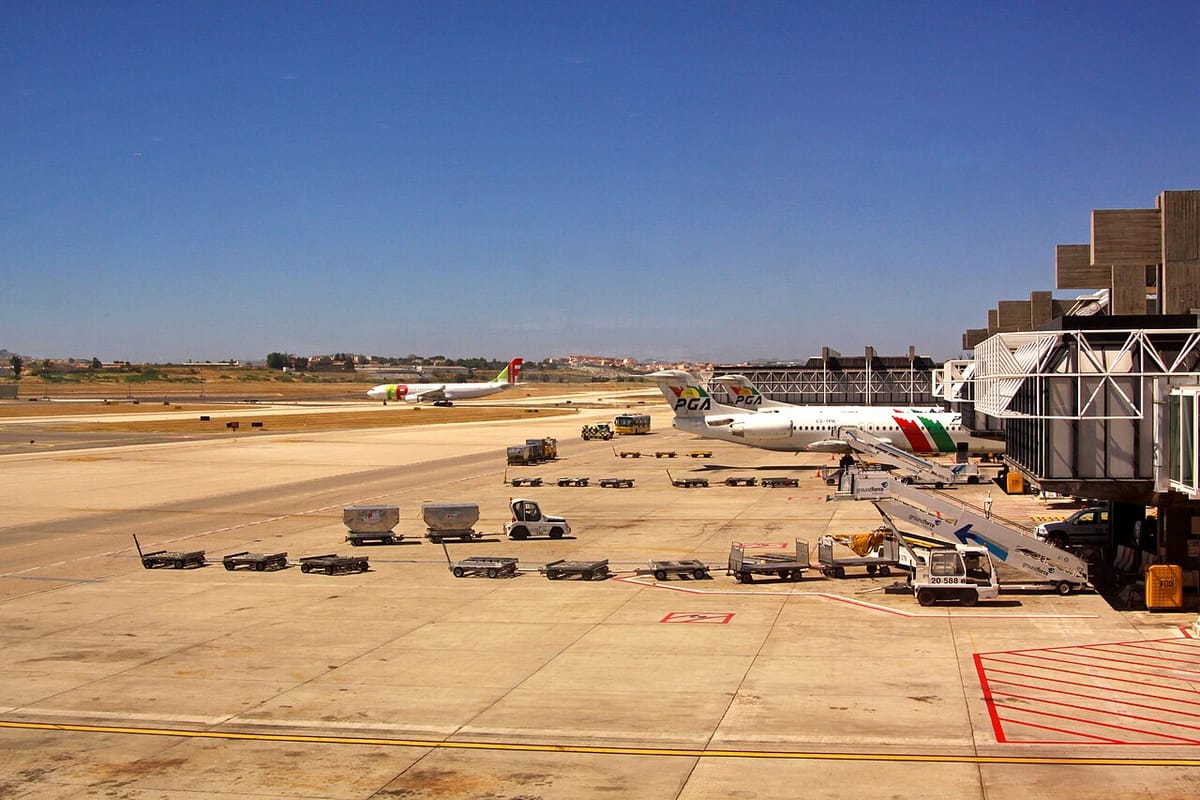
The single dominant feature of that first year was the airport queue, above all in Lisbon. The pressure came from the EU's new Entry/Exit System, which began a phased rollout in October 2025 and has been running at full capacity since April. It has already been partially suspended several times when waiting times ran out of control.
"There is no doubt at all that it was a very turbulent year, all the more so because it was the year in which the new border control was implemented 100%, and that brought additional constraints on top of work the PSP itself was still getting to know, still developing and still learning," Bruno Pereira, president of the Sindicato Nacional dos Oficiais de Polícia (SNOP), told Lusa.
Pereira said the force "went through enormous sacrifices" and that its national directorate took strategic decisions to reinforce airport security. He credited the past two months with finally clearing the worst of it, through an enlarged border area and the deployment of nearly 400 additional officers. Portugal had already stationed 367 new PSP officers at its airport borders at the start of July as summer arrivals climbed.
The union's complaint: the wrong officers in the wrong places
Pereira's criticism is not that the reinforcement happened, but how. He argued the response was shaped "by the froth of the day and by tremendous political and media pressure", and that tools such as paid overtime would have let airport commands surge staff only at the hours that need them. "You do not need the [air] border permanently full of police officers. There is a poor rationalisation of resources," he said. Without those tools, close to 400 officers have been pulled from territorial commands that are, in his description, desperately short of people.
He also flagged a structural gap. The regional units for the control and inspection of foreign nationals, which the UNEF model provides for, "are still not set up". Some commands have small foreigners' desks, but "most do not even have police officers to carry out that mission". His summary is uncomfortable: "We secured very well the control of who comes here, but then we did not secure the protection of those same people once they are here." Lusa has asked the PSP for its own assessment of the year and is awaiting a reply.
What this means for you
- Airport waits should be shorter than in the spring, but the improvement rests on a temporary surge of officers rather than a permanent establishment. Build in time at Lisbon in particular.
- Non-EU residents still register biometrics. If you hold a Portuguese residence permit you are exempt from EES registration, but carry the card: proving your status at the booth is what keeps you out of the third-country queue.
- Interior enforcement is thin. If you are waiting on a removal, readmission or regularisation matter handled by UNEF rather than AIMA, expect regional capacity to be limited.
- Watch the next twelve months, when the promised regional inspection units and the EU's €20 ETIAS travel permit, now slated for 2027, will both land on the same unit.
A year in, the UNEF has proved it can hold the line at the airports when it throws enough officers at them. The harder question, and the one its own officers are asking, is whether a unit built to police borders has been given the people to police anything else. On the flexibility the border forces have just lost, our account of what expired at the biometric border on 6 September, why the six-hour partial suspension ran that late, and what Portuguese airports have left when a queue builds sets the latest reference.