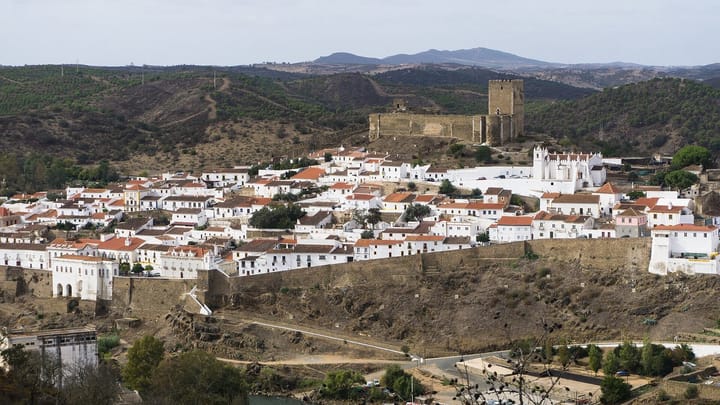
Barely Half of Residents in Portugal's Northern Border Highlands Are of Working Age, One of the Lowest Shares in the EU
Eurostat puts five inland Portuguese regions among the 189 in the EU where fewer than 55 percent of people are aged 20 to 64. Alto Tâmega e Barroso, at 50.8 percent, ranks near the bottom, while the islands and the Minho are the country's youngest.
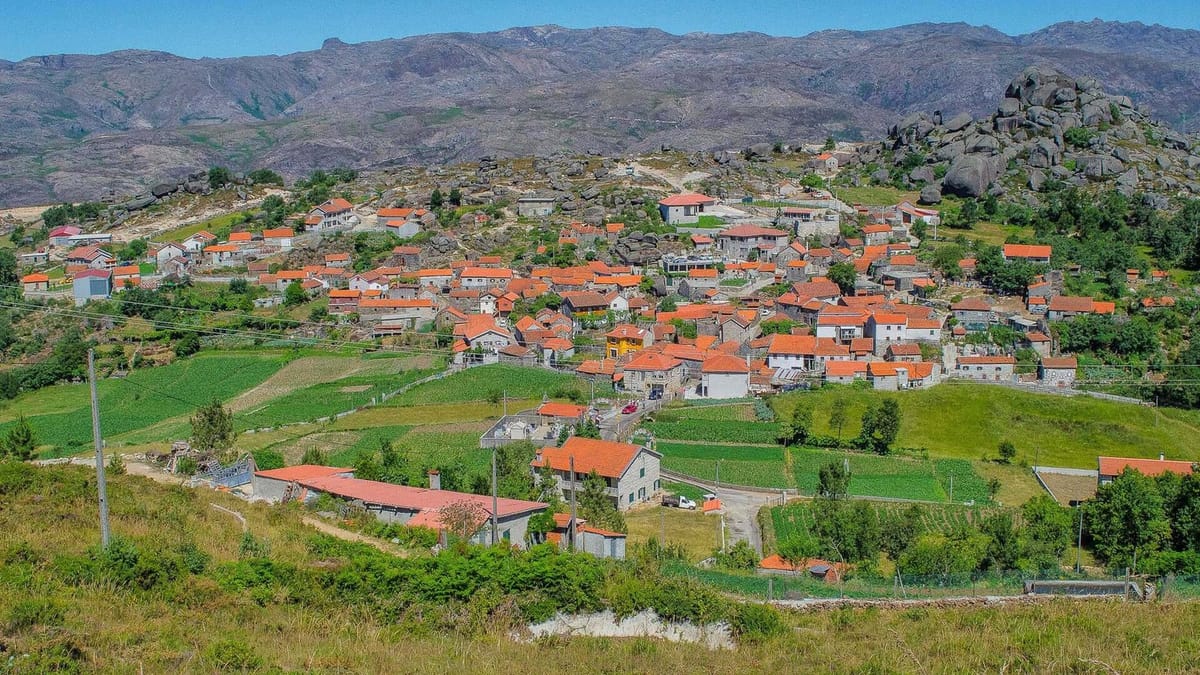
Five regions of inland Portugal are among the parts of the European Union where people of working age make up the smallest share of the population. That is the finding of figures that Eurostat, the EU's statistics office, published on Tuesday. In Alto Tâmega e Barroso, the mountain region on the Spanish border that takes in Chaves, Montalegre and Boticas, just 50.8 percent of residents were aged 20 to 64 at the start of 2025.
Across the EU the share was 58.3 percent. Eurostat counted 189 regions at the third level of its regional classification (NUTS 3) where it was below 55 percent. It described them as "mainly rural", naming inland Portugal alongside large parts of rural France, most of eastern Germany and rural Bulgaria, Greece and the Nordic countries.
The five Portuguese regions below 55 percent
Eurostat's regional table puts five Portuguese regions under the line:
- Alto Tâmega e Barroso: 50.8 percent
- Terras de Trás-os-Montes: 52.2 percent
- Beira Baixa: 52.5 percent
- Beiras e Serra da Estrela: 52.7 percent
- Alto Alentejo: 54.0 percent
On our count of the same table, Alto Tâmega e Barroso ranks 14th lowest of the EU's 1,165 regions at that level. Only six EU regions have less than half their population of working age: the Danish island of Bornholm, Creuse and Lot in France, Etelä-Savo in Finland, Veurne in Belgium and the French overseas region of Mayotte.
The other side of the ledger is age. In Alto Tâmega e Barroso, 36.6 percent of residents are 65 or older and the median age is 56.6. There are 72 people aged 65 and over for every 100 people aged 20 to 64. In Greater Lisbon, the ratio is 37.5 per 100.
The coast and the islands are younger
The national figure, 58.1 percent, is close to the EU average, because the working-age population is concentrated elsewhere. The Azores have the highest share in Portugal, at 62.5 percent, followed by Madeira and Tâmega e Sousa (61.5 percent each), Cávado (60.9 percent) and Ave (60.2 percent). The Porto Metropolitan Area stands at 59.5 percent and Greater Lisbon at 58.5 percent.
The top of the EU table is far higher. More than two thirds of residents are of working age in Copenhagen's city region and in Ibiza and Formentera (68.9 percent each), and in the Canary Islands of Fuerteventura (68.3 percent) and Lanzarote (67.3 percent). Of the 39 regions above 63 percent, 22 are in Germany.
A decade of ageing
Eurostat's series show how quickly the balance has shifted. In 2015, 59.8 percent of Portugal's population was of working age; by 2025 it was 58.1 percent. Over the same period the share aged 65 or over rose from 20.4 to 24.3 percent, and the median age rose from 43.7 to 47.2.
The change was sharpest where the population was already oldest. Alto Tâmega e Barroso's working-age share fell more than five points, from 56.0 percent, and its median age rose by almost five years. Terras de Trás-os-Montes and Beiras e Serra da Estrela each lost three to four points.
A smaller working-age population means fewer people paying in and more drawing on pensions and care. That trend lies behind the European Commission's projection that Portugal's pension spending will climb towards 2045. Immigration is the other variable in the picture: AIMA counted 1,585,854 at the end of 2025. Eurostat's release does not break the regional figures down by nationality, however.
The figures come from the 2026 edition of Eurostat's regional yearbook and refer to the population on 1 January 2025. Readers can look up any region in Eurostat's "My region" tool.