Portugal Stations 367 New PSP Officers at Its Airport Borders as Summer Arrivals Swell by 20,000 a Day
The PSP is putting 367 newly trained officers on airport passport control from July 7 — 170 in Lisbon alone — as Portugal handles 20,000 more daily passengers and the biometric Entry/Exit System slows non-Schengen queues.
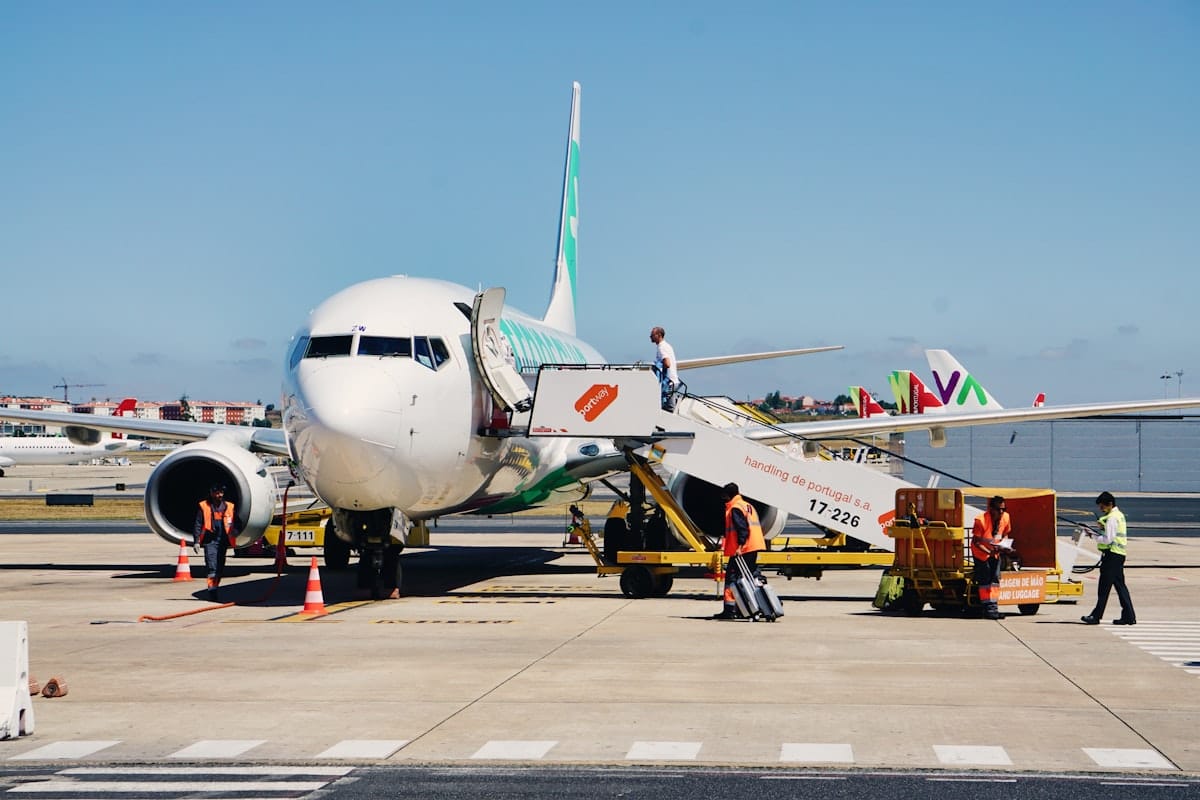
Portugal is putting 367 newly trained officers of the Public Security Police (Polícia de Segurança Pública, PSP) onto its airport borders just as the summer travel peak arrives — the largest single staffing boost since the force inherited passport control from the now-defunct Foreigners and Borders Service (Serviço de Estrangeiros e Fronteiras, SEF).
The officers completed the classroom phase of their training at a ceremony in Torres Novas, in the district of Santarém, and begin a two-week operational placement at air border posts on Monday, July 7. Their focus is the control of passengers arriving from outside the Schengen Area — the travellers whose passports must be checked, stamped and, increasingly, biometrically recorded.
Where the officers are going
- Lisbon (Humberto Delgado): 170 officers
- Porto (Francisco Sá Carneiro): 78
- Faro: 69
- Funchal (Madeira): 29
- Ponta Delgada (Azores): 21
The distribution mirrors where the pressure is worst. Portugal is currently handling roughly 20,000 more passengers a day than at the same point last year, and Lisbon — perennially the country's most congested border — takes almost half the reinforcement.
The Entry/Exit System is the real bottleneck
The extra headcount is as much about a new procedure as about numbers. Since October 2025 the European Union's Entry/Exit System (EES) has required non-EU travellers to have their fingerprints and a facial image registered on first entry, replacing the old manual passport stamp. Each first-time enrolment adds time at the desk, and Portugal's terminals — as the government concedes — were not redesigned for the volume.
The Minister of Internal Administration (Ministério da Administração Interna), Luís Neves, said the roughly 366 officers assigned to air borders would deliver "greater speed and ease" in the operation, but he was candid that "queues will always exist" and that computer failures or database-access problems can still snarl the lines. The government says it is coordinating with airport operator ANA on infrastructure to match the new checks. The reinforcement follows years of chronic understaffing after the 2023 handover from SEF, when long non-Schengen waits at Lisbon became a recurring summer embarrassment.
What This Means for Expats
- If you travel on a non-EU passport: you are the queue this system is built around. Arrive early for departures to third countries, and expect a one-time EES biometric enrolment — fingerprints and a photo — on your first crossing since the system went live.
- Residence-card holders: carry your título de residência. Legal residents are generally directed to the EU/Schengen lane and are exempt from EES registration — but only if you can prove your status on the spot.
- Dual nationals: travel on your EU passport to use the faster lane and skip biometric capture entirely.
- Tight connections: if you are transiting through Lisbon from outside Schengen, build in a generous buffer; border processing, not the walk to the gate, is the variable that will make you miss a flight.
Whether 367 officers are enough will become clear over the next eight weeks, as August arrivals test both the new staff and the biometric system at once. For now, the busiest summer on record meets a border force still finding its feet — and the smart traveller plans for the wait. Anyone renewing their status this month should also note that AIMA has opened its July–August residence renewals and is issuing digital proof-of-stay certificates, useful documents to have to hand at the border. The pressure also underlines why the country is racing to build the new Luís de Camões airport at Alcochete, and why carriers keep adding summer routes that funnel still more passengers through the same desks.