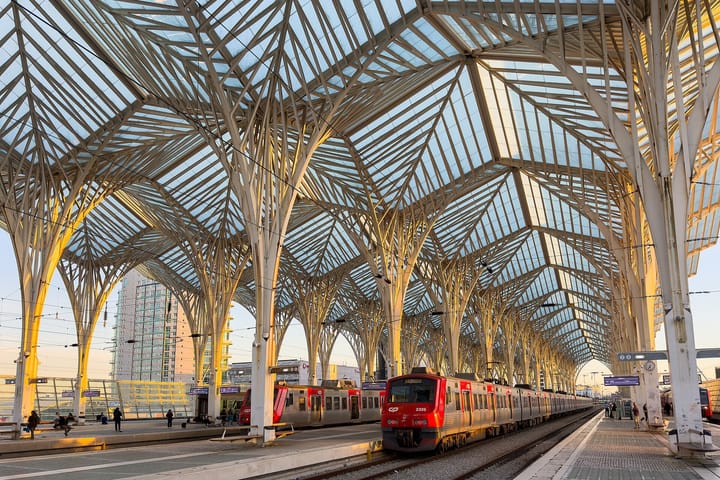
Portugal's Transport Regulator Logged 26,933 Passenger Complaints in 2025, Led Again by Late CP Trains and Rede Expressos Coaches
Passengers filed 26,933 complaints against Portugal's regulated transport operators in 2025 — down from 2024's record 29,586, but still dominated by CP's late trains and Rede Expressos coaches, with missed timetables the number-one grievance.

Passengers lodged 26,933 formal complaints against Portugal's regulated transport operators in 2025, according to figures from the Mobility and Transport Authority (Autoridade da Mobilidade e dos Transportes, AMT). The tally is down from the record 29,586 registered in 2024, but it remains one of the highest on record — and it is once again dominated by the same culprits: late trains and cancelled coaches.
Who draws the complaints
The pattern has been remarkably stable year to year:
- CP (Comboios de Portugal), the state railway, is the single most-complained-about operator. Rail services drew more than 8,000 grievances in 2024, of which CP's passenger trains alone accounted for 5,454 — even as the company carried a record 188 million passengers.
- On the road, the national intercity coach network Rede Nacional de Expressos leads its category, with 1,184 complaints in just the first eight months of 2025, ahead of Lisbon's Carris (555), Alsa Todi (389), Viação Alvorada (374) and Flixbus (344).
- Urban systems — Carris trams and buses plus the metro and eléctrico networks — add roughly 2,000 more between them.
Missed timetables, every time
The number-one reason people complain barely changes: failure to keep to the timetable. Schedule non-compliance accounted for 1,654 road and 1,194 rail complaints in 2025, comfortably ahead of the next causes — outright cancellations, service suppressions and the conduct of staff. In other words, the grievances are less about fares or comfort than about the basic promise that a train or coach will turn up when the timetable says it will.
The AMT publishes the data but has limited power to force change; it regulates and recommends rather than runs the services. Separately, the authority has opened a process against Rede Expressos over access to the Sete Rios terminal in Lisbon that could, in theory, carry a two-year suspension — a rare flash of enforcement teeth in a sector where complaints have trended upward for years alongside rising ridership.
What This Means for Expats
- Use the complaints book. Every operator must offer the Livro de Reclamações, in paper form on board or at the station and online at livroreclamacoes.pt. Complaints filed there are routed to the regulator and count toward exactly the statistics above — they are not a black hole.
- Know your refund rights. Under EU rail passenger rules, a delay of 60–119 minutes on an eligible service entitles you to 25% of the ticket price back, and 50% for delays of two hours or more. Keep your ticket and claim it; CP does not volunteer refunds.
- Build a buffer around CP. If you rely on intercity or suburban trains to commute or catch a flight, the data says plan for the delay rather than the timetable — especially on the busiest Lisbon and Porto corridors.
- Weigh the alternatives. Coach fares can undercut the train, but Rede Expressos tops the road complaints too; and where free metropolitan transport now runs in the Porto area, a monthly pass may be the more reliable bet.
For a country that has poured record ridership and public money into rail, the persistence of these numbers is a pointed reminder that capacity and punctuality are not the same thing. New links help — from the new Trafaria–Algés ferry to expanding metro networks — but until the trains and coaches simply run on time, the complaints book will keep filling. Drivers, meanwhile, are watching a price war at the pumps that may make the car the more tempting option yet. Update: the decree extending the 20-euro Green Rail Pass to Lisbon and Porto commuter trains and to Fertagus is in force from 26 September 2026; CP still has to set the start date and the rules of use. Update: the transport regulator's figures show the 20-euro Green Rail Pass more than doubled regional train journeys in 2025 while long-distance punctuality fell to 37 percent.