Zero Asks APA to Reject the Foupana Dam in the Algarve, Citing an Endangered Fish, EU Law and Doubts Over Impartiality
As the public consultation closes, the environmental association Zero wants the eastern Algarve dam refused: it says the study admits the saramugo fish will not survive, skips real alternatives and breaches EU water and habitat law.
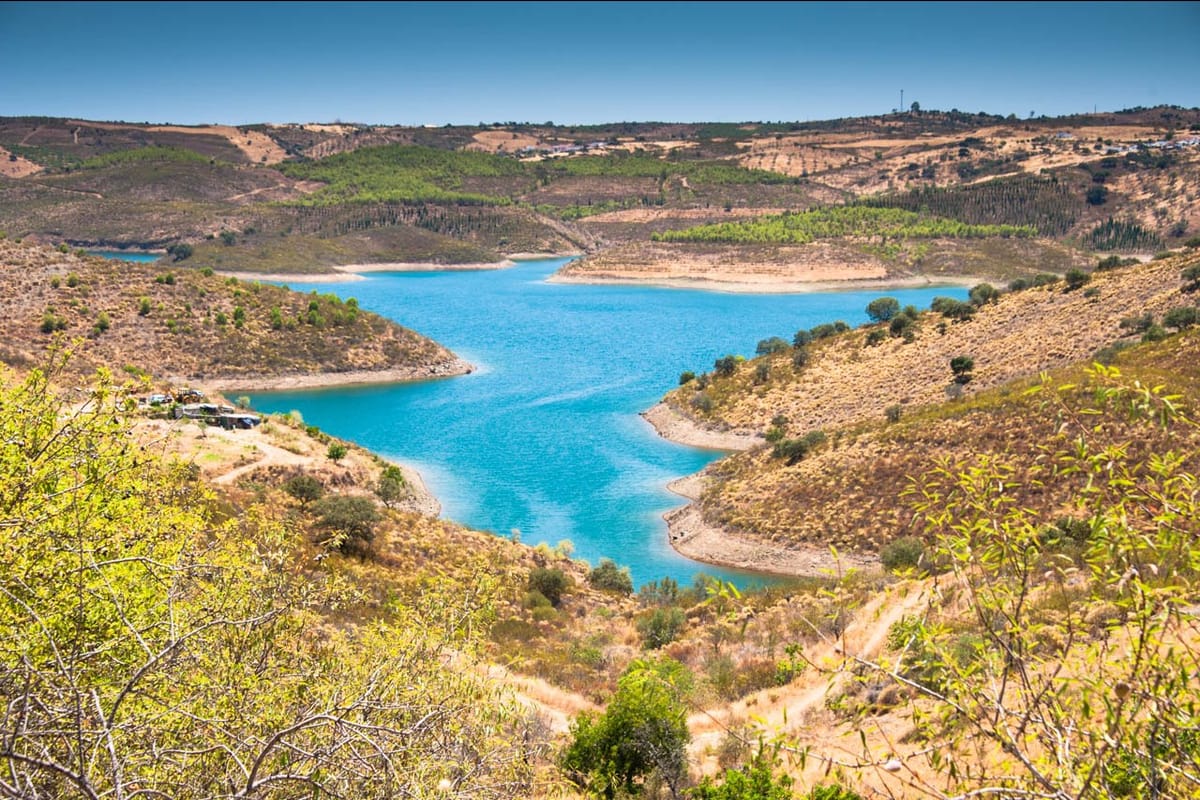
The environmental association Zero has asked for the planned Barragem da Foupana (Foupana dam) in the eastern Algarve to be rejected. In its submission to the public consultation, which closes today, 16 October, it argues that the environmental study is seriously flawed, that the project would breach EU law and that the impartiality of the bodies driving it needs to be cleared up before any decision.
The consultation on Participa, the government's public participation portal, opened on 31 August and is run by the Agência Portuguesa do Ambiente (APA, Portuguese Environment Agency).
What is planned, and why
The project sits on the ribeira da Foupana (Foupana stream) in the municipalities of Alcoutim and Castro Marim, in Faro district. According to the non-technical summary of the environmental impact study, it consists of a dam, a tunnel to the Odeleite-Beliche reservoir system that supplies the eastern Algarve, and access roads. The promoter is the Associação de Beneficiários do Plano de Rega do Sotavento do Algarve (ABPRSA, the eastern Algarve irrigation scheme's farmers' association), and APA is the licensing body.
The study's stated reason is to increase the water available to the Algarve by reinforcing Odeleite-Beliche, for current and future use including farming, and to make public supply across the region more resilient. Its authors favour the smaller of two sites: a dam about 53 metres above the riverbed, holding 99 cubic hectometres and flooding 491 hectares. They conclude it is viable as droughts become more frequent with climate change, provided every mitigation measure is applied.
A dam on the Foupana has been discussed since the 1970s. The government's national water strategy, Água Que Une ("Water That Unites"), approved by Council of Ministers Resolution 133/2026 in June, lists an assessment of its feasibility for 2027 to 2032. The same strategy promotes desalination for the Algarve, where a desalination plant and a Guadiana intake at Pomarão are already planned.
Zero's case
The following are Zero's claims, from its statement. It says:
- the study accepts that the saramugo (Anaecypris hispanica), an endangered small fish found only in the Guadiana basin, will not survive the project, yet concludes the Natura 2000 network of protected sites is not significantly affected;
- that conclusion rests on the Foupana having been left out of the Guadiana special conservation area, and on a single fish survey taken in July in a year of severe drought;
- the dam would add about 10 cubic hectometres a year on average, citing the study, raising the system's guaranteed volume from about 75 to 85;
- no real alternative, such as cutting leaks, reuse or managing demand, was compared, and the study accepts a deterioration of the water body without the derogation the Water Framework Directive requires;
- Água Que Une was approved without a strategic environmental assessment.
Zero puts the cost at 150 to 200 million euros. In September it complained to the European Commission that Portugal is breaching the Habitats, Strategic Environmental Assessment and Water Framework directives and the Nature Restoration Regulation. It also says recent links between board members of AdP AQUA, the Águas de Portugal company that Decree-Law 123/2026 charges with planning, financing, building and managing the strategy's works, and the promoting association "raise doubts" about impartiality. It wants an unfavourable environmental impact declaration and public clarification first.
What happens next
Under the study's own terms, the project can only be licensed after a favourable or conditionally favourable environmental impact declaration from APA. Elsewhere, the courts have halted works on the Pisão dam in Crato since May. In Peniche this month, a kaolin mine failed its assessment.