Saharan Dust Brings Poor Air Quality to Mainland Portugal on Friday and Saturday: Who Should Stay Indoors and Where to Check Readings
Hot air from North Africa is carrying dust across the mainland on 16 and 17 October. The DGS expects poor air quality and asks children, older people and anyone with asthma or heart disease to stay indoors where possible, windows shut.
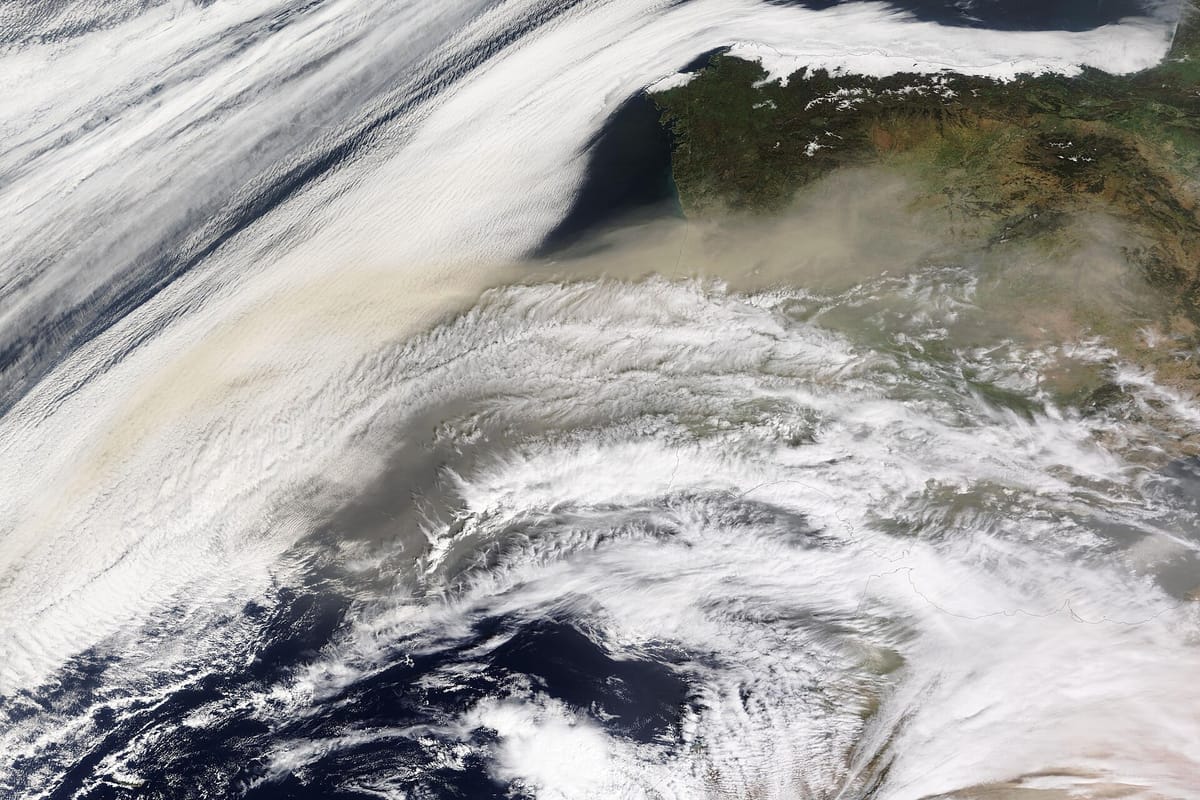
A mass of hot air from the deserts of North Africa, carrying dust in suspension, is crossing mainland Portugal on Friday 16 and Saturday 17 October, and the Direção-Geral da Saúde (DGS, Directorate-General of Health) expects poor air quality across most of the country while it lasts. The warning, published by the DGS on 15 October, covers the mainland; it does not mention the Azores or Madeira.
The dust raises the concentration of inhalable particles of natural origin, known as PM10 (particles 10 micrometres across or smaller). The DGS says they affect health above all in the most sensitive groups, children and older people, whose care should be stepped up while the episode lasts.
What the DGS advises
For everyone, while the dust is in the air:
- avoid prolonged exertion and limit physical activity outdoors;
- avoid other irritants, such as tobacco smoke and contact with irritant products.
Four groups should also, wherever possible, stay indoors, preferably with the windows shut:
- children;
- older people;
- people with chronic respiratory illness, asthma in particular;
- people with heart and circulatory disease.
People with chronic conditions should keep taking their usual treatment. If symptoms get worse, the DGS says to call the SNS 24 line (the National Health Service helpline) on 808 24 24 24 or go to a health service.
Where the forecast is worst
The Agência Portuguesa do Ambiente (APA, Portuguese Environment Agency) runs QualAr, its air quality information system, which rates each area on five classes from "Very Good" to "Very Poor" and carries a forecast for today and tomorrow built by the University of Aveiro for the mainland. The APA had issued no press note of its own on the episode by Friday morning.
On Friday morning, QualAr's University of Aveiro forecast for that day rated Lisbon and Vila Nova de Gaia "Poor", the class the DGS warning refers to, because of fine particles. Porto, Almada, Aveiro and Ílhavo were rated "Moderate", also for particles. For Saturday, Lisbon and Almada were still forecast "Moderate" for fine particles. Most of the 280 municipalities in the forecast were rated "Good" on both days. By late morning on Friday, the measured index from the monitoring stations had every zone at "Good" or "Very Good". Readings can change during the day, so check the live figures before going out.
For reference, the air quality objectives on the APA's site set the PM10 limit at 50 micrograms per cubic metre averaged over 24 hours, a level that may be exceeded no more than 35 times a year.
Where to check live readings
The DGS points readers to the APA's website and the QualAr app, which show the index and the values measured at each monitoring station. The stations are run by the Comissões de Coordenação e Desenvolvimento Regional (CCDR, Regional Coordination and Development Commissions) on the mainland and by the regional environment departments in the Azores and Madeira.
Saharan dust is a recurring visitor. This is the twelfth air quality notice of this kind on the DGS website since 2 March, by our count of the notices it lists, with the previous ones in September and August. It adds to particles of our own making: home wood fires produce about 43 percent of fine-particle pollution in mainland Portugal, as we reported on 10 October.