
Home Wood Fires Produce About 43 Percent of Fine-Particle Pollution in Mainland Portugal, and a New Air Programme Promises Help to Replace Them
The government approved Portugal's air pollution control programme on 8 October. Its draft plans a Fundo Ambiental line from 2026 to 2030 to swap open fireplaces and stoves for clean heating such as heat pumps, and low-emission zones by 2030. No amount or application date exists yet.
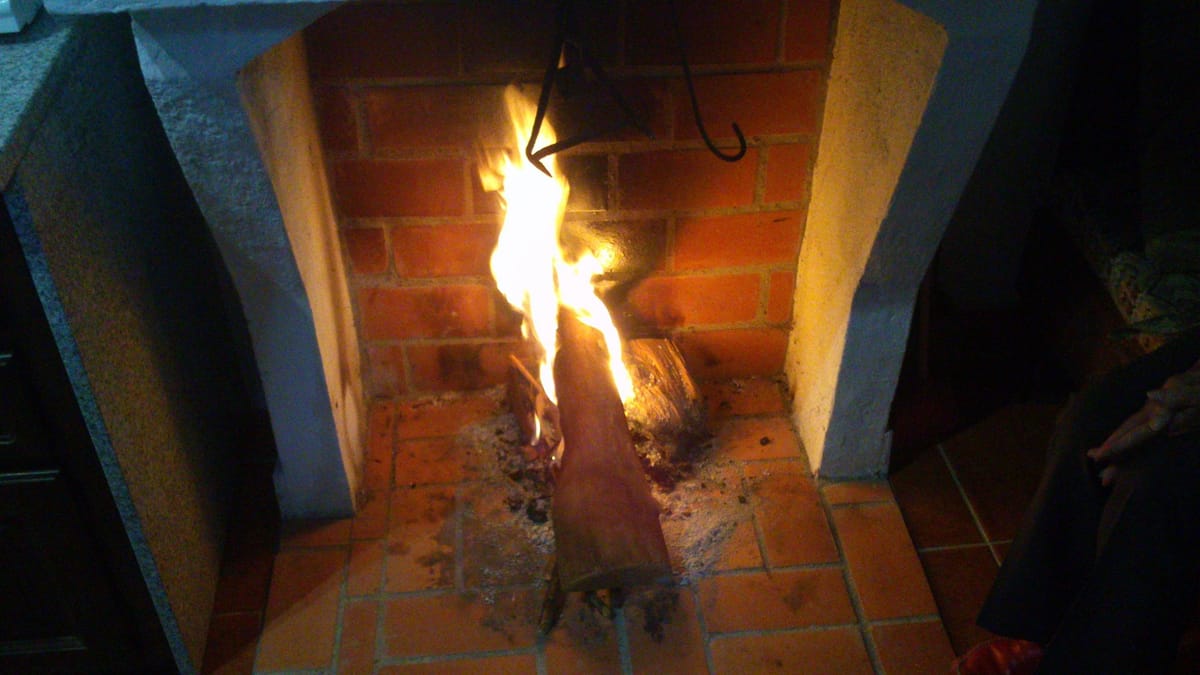
Open fireplaces, wood stoves and the other wood-burning heaters in Portuguese homes are the single biggest source of the fine particles that do most harm to health, and the government now has a programme that promises money to help households replace them. On Thursday, 8 October, the Conselho de Ministros (Council of Ministers) approved by resolution the Programa Nacional de Controlo da Poluição Atmosférica (National Air Pollution Control Programme), known as PNCPA 2030, which the official communiqué says sets the national strategy for cutting air pollutant emissions over the next decade.
The communiqué says the programme covers agriculture, industry, home heating, mobility and transport, including better farming practices, energy efficiency and electrification, the replacement of the most polluting equipment and more public transport. It gives no figures, no budget and no dates.
Those come from the draft put out for public consultation, a 132-page document dated December 2025 and prepared by the Agência Portuguesa do Ambiente (Portuguese Environment Agency, APA) with the University of Aveiro. The approved text has not been published: as of Saturday the resolution had not appeared in the Diário da República (the official gazette), so the figures and measures below are the draft's, and the final version may differ.
Why home heating is in the frame
Fine particles, known as PM2.5, are small enough to reach deep into the lungs. According to the draft, burning wood and other biomass to heat homes (in open fireplaces, recuperadores de calor (fireplace inserts), salamandras (free-standing stoves) and wood-burning cookers, among others) was responsible for about 43 percent of mainland Portugal's PM2.5 emissions in 2023, about 18,000 tonnes. (The draft's sector table, which that figure matches, counts homes and commercial premises together.) Industry, mostly pulp and paper, came second at about 33 percent. A later chapter of the same draft puts home biomass burning at about 40 percent of man-made PM2.5.
The draft blames incomplete burning in outdated equipment, naming open fireplaces, stoves and low-efficiency inserts, and says the effect on air quality is worst in winter. It also says Portugal must cut PM2.5 emissions by 53 percent from 2005 levels by 2030 under its national emission ceilings, and that existing policies will not be enough on their own to get there, so extra measures are needed. Its projections have home wood heating still the main source of PM2.5 in 2030.
The draft's health modelling puts premature deaths linked to PM2.5 at 3,264 in its 2015 reference year, falling to an estimated 1,916 in 2030 with the measures already in place, a drop of 41 percent. Its extra measures, aimed mainly at PM2.5, would bring that to about 1,858.
What the draft promises households
Two measures in the draft are aimed directly at home heating:
- Money to replace old heaters (measure 5.2). A relaunched support line under the Fundo Ambiental (Environmental Fund), within its programme to improve the energy and environmental efficiency of homes, to replace open fireplaces, salamandras and wood or coal boilers with heating that is clean for the environment and for health, with heat pumps given as the example. The draft dates it 2026 to 2030 and puts the Agência para o Clima (Climate Agency) and APA in charge.
- An awareness campaign (measure 5.1). APA and the Direção-Geral da Saúde (Directorate-General of Health, DGS) are to run a campaign in 2026 on good practice when burning wood for heating, on treating and storing firewood properly, and on the effects on health.
The draft does not say how much money the replacement line will have, how much any household could receive, who will qualify, or whether tenants as well as owners could apply. No application date has been announced. Until the Fundo Ambiental publishes a call, there is nothing to apply for.
Alongside these, the draft plans work in 2026 and 2027 on a method for gathering information on how homes are heated, to improve the data behind the sector's emission estimates.
Low-emission zones in more cities
For transport, the draft includes a measure (E1.3) for councils and the regional coordination and development commissions (CCDR) to put zonas de emissões reduzidas (low-emission zones) in place in medium-sized and large cities by 2030. The draft gives no list of cities and no rules on which vehicles would be kept out; those would be set locally.
The consultation report, posted when the consultation on participa.pt formally closed on 15 September (comments had been taken from 24 March to 6 May), says APA added a further measure after hearing from campaigners, a council and members of the public: zero-emission zones or restricted-access zones in medium-sized and large cities, which may be included in air quality plans where traffic must be cut. The same report says the emission figures were revised and adjusted after comments from the agriculture ministry's planning office, so some of the draft numbers may have changed in the approved text. The document was also renamed from "Plano" to "Programa".
What this means if you rent an older home
Many immigrants rent older flats and houses where an open fireplace or a wood stove is the main heating. Nothing in the draft bans their use, and no support is open yet for this winter. The practical points so far are these:
- The replacement support, when it opens, is planned as a Fundo Ambiental line; any rules on who can apply, and whether a landlord's consent is needed, will be in the call itself.
- The programme also points to heat pumps and electrification more broadly, which ties in with the Social Climate Plan Portugal submitted to Brussels on 9 October, aimed at low-income households.
- Low-emission zones, where they come, will be designed city by city, so drivers will need to check their own council's rules.
The same Council of Ministers meeting also set a 49 percent renewable energy goal for 2030 in a separate decree-law. According to the consultation report, the air pollution programme covers mainland Portugal only.


