Portugal Approves a 49% Renewable Energy Goal for 2030, Two Points Below the 51% in Its Own Climate Plan
The decree transposing the EU's RED III directive sets a 49% renewables goal for 2030, with 75% in buildings and 29% in transport. Parliament's climate plan says 51%, and the government has not explained the gap. Portugal reached 36.3% in 2024.
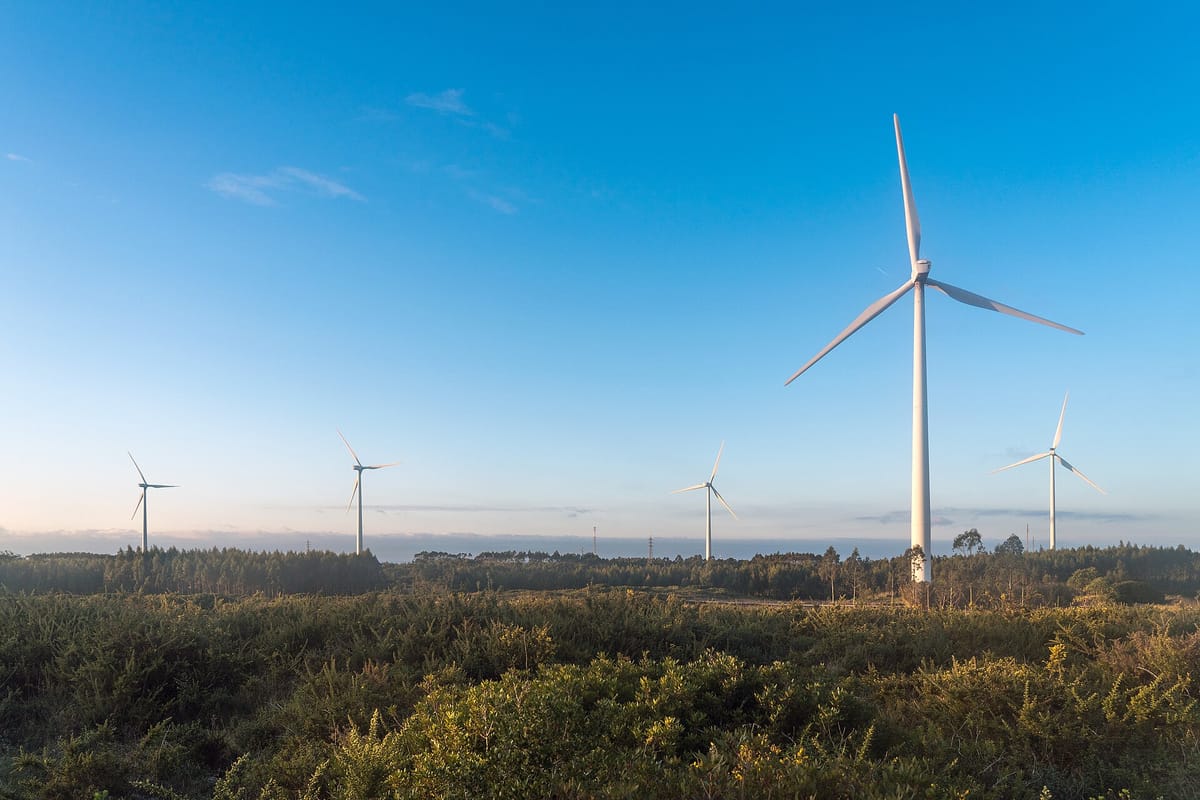
The Council of Ministers approved a decree-law on 8 October 2026 that transposes the European Union's revised Renewable Energy Directive, known as RED III, and fixes a national goal of 49% renewable energy in everything Portugal consumes by 2030. According to the government's communiqué, the decree also sets an indicative target of 75% renewable energy in buildings and a 29% renewable share in transport, both for 2030.
The 49% headline is two percentage points below the 51% written into Portugal's own updated climate and energy plan, as Jornal de Negócios noted. The decree's text has not yet been published.
The targets in the new decree
- Overall: 49% of energy consumed in Portugal from renewable sources by 2030.
- Buildings: an indicative 75% renewable share by 2030.
- Transport: 29% renewable energy by 2030.
Below the plan parliament approved
The updated Plano Nacional de Energia e Clima 2030 (PNEC 2030, National Energy and Climate Plan) was approved by parliament on 20 December 2024 and published as Resolução da Assembleia da República n.º 127/2025 (Resolution of the Assembly of the Republic) on 10 April 2025. It raised the renewables goal from the 47% of the original 2020 plan to 51% of gross final energy consumption, describing that as Portugal's contribution to the EU-wide target. The Agência Portuguesa do Ambiente (APA, Portuguese Environment Agency) summarises the plan's sector goals as 93% renewables in electricity, 63% in heating and cooling and 29% in transport.
The government's communiqué does not mention the plan or explain why the decree uses 49% rather than 51%, and no explanation appeared in the coverage we reviewed. The lower figure is not new. The draft decree the environment and energy ministry put to public consultation on ConsultaLEX (the government's consultation portal) from 25 September to 25 October 2025 already said 49%. Its preamble described the revised PNEC as setting a 49% goal, although the plan approved by parliament says 51%.
Where Portugal stands now
According to APA, renewables supplied 36.3% of Portugal's gross final energy consumption in 2024 and 65.8% of its electricity production. For the sixth year running, that left Portugal with the fourth-highest renewable share of electricity in the EU.
The consultation draft also set indicative milestones of at least 40% in 2025 and at least 44% from 1 January 2028. Whether those survive in the approved version will only be clear once the text is published.
Sixteen months late, and before the EU court
RED III, Directive (EU) 2023/2413, sets a binding EU-wide target of at least 42.5% renewable energy by 2030, with an aim of reaching 45%, according to the European Commission. National governments had until 21 May 2025 to bring most of it into their own law.
Portugal missed that date. The Commission sent a letter of formal notice in July 2025 and a reasoned opinion in December 2025, and on 29 April 2026 it decided to refer Portugal, together with Greece and Malta, to the Court of Justice of the European Union. The Commission asked the court to impose financial sanctions, noting that Portugal had not notified any transposition measures. We reported the referral on 2 May. The government has not said what Thursday's decree means for that case.
Buildings and transport
The 75% buildings figure is well above the directive's floor. RED III asks each country to set an indicative buildings target consistent with an EU-wide share of at least 49% by 2030, according to the European Parliament's fact sheet. The transport figure of 29% matches both the directive's transport option and the PNEC.
In the consultation draft, renewable energy produced on or near a building for self-consumption counted towards the buildings target, as did renewable energy supplied through the grid. Ambient heat captured by heat pumps could also count, under the EU calculation method. The draft also allowed the energy minister to set out, by portaria (ministerial order), measures and incentives for renewable heating and cooling equipment. It did not create any incentive itself, and Thursday's communiqué announced none.
Also approved on Thursday
The same meeting approved the 2027 State Budget proposal. It also adopted the Programa Nacional de Controlo da Poluição Atmosférica (National Air Pollution Control Programme), covering agriculture, industry, home heating, mobility and transport, including the replacement of more polluting equipment and more public transport. A separate decree-law applies the EU's FuelEU Maritime regulation on cleaner shipping fuels. It names the Direção-Geral de Recursos Naturais, Segurança e Serviços Marítimos (DGRM, the maritime directorate) as the national authority and puts fine revenue towards cleaner fuels and shore power in ports, Lusa reported via Notícias ao Minuto.
What this means for residents
- No immediate change at home: the decree sets national targets. Nothing published so far creates a new obligation or a new grant for households.
- Buildings are the sector to watch: the 75% goal is indicative, but the draft points to future ministerial orders on renewable heating and cooling. Anyone weighing a heat pump or solar panels should look for those orders rather than act on the headline figure.
- Self-consumption counts: solar power you generate and use yourself counts towards the buildings target. Our guide to joining a renewable energy community explains how shared self-consumption works.
- The electricity is already mostly green: with about two thirds of power generated from renewables in 2024, the bigger gaps are in heating and transport fuels.
The decree must still be promulgated by the President and published in the Diário da República (the official gazette) before it takes effect. Publication will show whether the final text keeps the consultation draft's interim milestones and building rules, and whether the government explains the gap with its own plan.