Thyssenkrupp Nucera Chooses Vila Nova de Gaia for Its First Company-Run Electrolyser Cell Assembly Line in Europe, Due to Open in 2028
The German electrolyser maker will spend 10 million to 14 million euros on a cell assembly hub at a business park in Gaia, backed by about 3.7 million euros of public money. The first cells are for a Spanish hydrogen plant. What is known, and what is not, including jobs.
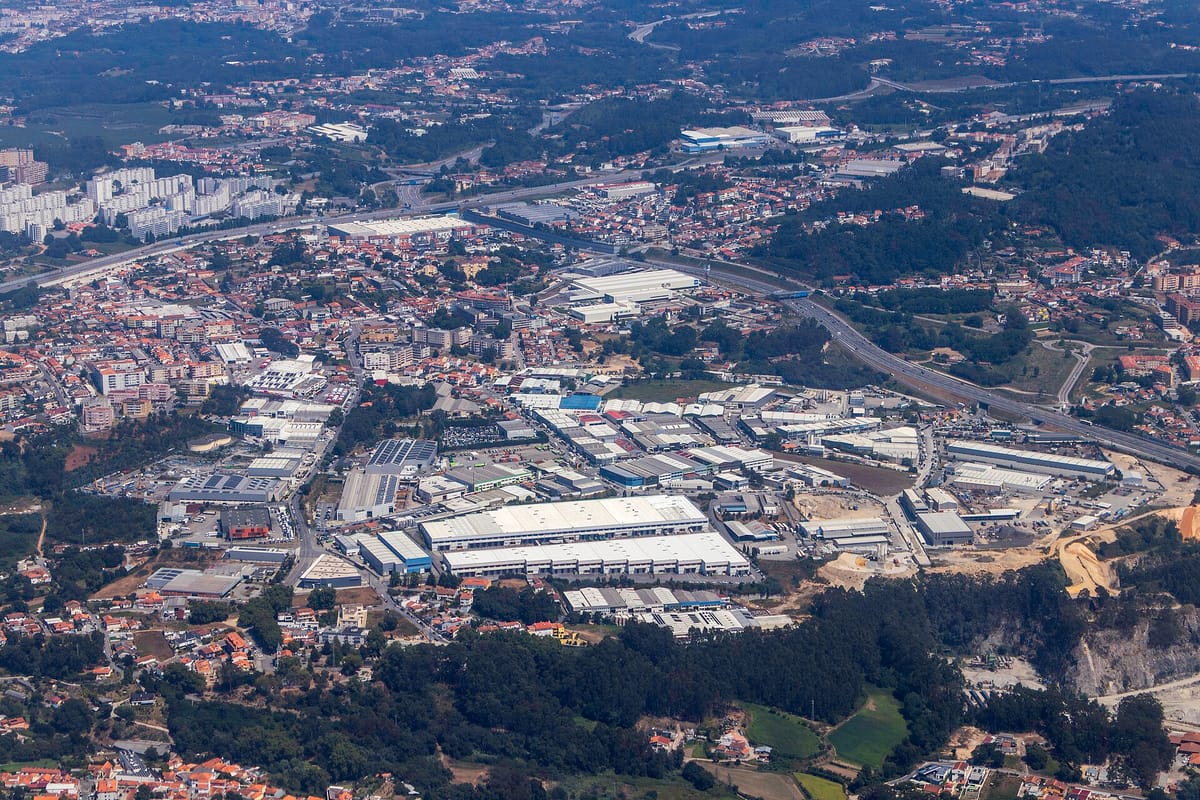
Thyssenkrupp Nucera, the German maker of electrolysers (the machines that split water into hydrogen and oxygen using electricity), is setting up its first company-operated electrolyser cell assembly site in Europe in Vila Nova de Gaia, just south of Porto. The company announced the project on 6 October and says it will invest between 10 million and 14 million euros in what it calls an Assembly Hub, with cell assembly due to start in 2028.
The project is backed by about 3.7 million euros of public funding from the Portuguese government under COMPETE 2030 (the Portugal 2030 programme for innovation and the digital transition), according to the company. The story was picked up in Portugal on Sunday by Jornal de Negócios, which reported that the group chose Portugal over several other European locations, that the plant is expected to create skilled jobs, and that the company does not rule out further investment.
What the Gaia site will do
The plant will not make hydrogen. It will assemble electrolyser cells, the stacked units at the heart of the equipment that produces what is usually called green hydrogen when the electricity comes from renewable sources. At first the line will handle cells for alkaline water electrolysis, the technology behind Thyssenkrupp Nucera's standard 20-megawatt module, sold under the name scalum.
Until now, the company says, the individual cell elements for these modules have been assembled by hand in decentralised workshops run by its customers, and then installed at each project site. It describes that approach as slow per cell and a limit on capacity. The Gaia line is meant to bring those steps under one roof, partly automated, so that several cells can be worked on at once and customers receive packages ready to install. The company also says the site will handle servicing, including the replacement of cells in plants already running.
"By centralizing and semi-automating cell assembly, we are increasing our capacity and closely integrating assembly and service," the chief executive, Werner Ponikwar, said in the company's statement, calling the investment "a clear commitment to Europe as an industrial location".
Where it will be, and when
- Site: a building of more than 7,500 square metres at VGP Park Vila Nova de Gaia, for which Thyssenkrupp Nucera has signed the lease. The park's developer, VGP, describes it as a logistics park next to exit 10 of the A29 motorway, about 18 kilometres from Porto.
- Construction: work on the building begins in winter 2026; the assembly line is installed once it is finished.
- Start: cell assembly from 2028.
- Money: 10 million to 14 million euros invested by the company; the project is supported by about 3.7 million euros of public funding under COMPETE 2030.
- Market: projects across Europe and neighbouring regions.
The first customer is across the border
The first cells out of Gaia are not destined for a Portuguese project. From 2028 the hub will initially assemble cells for Onuba, the green hydrogen plant being built by the Spanish energy company Moeve (formerly Cepsa) at its La Rábida energy park in Huelva, in Andalusia. In a statement in March, Thyssenkrupp Nucera said it had signed a contract to supply 15 of its 20-megawatt units, 300 megawatts in total, for Onuba, after Moeve took its final investment decision in early March 2026. The companies put the plant's capacity at around 45,000 tonnes of hydrogen a year.
The company has not published its reasons for choosing Gaia over the other sites it looked at. The March statement quoted Mr Ponikwar describing the Iberian Peninsula as "one of Europe's greatest opportunities for large-scale green hydrogen production".
Where this sits in Portugal's hydrogen story
Portugal's own hydrogen plans have so far centred on production, especially around the port of Sines, where several projects are working toward investment decisions; we looked at the largest of them in June. In the Porto area, hydrogen has mostly been visible on the road, with the hydrogen-powered MetroBus that began paid service in April.
The Gaia project is different in kind: it puts part of the equipment supply chain in the country rather than a production plant. It is also modest in size. At up to 14 million euros it is far smaller than the multi-billion-euro production projects proposed at Sines, and its workload depends on electrolyser orders across Europe, in what Mr Ponikwar himself called, in March, "volatile markets". It is the latest in a run of industrial investments in the north, after the Brazilian motor maker WEG set out its expansion plans for Santo Tirso last week.
What is not yet known
- Jobs: neither the company's statement nor the reporting so far gives a number of workers; Jornal de Negócios reports only that skilled jobs are expected.
- The funding call: the company names COMPETE 2030 but not the specific call or contract under which the 3.7 million euros was awarded, and no award notice had been found by the time of writing.
- Capacity: the company says the hub will "significantly" increase capacity but has not published how many cells a year it will assemble.
- Further investment: what a second phase might involve, and when, has not been set out.
For anyone in the Porto area hoping to work on the line, the dates to watch are this winter, when construction of the building begins, and 2028, when assembly is due to start. The company has not yet said when or how it will recruit.