
Parliament Clears Portugal's Fifth IRS Cut, Backdated to January, and Settles the Third-Bracket Rate at 20.7 Percent
Parliament approved on Friday the authorisation for lower IRS rates on the first six brackets, applying to all 2026 income. The new table, what happens before November's payslips, and what is still unknown about the months already taxed.
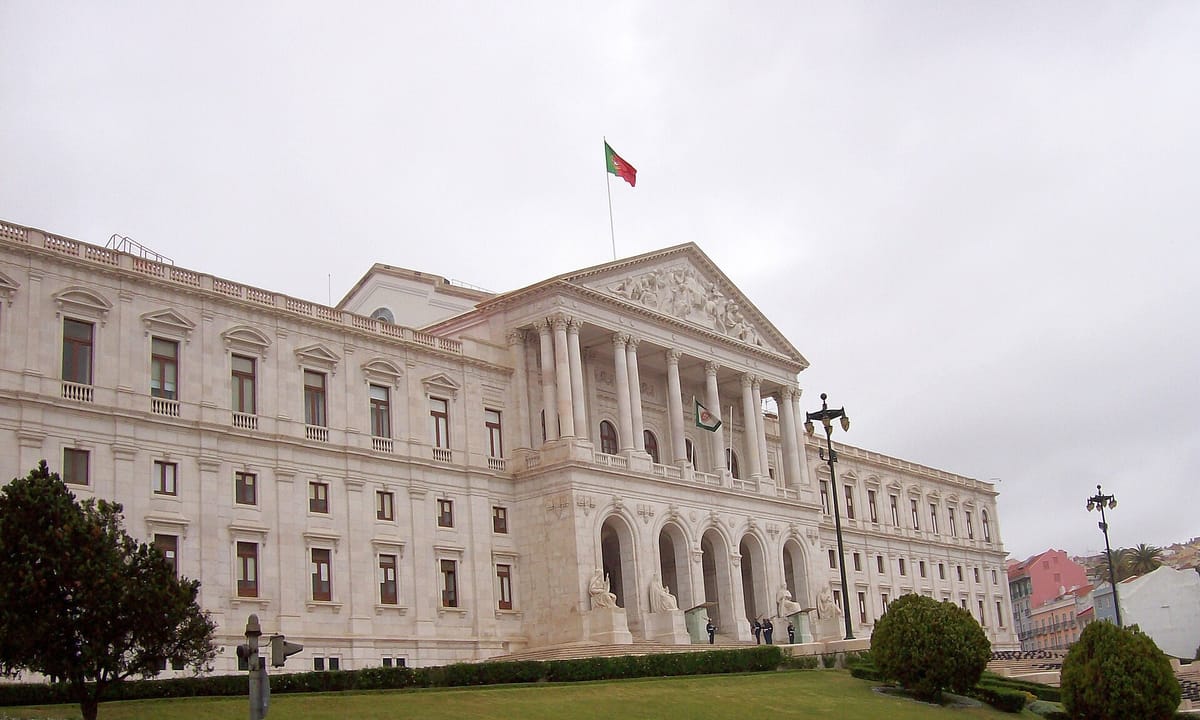
The Assembleia da República (Parliament) on Friday, 9 October, approved the government's bill for a fifth cut in IRS, the personal income tax, since April 2024. Proposta de Lei n.º 108/XVII/2.ª lowers the rates on the first six income brackets, and the bill says the reduction applies to all income earned in 2026, with effect from 1 January. The bracket limits themselves do not change.
The government had asked for the urgent procedure, and the bill went through its general, detailed and final votes. According to Jornal de Negócios, the PCP voted against at every stage, while the PS, the Bloco de Esquerda and Livre abstained. ECO reports that the PSD, CDS-PP, Chega and Iniciativa Liberal voted in favour.
The new rates, bracket by bracket
The bill is an authorisation law: Parliament does not change the tax code itself but authorises the government to amend article 68(1) of the Código do IRS (Income Tax Code). The draft decree-law annexed to the bill sets out the new table. The current rates are those in force since the 2026 State Budget (Lei n.º 73-A/2025), as published on the Autoridade Tributária (tax authority, AT) page for article 68.
| Taxable income (euros a year) | Rate now | New rate | Change |
|---|---|---|---|
| Up to 8,342 | 12.5 percent | 12.2 percent | 0.3 points lower |
| 8,342 to 12,587 | 15.7 percent | 15.2 percent | 0.5 points lower |
| 12,587 to 17,838 | 21.2 percent | 20.7 percent | 0.5 points lower |
| 17,838 to 23,089 | 24.1 percent | 23.6 percent | 0.5 points lower |
| 23,089 to 29,397 | 31.1 percent | 30.6 percent | 0.5 points lower |
| 29,397 to 43,090 | 34.9 percent | 34.6 percent | 0.3 points lower |
| 43,090 to 46,566 | 43.1 percent | 43.1 percent | unchanged |
| 46,566 to 86,634 | 44.6 percent | 44.6 percent | unchanged |
| Above 86,634 | 48 percent | 48 percent | unchanged |
The bill text also settles a figure that was unclear when the cut was announced. When the Council of Ministers approved it on 17 September, we noted that one table in circulation gave 20.2 percent for the third bracket. The bill says 20.7 percent.
The rates apply to taxable income (rendimento coletável), which is what is left after the deductions the code allows, not to gross pay. Because the tax is progressive, the bill's explanatory memorandum points out that people in the higher brackets also benefit on the part of their income that falls in the first six. Using the AT's average-rate column for the current scale and the bill's new one, a single taxpayer's annual tax falls by about 171 euros at 43,090 euros of taxable income, and the saving stays at roughly that level above it. Below that point it is smaller.
Rival bills rejected
The government's bill was debated alongside proposals from other parties, listed on the Parliament page for the initiative. Jornal de Negócios reports that all were rejected. Chega wanted deeper cuts of 0.4 to 0.6 points across the same six brackets. Livre proposed a cut of 1 point in the first bracket and 1.1 points in the second, and in a separate bill a higher specific deduction for income from work and pensions. Iniciativa Liberal wanted to cut the first-bracket rate by 0.3 points and raise its upper limit from 8,342 to 12,587 euros, which would have moved the higher brackets up too. A PAN resolution to index the brackets to inflation was also rejected.
What happens next
The law still needs the signature of the President of the Republic and publication in the Diário da República (official gazette). It enters into force the day after publication, and from then the government has 180 days to use the authorisation. The cut itself takes effect only once the government approves and publishes the decree-law amending the code, and the tax authority will then need new withholding tables for monthly pay and pensions.
The government wants the cut to show up quickly. ECO reports that Prime Minister Luís Montenegro has said the intention is for the lower rates to be reflected in the withholding tables applied to November salaries. No official document has yet said whether November and December withholding will also make up for the ten months already taxed at the old rates. Because the bill applies the new rates to all of 2026's income, any tax overpaid during the year should be settled when that income is assessed on the annual return filed in 2027.
What this means for you
- If you pay IRS on the general scale, your bill falls. Anyone with taxable income in the first six brackets pays less on that part, whatever their top bracket. People whose income is already exempt see no change.
- Check your payslip from November. The change in monthly withholding depends on tables the AT has not yet published. Compare your November net pay or pension with October's once they are out.
- The full annual effect comes with the 2027 return. Tax withheld from January to October was calculated under the old tables. The annual return for 2026 income is where the final amount is worked out.
- Special flat rates are not covered. The bill changes only the general rates in article 68. Income taxed at one of the code's special or flat rates is outside it, so check which regime applies to you before counting on a saving.
The 2026 cut will not be the last change to the scale. The 2027 budget bill, presented on 8 October, would raise the bracket limits again next year, and ECO reports that the first vote on it is set for 28 October. Before then, the decree-law and the new withholding tables will show how much of this year's cut reaches November's payslips.


