The Algarve's Desalination Plant Is Now Due in Early 2029, and With the Guadiana Intake at Pomarão the Two Projects Come to 305 Million Euros
The new head of Águas do Algarve told MPs the Albufeira desalination plant should be running in the first quarter of 2029. With the Guadiana intake at Pomarão, the two projects add up to about 305 million euros, now sought from EU cohesion funds.
The first seawater desalination plant on mainland Portugal, in the Algarve, should start supplying water in the first quarter of 2029, and together with a new intake on the Guadiana river at Pomarão it will cost about 305 million euros, the new head of Águas do Algarve (the company that runs the region's multimunicipal water supply and sanitation system) told MPs on Tuesday 13 October.
Helena Lucas, who took over as chair on 2 October, was speaking at a hearing of the Assembleia da República's Comissão de Ambiente e Energia (Parliament's Environment and Energy Committee) on the Algarve's water projects, requested by the Socialist Party (PS). Her figures were reported by the Lusa news agency, via Notícias ao Minuto.
"Let us hope there are still no delays, and that in 2029, which is our window to build these works and bring them into service, we can really be at ease about the Algarve's water resilience," she said.
The two projects
The desalination plant, known as the EDAM, is under construction in the municipality of Albufeira. Its first phase is designed to produce up to 16 cubic hectometres (16 million cubic metres) of drinking water a year, and it can later be expanded to 24, according to Águas do Algarve's own announcement when work was cleared to start in April. The design, construction and operation contract is worth 107,922,830 euros, according to the company's project page, and was signed with a consortium of Luságua, Aquapor and GS Inima.
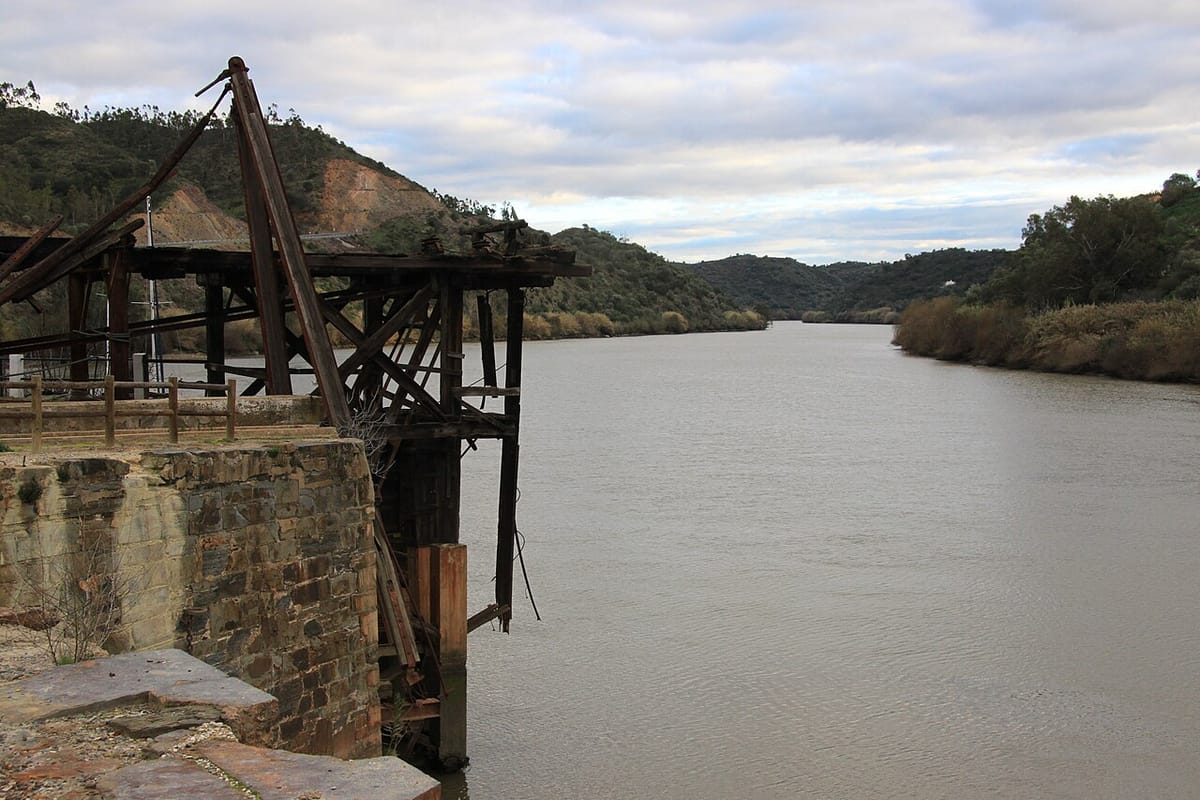
The Pomarão intake will draw water from the Guadiana estuary near the village of Mesquita, upstream of Pomarão in the municipality of Mértola (Beja district), and pipe it to the Odeleite reservoir in Castro Marim. Lucas said it would supply 16 cubic hectometres a year on average. Águas do Algarve's project page, written when the scheme went to public consultation, says the pumps would run only from October to April, would stop in exceptionally dry months, and would halt once 30 cubic hectometres had been taken in a hydrological year. The intake rests on the flow rules for the lower Guadiana in a protocol with Spain that the Cabinet sent to Parliament in June.
Between them, Lucas said, the intake would give the region "a possibility of guaranteeing annual water security that we did not have before", while the desalinated water would let reservoir levels be topped up "so that there is always water available for public supply". The Algarve currently needs to draw about 75 cubic hectometres a year for public supply, she said.
Money and timetable
- Pomarão intake: 188.7 million euros of investment, with an application for 172.9 million euros already lodged with Sustentável 2030 (the EU-funded climate action and sustainability programme, financed by the Cohesion Fund).
- Desalination plant: 116.9 million euros, with an application for 110.3 million euros to the same programme.
- Pomarão works tender: closed, with "seven bids open to be assessed in the coming months".
- Desalination plant in service: first quarter of 2029.
Both projects began in the Recovery and Resilience Plan (PRR), the EU's post-pandemic fund. In January 2025 the government proposed moving them to Sustentável 2030, saying EU co-financing could reach 85 percent and the deadline for finishing the works would be two years longer, ECO reported. Environment Minister Maria da Graça Carvalho announced in November 2025 that the European Commission had approved the transfer, according to Lusa, via Observador.
The timetable has moved. When construction was cleared in April 2026, Águas do Algarve said it expected the plant to enter service in 2028. Lucas's date is now the first quarter of 2029. For Pomarão, the Environment Ministry put the base price of the works tender at 101 million euros, split into three lots with a building period of 460 working days, when Águas do Algarve launched it in December 2024, RTP reported.
Why it matters for residents
The two projects are the Algarve's main bets on water that does not depend on its own rainfall. The reservoirs are comfortable for now: the Agência Portuguesa do Ambiente (Portuguese Environment Agency, APA) said at the end of September that the region's six main reservoirs began the hydrological year on 1 October at 74 percent of capacity, holding 328 million cubic metres, 13 million more than a year earlier, Lusa reported. But the maps of the Instituto Português do Mar e da Atmosfera (IPMA, the national weather service) show meteorological drought settling over the south after a record-hot, dry September.
Others at the hearing set out the cheaper side of the effort. José Apolinário, president of the Comissão de Coordenação e Desenvolvimento Regional do Algarve (CCDR Algarve, the regional development commission), said the region's 16 municipalities have works under way worth an estimated 120 million euros to cut losses in their water networks from 20 percent to 15 percent by the end of the decade, and that the PRR had allowed 106 million euros of water investment to be carried out in the Algarve.
André Gomes, president of Turismo do Algarve (the regional tourism board), said about 130 tourist establishments, roughly 30 percent of the region's beds, have joined the "Save Water" label awarded since 2024. They have cut their annual water use by 12 percent, he said.
What happens next
Águas do Algarve now has to assess the seven Pomarão bids and award the works, while construction continues on the coast at Albufeira. The company's board has a new make-up: a notice of 8 October lists Albufeira's mayor, Rui Cristina, as a non-executive board member, alongside Castro Marim's mayor, Filomena Sintra. In April Cristina had threatened to take "all necessary measures" against the plant's construction on his council's coast.