Albufeira Mayor Threatens 'All Necessary Measures' to Block Portugal's First Mainland Desalination Plant as Construction Crews Prepare to Move In
Portugal’s Environment Ministry has authorised the start of construction on the country’s first mainland desalination plant — a €107.92 million facility at Praia da Falésia in Albufeira — setting up a collision...
Portugal’s Environment Ministry has authorised the start of construction on the country’s first mainland desalination plant — a €107.92 million facility at Praia da Falésia in Albufeira — setting up a collision with the town’s mayor, who says the municipality was never consulted and is preparing to “take all necessary measures” to stop the works.
The authorisation was issued on Friday 17 April. Construction can begin as early as this week. Environment and Energy Minister Maria da Graça Carvalho told journalists on Saturday that the project is “an irreversible process” but that she still wants “one more conversation” with Albufeira mayor Rui Cristina (Chega) before the first excavators arrive.
The Project
The plant is Portugal’s first seawater desalination facility on the mainland — the Azores and Madeira already operate smaller units. It is designed to produce 16 million cubic metres of drinking water a year, with engineering headroom to be expanded to 24 million cubic metres. That first tranche is equivalent to roughly a fifth of the Algarve’s annual urban water use, and is being positioned as a structural hedge against the region’s recurring drought cycles.
The contract was awarded in 2024 to a Luso-Spanish consortium built around Aquapor (a Portuguese water utility owned by French group Saur) and GS Inima (a Spanish desalination specialist owned by South Korea’s GS E&C). The winning bid came in at €107.92 million, some €17.92 million above the €90 million base price set in the tender. Of that, €56 million is being paid from Portugal’s Recovery and Resilience Plan (PRR) — EU post-pandemic funds that must be committed by mid-2026. The consortium will also operate the plant for three years after commissioning, scheduled for late 2026 or early 2027.
The project is not new. It was launched under the previous Socialist government of António Costa, ran through a favourable environmental impact declaration, survived a public consultation with academia, NGOs, and water agencies, and secured its final Project Execution Compliance Declaration (DECAP) earlier this year. What is new — and politically combustible — is the moment the diggers arrive.
The Mayor’s Stand
Rui Cristina was elected mayor of Albufeira in 2025 as part of Chega’s first wave of municipal breakthroughs. In a video posted to social media over the weekend, he called the desalination plant “um erro político, ambiental e territorial grave” — “a grave political, environmental and territorial error” — and accused the Government of proceeding without any “formal act, protocol, consultation, or decision” from the Câmara Municipal de Albufeira.
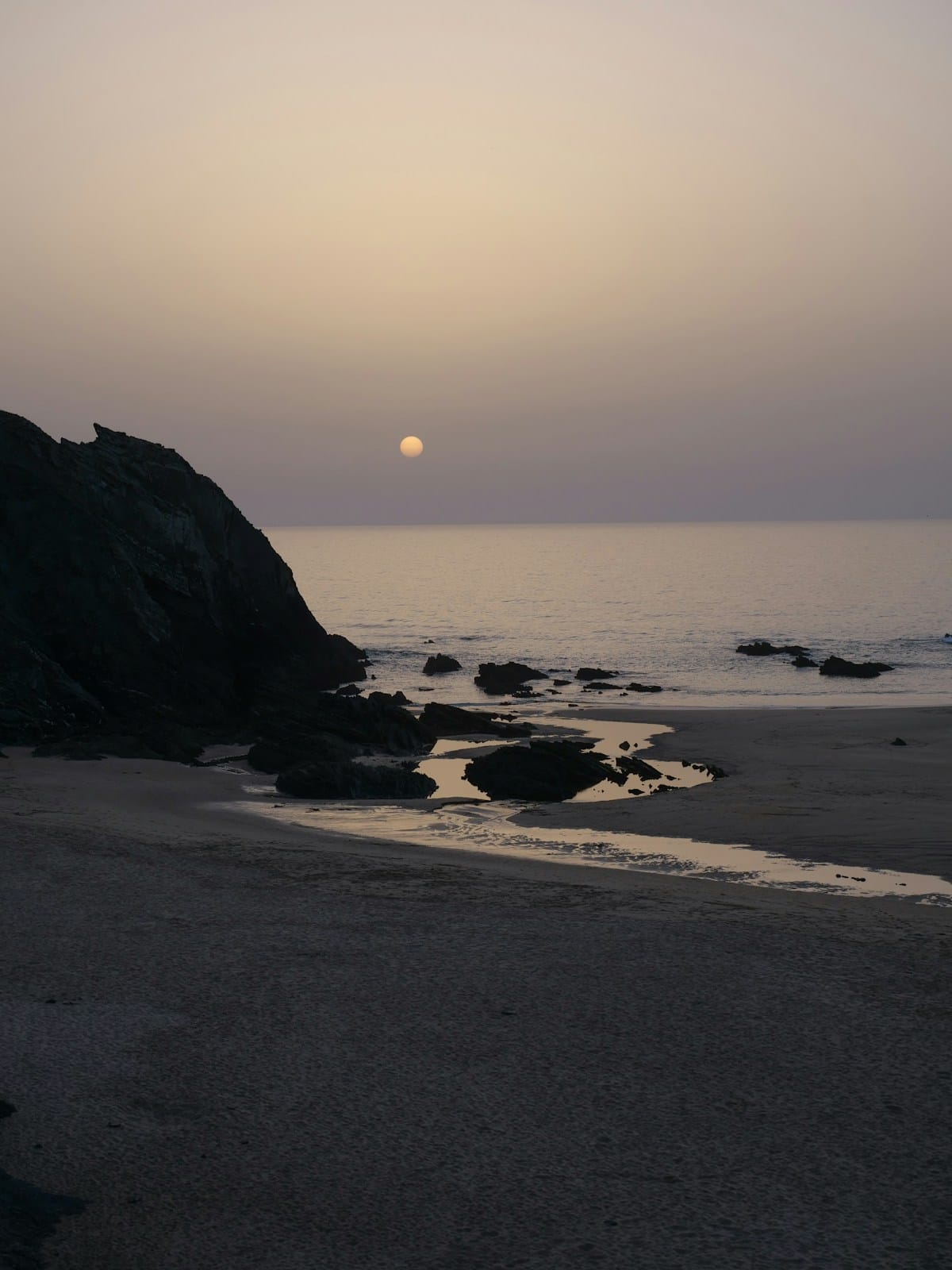
His central argument is about location. The plant is sited at the eastern edge of Praia da Falésia, the nine-kilometre ochre-cliffed beach between Olhos de Água and Vilamoura that has become one of the Algarve’s most photographed stretches of coast and a mainstay of the region’s tourism brand. Cristina argues the facility will have a “profound impact” on an ecosystem he describes as “a world reference of exceptional natural heritage value,” pointing to the brine discharge, the intake and outfall pipes, and construction traffic on access roads that run through pine forest and protected dune landscapes.
“If the works go ahead,” Cristina said, “we will take all necessary measures to defend Albufeira.” He has not specified what those measures are, but municipalities in Portugal have historically used court injunctions, planning permits, and licensing refusals on access roads and connection works to slow or block projects they oppose.
The Minister’s Case
Carvalho’s counter-argument is hydrological rather than political. Climate projections for the Iberian Peninsula point to a persistent drying trend: fewer rainy days, longer droughts, and a 10–20 per cent reduction in annual precipitation in the south by mid-century. The Algarve has already lived through two multi-year drought cycles in the past decade, leading to water-use restrictions on golf courses, agriculture, and hotels.
“This work has to be done,” Carvalho said. “The science shows increasing drought frequency. Without this, we cannot secure water for agriculture, for tourism, for our green spaces, or for the population.” She framed the plant as the cornerstone of a regional water-security strategy that also includes the Pomarão intake from the Guadiana river, water transfers from the Alqueva reservoir, and a second desalination unit under study for later in the decade.
The political stakes are sharpened by the calendar. The PRR money that covers more than half the cost must be committed within the next twelve to eighteen months or Portugal risks losing it. A local injunction, even a short one, could jeopardise the EU funding and leave the Government to pick up the full bill from the national budget.
What to Watch This Week
Three things will shape how this plays out. First, whether Carvalho and Cristina actually sit down this week — the minister said she hopes to meet the mayor “before the works begin.” Second, whether Albufeira lodges a formal challenge in the administrative courts, which could seek to suspend the construction permit on procedural grounds. Third, whether other Chega-run municipalities in the Algarve — the party made major gains in 2025 — line up publicly behind Cristina and turn this into a regional standoff, as opposed to a local one.
For expats in the Algarve, the immediate practical picture is unchanged: tap water remains normal, drought restrictions remain the ones set last summer, and hotel and golf water-use quotas for 2026 were agreed in February. The longer-term picture is more consequential. A working desalination plant would mark a structural shift in how southern Portugal sources its drinking water — away from rainfall-dependent reservoirs and toward an energy-intensive, technology-heavy supply. Whether that shift arrives on the 2027 timetable the consortium is promising, or gets pushed deeper into the decade by legal and political resistance, is what the next few weeks will decide.
Sources: Público (19 April 2026), Notícias ao Minuto (18 April 2026), Jornal de Negócios (project value and consortium), RTP (regional water strategy). On the 1 June praia-vigiada beach-safety side, our 31 May read on ISN manning the 1 June Praia-Vigiada surveillance window across the Portuguese coast — credentialed nadadores-salvadores under Portaria 53/2014 deploy through 30 September across the 350-plus praias vigiadas, the bandeira verde-amarela-vermelha-xadrez frame governs swimmer admissibility on a daily readout, and the praias-não-vigiadas perimeter on the Costa Vicentina, Costa Alentejana and the remote Açorean-Madeiran coves carries the structural drowning-severity tail sets the latest reference.