Porto Set to Vote Tomorrow on Free Public Transport for 42,700 Adult Residents — Pedro Duarte's €20.5 Million 'Flex' Programme
Porto's municipal assembly meets tomorrow, Tuesday 21 April, to vote on the most consequential transport proposal of Mayor Pedro Duarte's young mandate: a programme that would make the city's buses, metro, urban trains, and the freshly launched...
Porto's municipal assembly meets tomorrow, Tuesday 21 April, to vote on the most consequential transport proposal of Mayor Pedro Duarte's young mandate: a programme that would make the city's buses, metro, urban trains, and the freshly launched MetroBus free at the point of use for any adult resident holding a Cartão Porto. — covering the same 18-municipality footprint as the Andante Metropolitano pass.
The package, branded Programa Flex, was a flagship pledge of the centre-right coalition Mr Duarte led to victory in the October 2025 municipal election. If the assembly approves it, the city would become the largest in Portugal — and one of the largest in Europe — to offer free transit to its general adult population, joining Cascais (which has run free local buses since 2020) and a handful of smaller municipalities.
Who qualifies, when it starts, and what it costs the rider
The proposal restricts eligibility to residents aged 23 or over who hold a Cartão Porto. — the municipal card available to anyone with proof of residence in the city, including foreign nationals with a residence permit. Students under 23 are excluded because they are already covered by the State's Sub23 Superior and similar schemes. The city's calculations identify 42,699 adult residents who would qualify on day one, drawn from a notional pool of 59,381 minus the 16,682 students the State already subsidises.
The financial cap is set at €40 per user per month — the price of the Andante Metropolitano pass and the existing reference value for unlimited metropolitan-area travel. Anyone validating fewer trips than that simply costs the city less; anyone who would have spent more pays the difference themselves, which is unlikely given the cap matches the universal pass.
Subject to a green light tomorrow, the programme is scheduled to take effect on 1 July 2026 — or whenever the Tribunal de Contas (Court of Auditors) clears the procurement contract with Transportes Metropolitanos do Porto (TMP), whichever falls later. The Tribunal de Contas visto prévio is mandatory for public contracts above the legal threshold and is the most plausible source of a delay; comparable transport contracts have historically taken between four and eight weeks to clear.
The pay-per-validation model the city wants to lock in
The most distinctive feature of the contract is its compensation logic. Porto will reimburse TMP only for validations actually performed by eligible users, with no minimum-revenue floor and no payment for fixed costs that the operator already incurs. In a sector long criticised for over-generous indemnity clauses to private concessionaires, that is a meaningful structural choice — and one that lowers the political risk of the headline number. If take-up disappoints, the city's bill simply drops.
Headline budget figures bear that out. The cap is €10.25 million for the second half of 2026, €18.7 million for the full year 2027, and €1.8 million for the wind-down phase in early 2028. The implied steady-state run rate is therefore roughly €20.5 million a year, or about €1.71 million a month, against a city budget that hovers around €350 million. Per eligible user, that works out at about €40 per active month — exactly the pass cap and a reminder that the city is in effect underwriting the metropolitan pass for its residents at face value.
What it means for expats living in the Porto metro
For the city's foreign residents — a population that has grown sharply since the Portuguese government opened the D7 and D8 visas to remote workers and pensioners — the programme carries a direct cash benefit. The Andante Metropolitano pass currently runs to €480 a year for an adult, and almost no expat household runs a single Porto Card today, which is the binding eligibility document. City Hall is expected to publicise an enrolment process well in advance of the 1 July go-live, but the practical first step for any non-Portuguese resident interested in the scheme is to obtain or update the card at one of the seven Espaço Municipal branches; proof of residency in one of the seven Porto parishes is required.
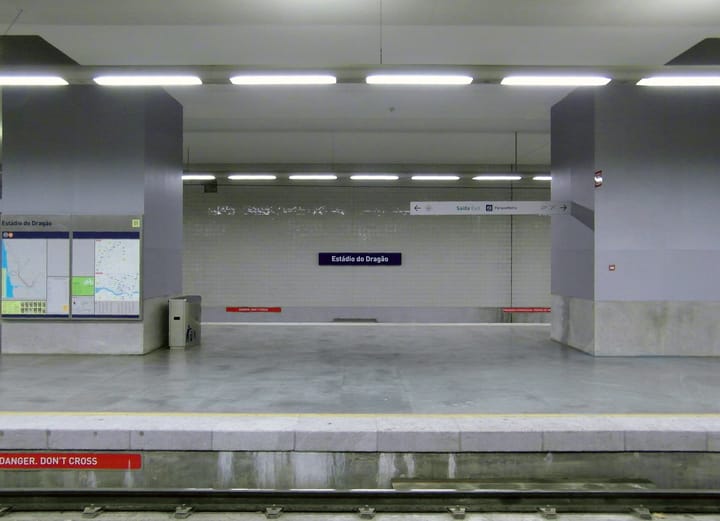
The geographic footprint is the same as the Andante Metropolitano: it covers central Porto and 17 surrounding municipalities, including Vila Nova de Gaia, Matosinhos, Maia, Gondomar, and Valongo, on STCP buses, all six Metro do Porto lines, the new hydrogen-powered MetroBus that started paid service today, and CP urban trains within the metropolitan area. It does not cover long-distance Alfa Pendular or Intercidades trains, taxis, or TVDE.
The political backdrop
Free transit was a defining policy of Mr Duarte's campaign — designed to draw a line between his administration and the previous Rui Moreira-era pricing reforms — and its delivery on the original timetable would be his first major executive win. The opposition Socialists and Bloco de Esquerda have so far signalled support in principle while reserving their position on the funding model; Chega is the only assembly bloc that has flagged outright opposition, on cost grounds.
If the assembly approves the package as drafted tomorrow, expect the operational detail — Cartão Porto. enrolment windows, validator software updates, communications campaign — to land within the next four to six weeks. The Tribunal de Contas referral will follow immediately after. Lusa first reported the proposal earlier today. On the Porto municipal side of the file, the court freeze on the Mercado do Bolhão stall auction sets out the popular action a traders' association filed on 30 July, what admitting a providência cautelar actually suspends, and the July auction in which a fish stall with a €343.80 base went for €7,550 a month. On checking when the next bus actually reaches the stop, the WhatsApp channel STCP opened for real-time bus arrivals sets out the 226 158 158 number STCP now answers on, the three ways to ask (by line, by stop or by sharing your location), and the September timetable switch that ends the summer reinforcements on the beach lines.