Azores Civil Servants Tried a Four-Day Week for Six Months: Absences Fell 15 Percent and Nine in Ten Want to Keep It
The final report on Portugal's first public sector four-day week trial finds most service measures held up or improved with 32 hours instead of 35, but warns against applying it everywhere at once.
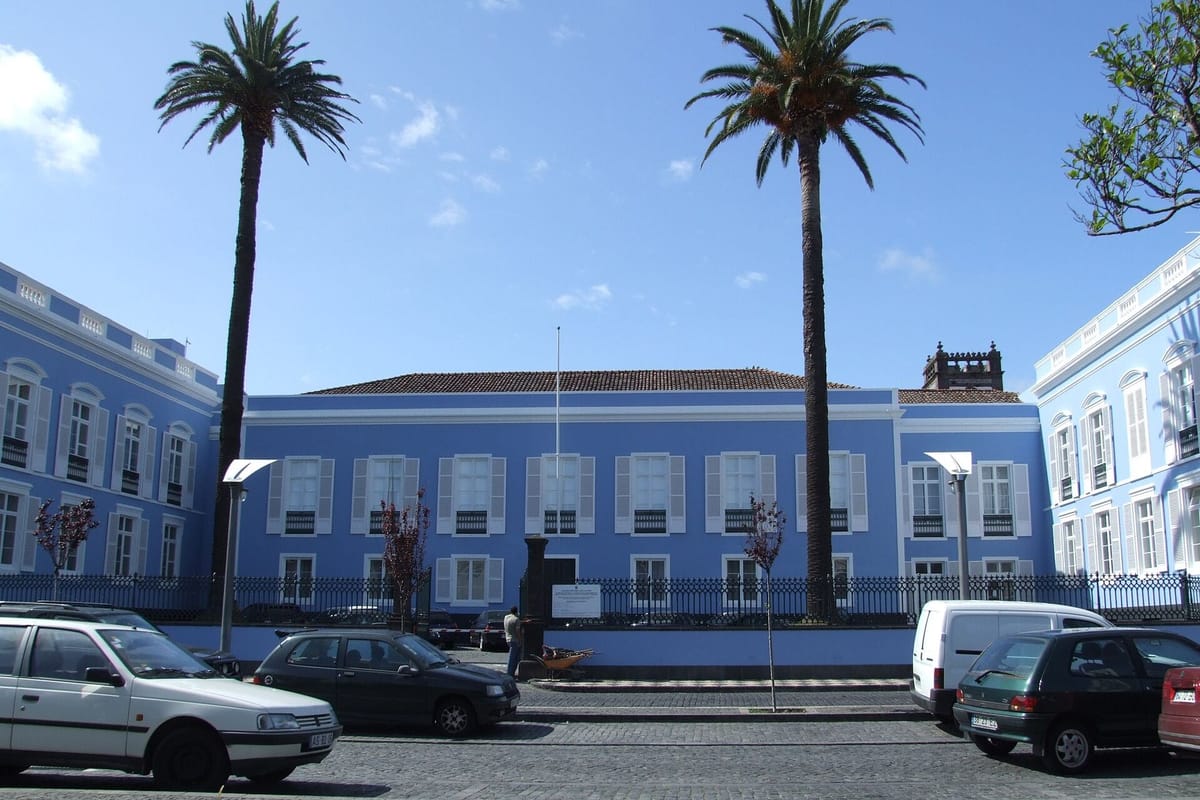
For six months this year, about 400 civil servants in the Azores worked a four-day week. The final report on the trial, the first in Portugal's public sector, was handed to the regional government and made public last week. It finds that absences fell, most service measures held up or improved, and almost nine in ten participants want to carry on. It stops short of recommending the model for the whole regional administration.
How the trial worked
The pilot ran from January to the end of June. Working hours fell from 35 to 32 a week, and staff joined voluntarily. When it started, the regional director for organisation, planning and public employment, Délio Borges, told Lusa it covered 13 services and about 400 workers. The final report counts 398 workers in 14 bodies, among them several regional directorates, the regional civil engineering laboratory, the fisheries and environment inspectorates and the RIAC, the Rede Integrada de Apoio ao Cidadão (the Azores' network of citizen service shops).
The offices stayed open five days a week. No extra staff were hired, and the report says the trial cost nothing more. It was coordinated by Rita Fontinha, of Henley Business School at the University of Reading, with Pedro Gomes, of Birkbeck, University of London, who led the 2023 four-day week pilot in mainland private firms.
What the report found
- Absences: days of absence per worker fell by 15 percent, an improvement about three times larger than in the comparison group, Fontinha told ECO.
- Service measures: of 182 operational metrics collected from the bodies, about 63 percent improved on the same period of 2025, 17 percent were stable and about 20 percent got worse. The report points to more cases closed and deadlines met more often.
- Counter services: at the RIAC, in-person attendances rose on every island, and hours of forced closure because of staff absence fell by more than 40 percent.
- Wellbeing: staff reporting difficulty balancing work and family fell from 34 percent to 17 percent. Frequent anxiety fell by 11 percentage points and fatigue by 10. The share rating their mental health as poor or fair fell from 41 percent to 30 percent.
- Artificial intelligence: use of generative AI tools rose from 68 percent to 82 percent of participants. The coordinators estimate it made up about 7 percent of the hours cut.
Participants rated the experience 8.56 out of 10, and 89 percent said they would like it to continue. On average they valued the fourth free day at the equivalent of 36 percent of their pay, more so among women and older workers.
Where it was harder
About 10 percent of participants reported significant difficulty adapting, the report says, mostly in small teams, shift work, front-desk jobs that need someone present at all times, and roles that depend on one person. "The results show that continuity is possible in many of the bodies, but they do not recommend an automatic and uniform application to the whole public administration," Fontinha told ECO. In health, education and other services that need staff on hand constantly, she said, teams might have to be reinforced.
The report recommends that the regional government use the results to extend the experiment with models fitted to each body. We found no announcement yet from José Manuel Bolieiro's regional government on what happens next. The trial had critics from the start: after it was announced, the Azores Chamber of Commerce and Industry questioned it, citing the region's strained public finances and staff shortages in health and education. In mainland Portugal, a public sector test was considered under António Costa's government but never went ahead.
The trial comes as the Azores prepare their first budget without EU recovery money.