Peniche Kaolin Mine Fails Its Environmental Assessment Over Groundwater Risk, but the Promoter Can Still Redesign It
An APA-led committee has given an unfavourable opinion on the Royal China Clay mine at Serra d'El-Rei, citing groundwater risk. It is not the final decision: the promoter can now get up to six months to redesign the project.
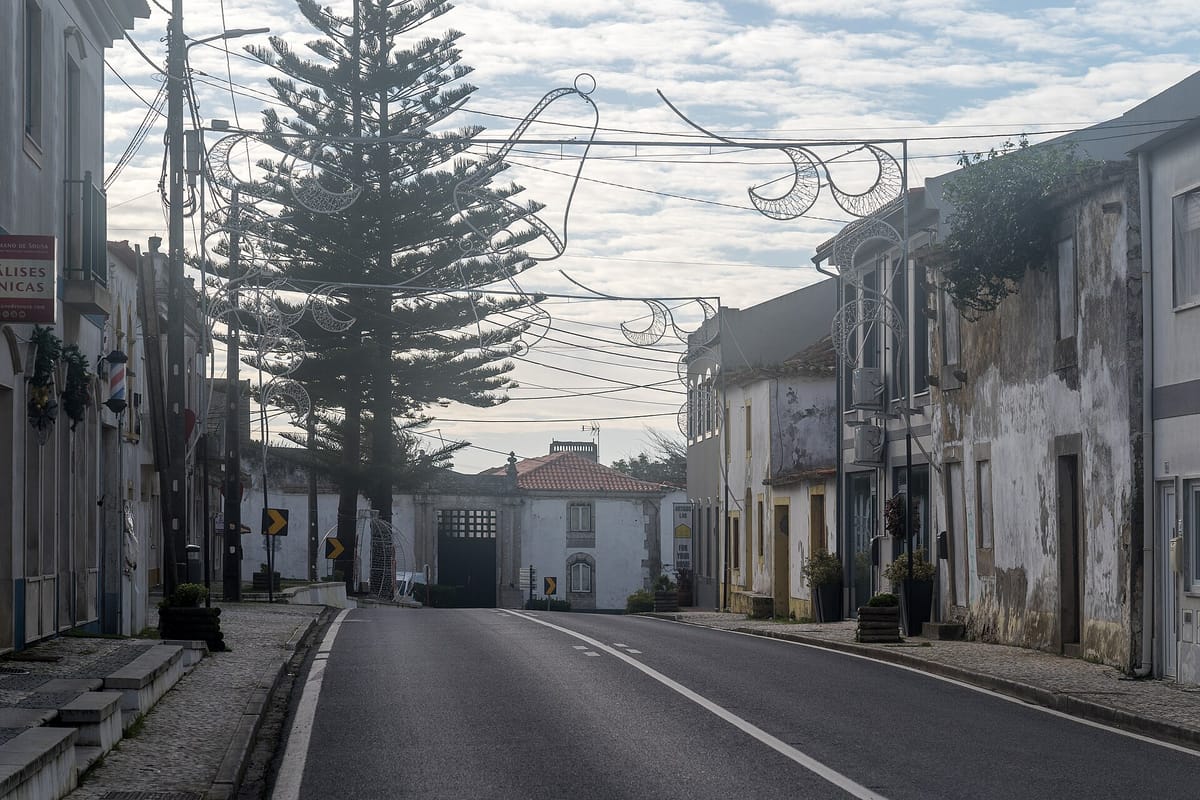
The committee assessing an open-pit kaolin and clay mine at Serra d'El-Rei, in the Peniche municipality, has given the project an unfavourable opinion. The committee says the plan puts groundwater and local streams at risk, and that the promoter has not shown those risks can be avoided. Its final opinion, dated September 2026 and signed on 27 September, is now on the Agência Portuguesa do Ambiente (Portuguese Environment Agency, APA) assessment database, SIAIA. Observador reported it on Tuesday.
This is not yet the final decision. The committee rejected the project "in the terms in which it was proposed" and recommended that the procedure be paused so the promoter can change it.
The project
The Concessão Mineira C-185 "Royal China Clay" belongs to Motamineral, Minerais Industriais, S.A., which signed the concession contract on 10 May 2023. The concession covers about 107.7 hectares, mostly eucalyptus and maritime pine. About 51.5 hectares would be dug in three pits without explosives over roughly 20.5 years. At full output the mine would produce 569,100 tonnes a year: 270,000 tonnes of washed sand, 31,800 tonnes of kaolin and 267,300 tonnes of common clay. The opinion counts 12 direct jobs and up to 11 lorries an hour at the peak, through Serra d'El-Rei and on the EN114.
The committee was led by APA. Its members came from the Lisbon and Tagus Valley regional coordination commission (CCDR LVT), the Direção-Geral de Energia e Geologia (Directorate-General for Energy and Geology, DGEG), which licenses the mine, the national geology laboratory, the heritage institute, the climate agency and two universities.
Why the committee said no
Water is the main ground. The pits would probably go below the water table, so water would have to be pumped out of them for as long as the mine works. The committee rates the effect on groundwater as significant or very significant. It says there is too little local hydrogeological data to judge how far the effects would reach. A private drinking-water well on a neighbouring property sits about 150 metres from one of the pits.
Several watercourses would be destroyed. That could change flows in the Ribeira do Vale Bem Feito and add silt in an area already classed as at risk of flooding. The plan also leaves no protective strip along the stream between the pits.
The opinion adds other weaknesses. Fine dust (PM10) would exceed the stricter EU annual limit that applies from 2030 in both phases of the mine. The climate figures leave out lorry traffic and the 471 cork oaks that would be felled. DGEG had also refused the plan to wash the sand at an existing quarry in Óbidos before the mine's own plant is built.
The public consultation, which ran from 22 July to 1 September, drew 7,368 submissions. Only 28 from members of the public supported the mine. The Peniche and Óbidos councils both gave unfavourable opinions, while the forestry and nature institute (ICNF) accepted the project subject to conditions. Twelve Oeste councils had already asked APA to reject the mine in September.
What happens next
Article 16 of Decreto-Lei n.º 151-B/2013, the environmental impact assessment law, sets out the next steps. APA must now consider with Motamineral whether the project can be changed. If so, the procedure is paused for up to six months while the company submits a revised design. That design may go back to the committee and to a new public consultation lasting 10 days. APA then has 50 days to issue the declaração de impacte ambiental (environmental impact statement, DIA).
Before any statement is issued, the company has a right to reply to the draft. An unfavourable statement ends the procedure. Observador's report carried no response from Motamineral.