
No Lisbon Metro Trains on Wednesday: Command-Post Supervisors Strike for 24 Hours, and Arbitrators Refuse a Minimum Service
Supervisors who run the Metro's central command post strike for 24 hours on 14 October, so no trains run on any line. Service restarts at 06:30 on Thursday. An arbitration tribunal set no minimum service, citing other transport.
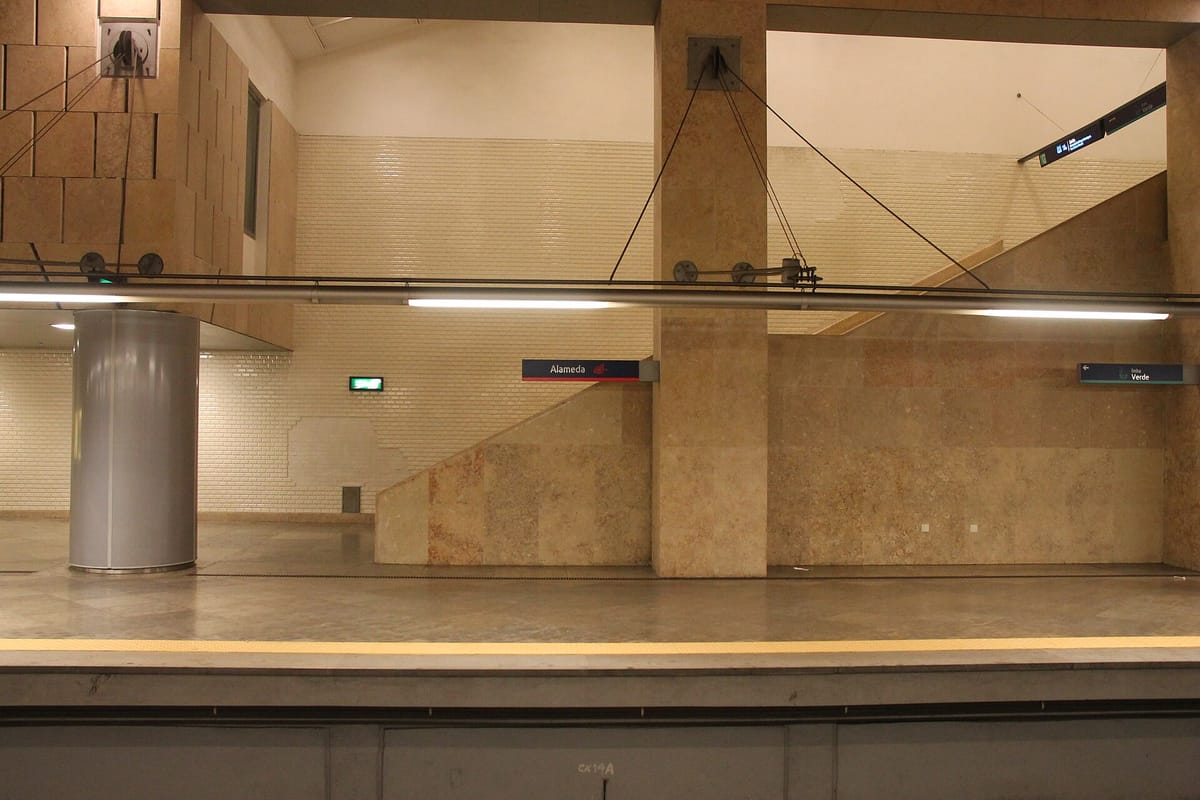
The Metropolitano de Lisboa (Lisbon Metro) will run no trains on Wednesday 14 October and its stations will be closed all day. In a notice on its website on Tuesday, the company said that because of a strike called by the unions representing its workers, it expects its transport service to stop and its stations to close. Service resumes at 06:30 on Thursday 15 October.
All four lines are affected. An arbitration tribunal ruled on 10 October that no minimum train service has to run during the stoppage.
Who is striking, and why it shuts everything
The strike is by the supervisors of the Metro's Direção de Operações (Operations Directorate): the staff who run the Posto de Comando Central (Central Command Post), which controls train movements across the network, and the traction posts. Without them the network cannot run, which is why their strike closes every station.
The strike notice was signed by six organisations: Fectrans (the Federation of Transport and Communications Unions), STTM (the Metro's traction workers' union), SINDEM (the Metro maintenance union), SITRA, SITESE and STMETRO (the Lisbon Metro workers' union). It covers 05:00 on Wednesday to 05:00 on Thursday.
What the unions want
In a joint press note on Tuesday, the unions said the strike follows an agreement signed with the Metro's board on 13 April 2026, which led them to call off a strike planned for 14 April. They say much of that deal has not been carried out. Their complaints include:
- unfilled posts in the command centre and traction posts, and slow recruitment and training of supervisors and inspectors;
- routine overtime, shifts extended or started early, work on rest days and, they say, stretches of up to 16 hours in a row;
- supervisors losing practical control of rosters, including access to the scheduling platform;
- reports of pressure on staff that they say the company has brushed aside.
According to the unions, the board met them on 12 October, said the April agreement was being implemented, called the strike disproportionate and asked them to reconsider. The unions said the meeting brought no new commitments or deadlines, and that they remain open to talks.
No minimum service, and what that means for passengers
Because the Metro is a state-owned company, minimum services were decided by an arbitration tribunal at the Conselho Económico e Social (Economic and Social Council). The Metro had proposed keeping all four lines open for the whole operating day. The three arbitrators unanimously refused, ruling that a single 24-hour stoppage, with other means of transport available and no other transport strikes on the same day, does not leave essential needs unmet. They said the Metro's proposal would have removed the strike's effect on transport altogether. Only three staff must report to the command centre, for the safety and maintenance of equipment and installations.
The ruling follows the line taken in April, when the same tribunal set no minimum train service for two 24-hour strikes by Metro managers and supervisors.
The Metro's notice does not list alternatives, and no other operator's extra services had been announced in the sources we checked. Transportes Metropolitanos de Lisboa (TML), which runs the navegante system, says the navegante card is used for travel on all public transport in every municipality of the Lisbon metropolitan area, so a navegante pass holder can switch to the buses, trains and ferries their pass already covers. The tribunal itself expected longer journeys and busier alternatives, so allow extra time.
This is separate from the planned closure of the Blue Line between Terreiro do Paço and Santa Apolónia, which is due to start in November.

.jpg)