Twelve Injured on Albufeira's Oura Strip After a Driver Told to Stop Accelerated Into the Crowd at 3am
A car parked on Rua da Oura began to move at about 03:00 on Tuesday. Ordered to stop by a GNR patrol, the driver reversed and accelerated into pedestrians and the police line. Ten civilians aged 18 to 22 and two GNR officers were hurt. The 35-year-old driver blew 1.29 grams per litre.
At about three in the morning on Tuesday, a car that had been sitting parked on Rua da Oura in Albufeira began to move. A Guarda Nacional Republicana (National Republican Guard) patrol working the bar strip signalled the driver to stop. He did not. He reversed, turned the car around, and then accelerated into the crowd of people and the police line standing in front of him.
Twelve people were hurt. Ten were civilians aged between 18 and 22, most of them Portuguese. The other two were GNR officers struck by the car. One young woman, 21 years old, was gravely injured.
What the GNR says happened
Major Pedro Pereira of the GNR's Algarve command set out the sequence at a Tuesday morning press conference in Albufeira, standing alongside the mayor. After hitting pedestrians and officers, the car collided with another vehicle. The driver got out and tried to run. He was caught on foot a short distance away.
He is 35, Portuguese, and was on holiday in Albufeira. He was alone in the car. A breath test returned 1.29 grams of alcohol per litre of blood, and he was taken for a toxicological examination. He has been detained on suspicion of qualified offences against physical integrity, driving under the influence of alcohol, and dangerous driving.
That reading matters legally as well as morally. Under Article 292 of the Código da Estrada (Highway Code), driving at or above 1.2 grams per litre stops being an administrative offence and becomes a crime, carrying up to a year in prison or a fine plus a driving ban of three months to three years. At 1.29 he cleared that line before the more serious charges are even considered.
Roughly 60 firefighters worked the scene. By Tuesday afternoon two of the injured were still admitted at the Hospital de Portimão, and three lighter cases had been seen at the Hospital de Faro, one already discharged.
The barriers were there
Albufeira's mayor, Rui Cristina, called it "an isolated act" and was firm that the street's protections had not failed. Access points to Rua da Oura, he said, are all closed off at night with protective barriers under the council's Noite Segura (Safe Night) programme, and a GNR team was on the ground and did intercept the driver. The car, in his account, "exceeded barriers, climbed pavements" to get where it went. The câmara has offered support to the injured and their families.
The Interior Minister, Luís Neves, condemned the incident, praised the GNR's intervention, and said the circumstances would be fully investigated by the competent authorities.
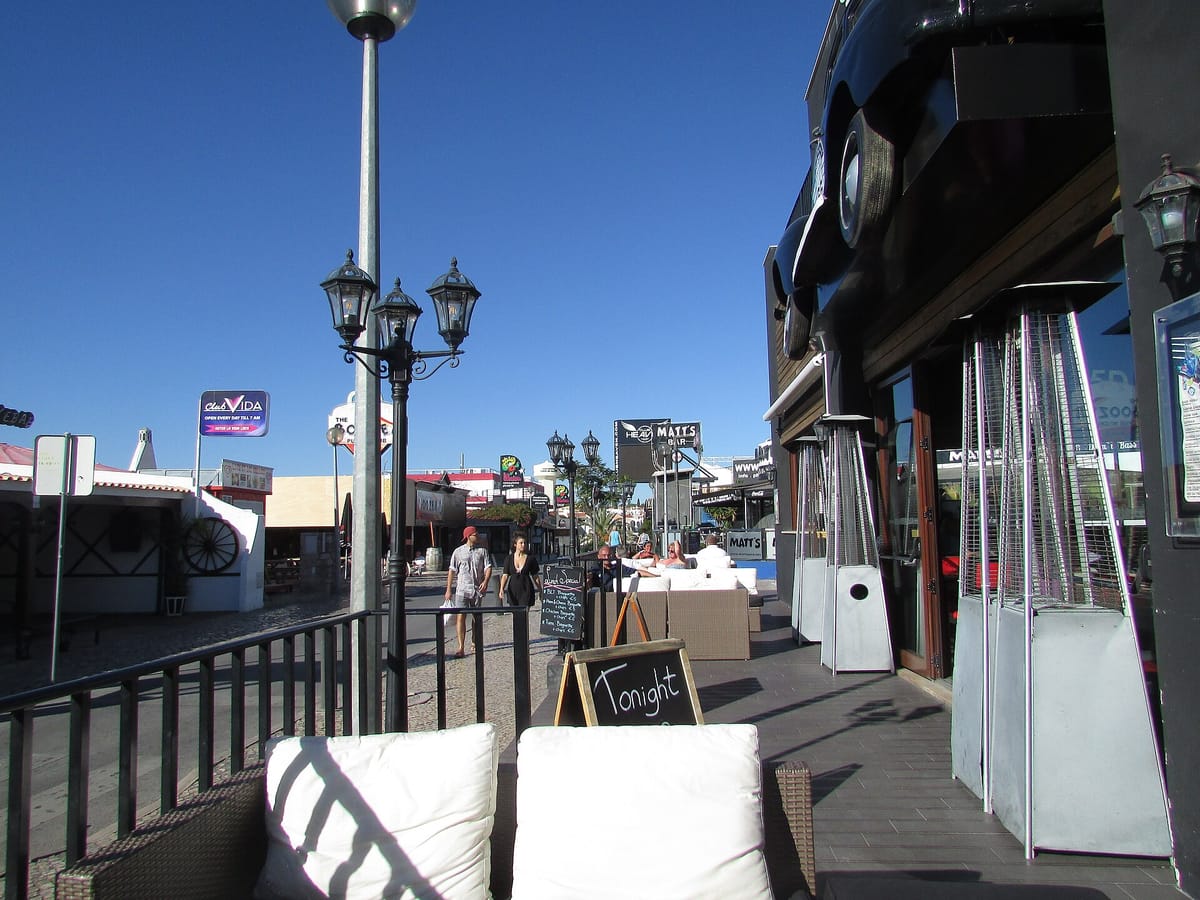
Oura is not an incidental location. It is the densest concentration of late-night bars in the Algarve, and its August clientele is overwhelmingly young, British, Irish and Portuguese. It is the same strip the Chega-led câmara targeted in June when it capped closing times at 03:00 for bars and 05:00 for nightclubs. The pedestrianisation and the barriers are the physical half of the same policy; a vehicle driven deliberately at people is the failure mode that street furniture is not designed to stop.
What this means for residents and visitors
- Nothing about the Oura closures has changed. The barriers and the night-time vehicle ban remain in force. If you are staying in Oura, the strip is still pedestrian-only after dark.
- Two hospitals absorbed the casualties. Serious trauma from the Albufeira area goes to Portimão, lighter cases to Faro. Both sit inside the Unidade Local de Saúde do Algarve, which is simultaneously appealing for blood donors as summer reserves run down.
- Drink-driving is a criminal matter here, not a ticket. The 1.2 g/l threshold is low by the standards of several other European countries, and a conviction brings a driving ban that applies to foreign licences used in Portugal.
Portugal has spent 2026 arguing about its roads, from a decade of road deaths that barely fell to a Highway Code rewrite that would criminalise driving over 180 km/h. Tuesday morning in Albufeira was a different category of event: not a collision, but a car driven at people who were standing still. The charge sheet reflects that distinction, and the first court decision on whether the driver stays in custody follows within days.
Feature image: the Oura Strip on Avenida Dr. Francisco Sá Carneiro, Albufeira. Photo by Kolforn via Wikimedia Commons, CC BY-SA 4.0.