Portugal's Road Deaths Barely Fell in a Decade as the Rest of Europe's Dropped a Fifth
Portugal cut road deaths by just 0.7% over the past decade while the EU average fell around 20%, a new European report finds, leaving the country well off its 2030 target.
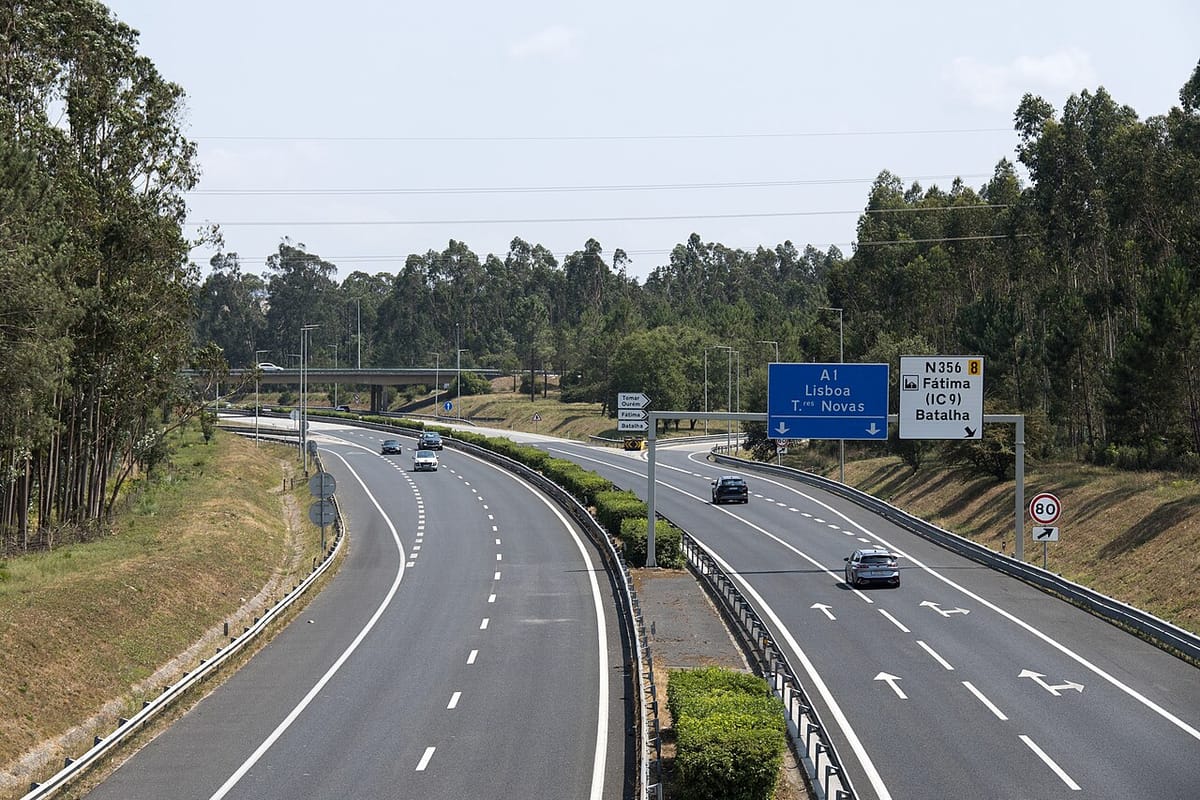
Portugal has spent a decade going almost nowhere on road safety. Between 2015 and 2025 the country reduced the number of people killed on its roads by just 0.7% — a rounding error next to the roughly 20% drop recorded across the European Union over the same period. The gap is laid out in the 20th annual Road Safety Performance Index (PIN) report from the European Transport Safety Council (ETSC), a Brussels-based body that tracks the progress of 30 European countries.
The numbers are stark. Over the ten years to 2025, Portugal averaged 55 road deaths per million inhabitants, against 43 per million across the EU. In raw terms, the Prevenção Rodoviária Portuguesa (Portuguese Road Safety Association) counted 486 people killed on the country's roads in 2015; a decade later, in 2025, the figure had eased only to 448. The official goal, shared with the rest of Europe, is to halve road deaths by 2030 — a target that now looks distant.
Portugal is not the worst performer in the ranking, but it stands out for standing still. The ETSC notes that no country managed to cut road deaths by more than 50% over the decade, and that four countries actually went backwards: Malta saw fatalities rise 91%, the Netherlands 22% and Ireland 13%. Portugal avoided that “red” category, but it distinguished itself by simply not improving. There was one bright spot: serious injuries fell in 18 of the 28 countries that supplied data, and Portugal was among them, recording a 22% drop in seriously injured road users between 2015 and 2025.
So why has the death toll stalled? Specialists consulted by the newspaper Expresso point the finger at enforcement that “does not work,” arguing it has come to be seen as a form of “fine-hunting” and remains glued to speed cameras — heavily focused on velocity while the real causes of crashes are more varied. In other words, the country may be catching speeders while missing the wider picture.
The data from the Autoridade Nacional de Segurança Rodoviária (National Road Safety Authority, ANSR) bears that out. One in three drivers killed on Portuguese roads had a blood-alcohol level above the legal limit. Using a mobile phone at the wheel raises the risk of an accident 23-fold, the authority says, and fatigue is thought to be a factor in 15% to 20% of serious crashes. Speed matters, but so do drink, distraction and tiredness — the kind of behaviour that fixed radar traps are poorly placed to catch.
For the many foreign residents and visitors who drive Portugal's motorways and winding rural roads, the report is a reminder that the country's roads remain measurably more dangerous than the European norm. With the 2030 halfway-point looming and progress flat, pressure is likely to grow on the government to broaden its road-safety strategy beyond speed cameras — toward alcohol checks, distraction enforcement and safer road design — if it wants to close the gap with the rest of Europe.