Giving Blood in Portugal in 2026 — A Practical Guide to IPST Eligibility, the 18-to-70 Age Range, the Three- and Four-Month Intervals, the Relaxed UK Residence Rule and Your Rights Under Lei 37/2012
Who can give blood in Portugal, how often, what defers you and for how long — plus the rules that changed recently, including the end of the permanent ban on anyone who lived in the UK between 1980 and 1996, and the right to paid time off work under Lei 37/2012.
Every summer the same appeals go out: holidays thin the ranks of Portugal's regular blood donors while road accidents and scheduled surgery keep demand where it was. Blood cannot be manufactured and red cells keep for weeks, not months, so the supply depends entirely on people turning up. If you live here — Portuguese or foreign, permanent resident or newly arrived — you are almost certainly eligible to help, and the rules changed recently in ways that let in people who were turned away for years, including a large group of British residents.
This guide covers who can donate in 2026, how often, what disqualifies you and for how long, what actually happens on the day, and the rights the law gives you as a donor — including time off work.
Who runs the system
Blood collection in mainland Portugal is coordinated by the IPST, IP (Instituto Português do Sangue e da Transplantação — the Portuguese Institute of Blood and Transplantation), the same public institute responsible for the transplant register that recently posted record numbers of heart and lung transplants. It operates three regional blood centres — Lisbon, Porto and Coimbra — alongside hospital blood services across the country and mobile collection sessions (brigadas) run with parish councils, fire brigades, universities, companies and donor associations.
In practice that means you have three routes: book a slot at a regional centre, walk into a hospital blood service, or catch a mobile session when it comes to your area. Sessions and locations are published on the IPST's donor site, dador.pt. The Azores and Madeira run their own regional services.
The basic eligibility test
The core requirements are short:
- Age 18 to 70. Seventeen-year-olds may donate with parental or guardian consent. Seventy is the upper limit.
- Weight of at least 50 kg.
- Good general health and healthy habits.
Donors aged 65 to 70, and anyone giving blood for the first time at 60 or over, donate subject to medical judgement rather than automatic entitlement — a clinician decides case by case.
Everything beyond that is settled at the triagem clínica, the clinical screening interview a qualified health professional carries out before every donation. You fill in a health questionnaire, your haemoglobin, blood pressure and pulse are checked, and the interviewer assesses individual risk. That conversation, not a published checklist, is what determines whether you donate that day.
How often you can give
The intervals differ by sex, because of iron stores:
- Men: once every three months — up to four donations a year.
- Women: once every four months — up to three donations a year.
Plasma and platelet donations (apheresis) follow different, shorter intervals and are arranged directly with the blood centres, which call regular donors when a particular component or blood group runs low.
What changed — and who it lets back in
The IPST has revised its donor selection criteria, loosening several long-standing bars. The changes matter to foreign residents in particular:
- Residence in the United Kingdom between 1980 and 1996 is no longer a permanent exclusion. This was the variant CJD ("mad cow") criterion that barred a generation of British residents in Portugal, along with anyone else who spent time in the UK during those years. It has gone.
- A previous blood transfusion after 1980 no longer bars you permanently either.
- The 60-year age ceiling on a first donation has been removed — first-time donors over 60 are now assessed individually rather than refused outright.
- The West Nile virus suspension period has been dropped, because every donation is now screened individually by nucleic acid testing (NAT).
- The fasting and "light meal" waiting rules have been eased. You no longer have to time your donation around digestion — in fact you should eat normally beforehand.
Selection criteria must also be non-discriminatory. Lei 85/2021 amended the Blood Donor Statute to prohibit exclusion on grounds of gender identity or sexual orientation; screening is based on individual risk behaviour and the epidemiological evidence, not on who someone is.
What defers you, and for how long
Most exclusions are temporary. The common ones:
- Tattoos and piercings: four months from the date it was done.
- Travel: assessed individually. The screening asks where you went, whether you lived there temporarily and for how long, and whether you fell ill during or after the trip — the aim is to exclude exposure to endemic, prevalent or tropical infections. Trips to malaria-endemic regions and to areas with active arbovirus transmission carry deferral periods.
- Illness, infection, antibiotics, recent surgery, dental work, pregnancy and breastfeeding all carry their own waiting periods, set at screening.
- Medication does not automatically rule you out, but bring the details.
Permanent exclusions are limited to conditions that would put the recipient or the donor at risk — certain transmissible infections and some cardiac, neurological and haematological conditions among them. If you are unsure, go and be screened rather than self-excluding: a large share of people who assume they cannot donate turn out to be eligible.
If you are a foreign resident
Nationality is not a criterion. What matters is meeting the eligibility rules and passing screening. The IPST explicitly welcomes people who donate regularly in another country and want to continue donating while in Portugal, provided that country carries no increased restrictions of its own. Bring photo identification — a cartão de cidadão, residence permit or passport — and, if you have one, your número de utente (SNS user number); if you have not yet registered with the health service, our guide to registering with the SNS covers how to get one.
Language is worth planning for. Screening questionnaires and interviews are conducted in Portuguese; the regional centres in Lisbon and Porto usually have staff who can work in English, but a smaller hospital service or a village mobile session may not.
What happens on the day
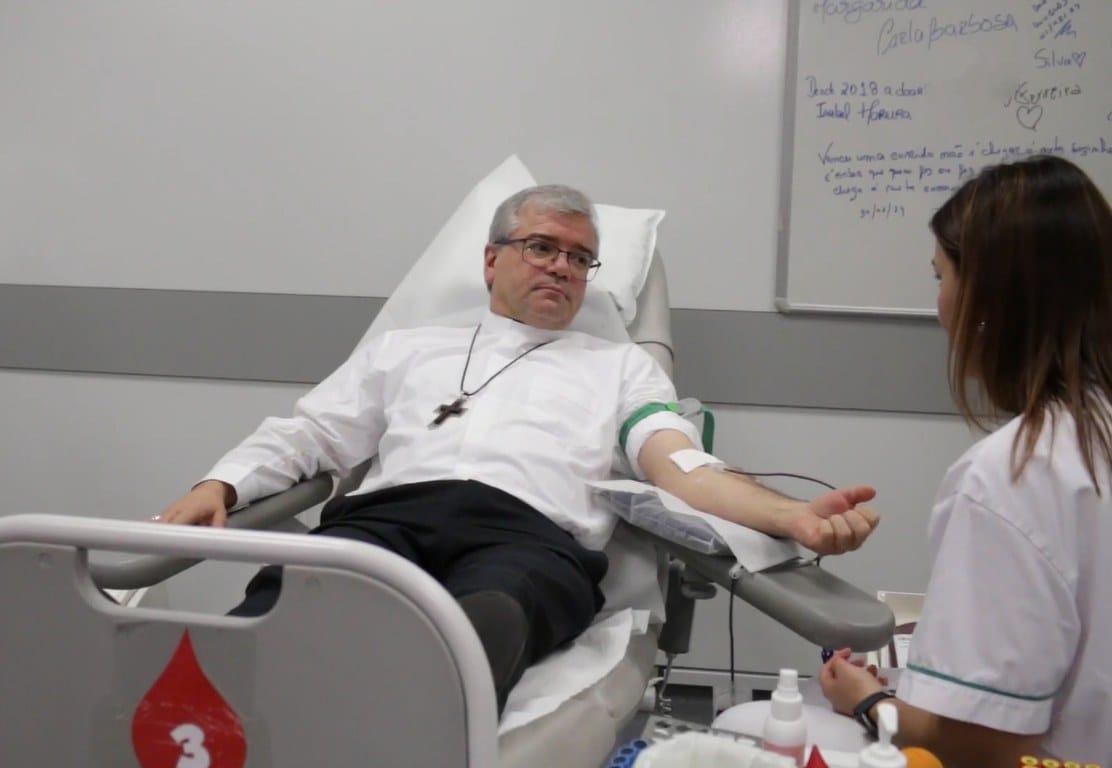
The donation itself takes about ten minutes. The whole visit — registration, questionnaire, screening, donation and the mandatory rest and snack afterwards — runs closer to 45 minutes to an hour.
Roughly 450 ml (give or take 10%) is collected. Beforehand, increase your fluid intake the day before and on the day, eat a normal breakfast without overdoing it, and avoid prolonged sun exposure. Afterwards, keep drinking, skip exercise for the rest of the day, and stay out of the heat — sensible advice generally, and more so during a Portuguese July.
Each donation is tested for transmissible infections before any of it reaches a patient; you are notified if anything abnormal is found. A single donation is separated into components — red cells, plasma, platelets — which is why the campaigns say one donation can help up to three people.
The rules about driving and working afterwards
This is the part people miss. Some occupations and activities require a waiting period after donating:
- At least 12 hours: drivers of heavy or public-transport vehicles, air traffic controllers, divers, climbers, scaffolders, electricians, miners and parachutists.
- 24 to 72 hours: commercial pilots.
- At least six hours' rest before setting off if you are driving more than 100 km.
- Any dangerous activity should be avoided on the day of donation.
The collecting professional gives specific advice at the chair — tell them what you do for a living before you donate, not after.
Your rights as a donor
Blood donors have a statute of their own: Lei 37/2012, the Estatuto do Dador de Sangue (Blood Donor Statute). It sets out the rights that come with donating:
- Time off work. You may be absent from your professional activities for the period necessary to donate blood, without loss of any rights or benefits. This is the provision most donors do not know exists — it means the donation session is not unpaid leave or holiday, and your employer cannot dock you for it. Tell your employer in advance and keep the attendance certificate the centre issues.
- Exemption from taxas moderadoras (SNS user fees). The statute lists this among donor rights; its practical weight has narrowed since Portugal abolished most user fees, but it remains in force.
- Free parking at SNS facilities while donating.
- Information, confidentiality and non-discrimination, plus public recognition of donors.
- Insurance cover in connection with the donation, under Decreto-Lei 83/2013.
Donation in Portugal is voluntary and unpaid. There is no payment, and offering to pay for blood is not permitted — the system rests on the principle that an unpaid donor has no incentive to conceal a risk at screening.
What This Means for You
- If you are between 18 and 70 and weigh over 50 kg, the default answer is that you can donate — go and be screened rather than assuming a past condition, a tattoo or a trip rules you out.
- If you lived in the UK between 1980 and 1996, the old permanent ban no longer applies. A large number of British residents in Portugal are newly eligible and do not know it.
- Plan the interval: three months between donations for men, four for women — four and three donations a year respectively.
- Tell them what you do for work before you donate. Professional drivers, pilots, divers and electricians have mandatory waiting periods afterwards, and a 100 km drive home needs six hours' rest first.
- Claim your time off. Lei 37/2012 gives you the right to be absent from work for the time the donation takes, without loss of pay or benefits — ask the centre for the attendance certificate.
- Summer is when it matters. Stocks fall in July and August while demand does not; if you are going to donate once this year, now is the useful moment.
This guide is general information for 2026, not medical advice. Eligibility rules and deferral periods are revised as the evidence changes, and the final judgement always rests with the health professional who screens you — confirm current criteria and session locations with the IPST at ipst.pt or dador.pt, or with your nearest hospital blood service. If you need the emergency side of the health system rather than the donation side, our guide to medical emergencies in Portugal explains 112, INEM and the SNS 24 line.